Most birds are wired to hide illness until they can't. By the time a bird looks sick, something has usually been wrong for days. Droppings are one of the few things a bird cannot fake, which makes the cage liner one of the most useful diagnostic tools an owner has.
What normal droppings actually look like
![Alert Parrot in Morning Light]()
Alert Parrot in Morning Light
Image credit : AI
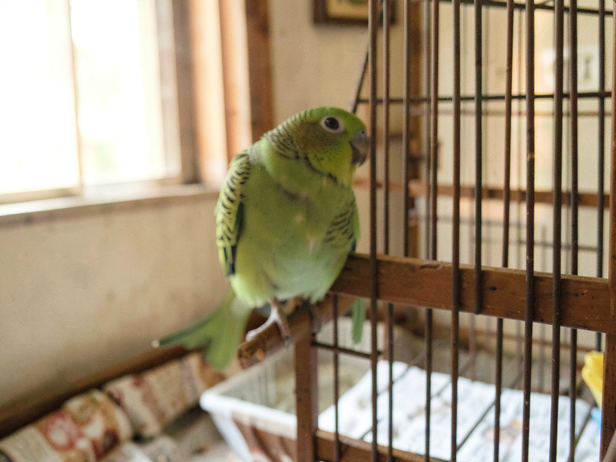
An alert parrot in its cage, a common sight in Indian homes. Observing bird poop colour change can be an important health sign.
A healthy bird dropping has three parts: a dark green or olive-brown solid coil in the centre, a white or cream chalky cap of urates wrapped around or beside it, and a small clear ring of liquid urine at the edge. The proportions shift slightly with diet, a bird that ate a lot of fruit will have more liquid, and one on pellets will have firmer, darker solids, but the three-part structure stays consistent. Knowing your bird's personal normal is the baseline everything else is measured against. Spend a week noting what the droppings look like on an ordinary day before you need to judge whether something has changed.
Colour changes that carry a warning
Bright red or fresh blood anywhere in the dropping is an emergency. It can point to bleeding in the cloaca, the intestinal tract, or reproductive tissue in female birds, and it needs a vet the same day. Black or very dark tarry solids suggest digested blood higher up in the digestive tract, which is equally urgent. Bright yellow or lime-green urates, the chalky part, are associated with liver stress and are one of the more common signs seen in birds with liver disease or chlamydiosis, a bacterial infection that affects many parrot species. Rust or reddish-brown urates can indicate kidney involvement. A one-off colour change after a new food is less worrying; a change that persists across two or three days is not.
Texture and consistency changes
![Golden Liquid & Water Bowls]()
Golden Liquid & Water Bowls
Image credit : AI
Two unbranded glass bowls on pale stone. One with clear water, the other a golden liquid. Soft diffused light creates deep shadow. Bird health is important.
Watery droppings with very little solid matter are called polyuria when the liquid fraction increases, and diarrhoea when the solid itself loses structure. These are not the same thing, and the distinction matters. True diarrhoea, unformed, smeared solids, points to the gut: infection, parasites, or a sudden diet change. Polyuria, where the solid looks normal but swims in excess liquid, often points to the kidneys, the liver, or hormonal issues. A bird that is drinking more than usual and producing very wet droppings is showing two signs that reinforce each other and deserve a vet assessment. On the other end, very dry, shrunken droppings with little to no liquid fraction can mean the bird is not eating or drinking enough, which in a small bird can become dangerous within a day.
Volume and frequency shifts
A sudden drop in the number of droppings across a day, especially paired with a bird sitting quietly at the bottom of the cage or fluffed on a perch, is one of the more serious combinations an owner can observe. It suggests the gut has slowed significantly. Conversely, a bird straining visibly and producing nothing, or producing only a small smear, may be dealing with an egg stuck in the reproductive tract, a condition called egg binding, or an obstruction. Both are emergencies. A bird that passes an unusual dropping and then returns to normal, is eating well, and is behaving normally can be watched for another day. A bird that is quiet, not eating, and producing abnormal droppings for more than twenty-four hours needs to be seen.
When to stop watching and call a vet
Go to a vet, ideally one with avian experience, without waiting if you see blood in the dropping, if the urates have turned bright yellow or lime-green and stayed that way for more than a day, if the bird has produced almost no droppings in twelve hours, if you suspect egg binding, or if any dropping change is paired with a bird that is fluffed, quiet, off food, or sitting on the cage floor. Birds deteriorate faster than mammals when something is wrong. A change that looks minor on day one can be critical by day two. The dropping is the signal; acting on it early is what gives the vet room to help.