
How to Keep Your Pet Safe on Long Nature Walk ?
Upasna Yadav | Mar 16, 2026, 15:30 IST

Happy Dog Exploring a Safe Walking
Every pet owner has a responsibility to ensure their furry friend is safe. Whether you’re walking in the city or country, there are certain hazards to be aware of and avoid when out on walks with your four-legged companion. From potential exposure to diseases and pests, to dangers from heavy traffic and rough terrains, explore what precautions you should take as a pet owner in order to keep your beloved pet safe while they’re taking some exercise outside.
Highlights
1. Keep a watchful eye out for other dogs, and monitor your pet’s body language to ensure they remain relaxed and calm when faced with another dog. If possible, steer clear of parks during busy times to avoid a potential altercation among a large pack of dogs.
2. When walking to a park, keep a sharp eye out for traffic, whether oncoming vehicles, bikes, or pedestrians. Ensure your pet stays close by your side to prevent accidents.
3. Protect your pet from internal and external parasites by administering preventives year-round and always checking from nose-to-tail for hidden bugs when you return home.
2. When walking to a park, keep a sharp eye out for traffic, whether oncoming vehicles, bikes, or pedestrians. Ensure your pet stays close by your side to prevent accidents.
3. Protect your pet from internal and external parasites by administering preventives year-round and always checking from nose-to-tail for hidden bugs when you return home.
What are some tips to make walking my dog safe and pleasurable?
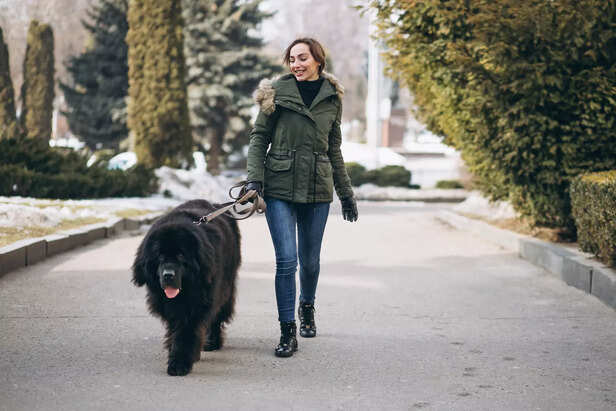
Morning Nature Walk with a Dog on a Quiet Trail
Have your veterinarian clear your dog for any new physical activity. Having a physical examination is especially important for older dogs that may have joint issues, like arthritis, but is also important for growing puppies that have immature joints. Strenuous exercise can be painful for both the very young and the very old. Ask your veterinarian to outline an appropriate exercise regimen for your dog. Your senior dog may need anti-inflammatory or pain medication to stay comfortable during and after exercise. On the upside, walking will help your older dog shed any extra weight he is carrying and therefore ease the burden on older joints. Before walking, you may want to see your own physician for a check-up.
Tips to walk with your furry friend
Have a talk with your dog:
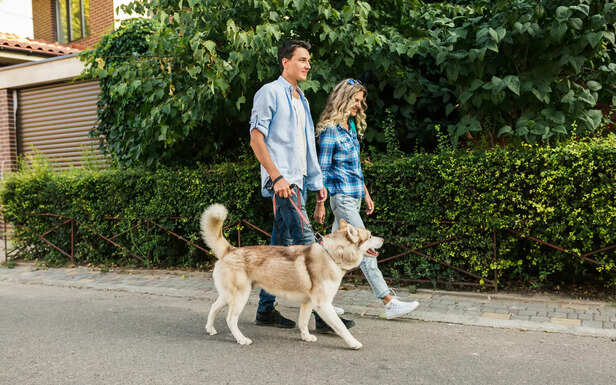
Dog Walking on a Shaded Nature Pathway
Walking is an adventure! Your dog will enjoy new sights, smells, and sounds that you encounter while strolling. Some dogs get excited when exposed to something interesting and new. They forget their manners and rush up to the interesting dog or person or bird…or skunk. You should have leash control of your dog, but it is good to have back-up control in the form of voice commands. Your dog should listen when you talk! He should sit, stay, or come when called. So, before setting out on a hike, spend some time reviewing (or teaching) basic obedience skills.
Use proper exercise equipment:
To have tangible control over your dog, it is important to have a sturdy leash that is 4–6 feet long attached to a properly fitting collar or harness. Wrap the leash around your palm so it does not slip out of your hand. Some pet owners allow their dogs to roam off leash; this requires walking in a controlled environment with a well-behaved dog. A short leash is always a safe bet and facilitates a quick retreat in case you are approached by something that is not so friendly, like a loose dog, porcupine, skunk, or other wildlife.
Wear proper exercise attire:
You will need sturdy walking shoes to protect your feet, but your dog’s feet need protection, too. Avoid extremely hot concrete, asphalt, or sandy beaches that can burn tender foot pads. A good rule is: if the walking surface is too hot for you to place your hand or bare foot on it for 10 seconds, then it is too hot for your dog to walk on “bare pawed". There are booties for dogs who walk on hot or cold surfaces. These booties also protect your dog from chemical irritation that may occur when walking on snowy or icy sidewalks that have been treated with salt or other de-icing compounds.
Check those tootsies:
After a walk, it is a good idea to look at your dog’s paws. Check for cuts, bruises, and foreign bodies like burs or splinters. If you walk on the beach or in the snow, wipe your dog’s feet with a warm, wet towel. Clean between the toes and around the foot pads. While you are at it, look for unwanted hitchhikers (fleas and ticks) you may have picked up during your walk. Look for ticks between the toes and around the ears. Look for fleas over the tail and under the belly. If you live in a flea or tick infested area, ask your veterinarian about the best preventive for your dog.
Be prepared for clean-up:
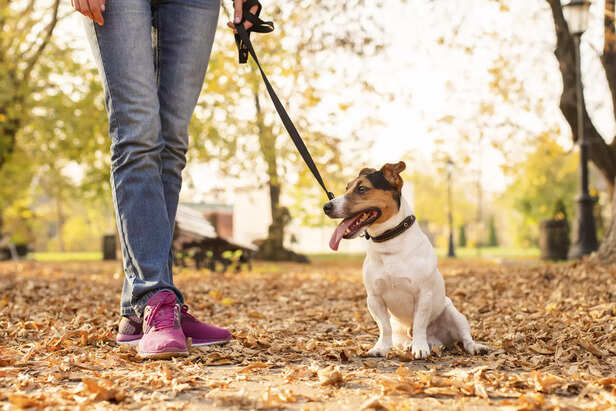
Pet dog walking on a natural trail with owner
A nice long walk is a great time for your dog to go to the bathroom. Be a conscientious dog owner and steer your dog away from your neighbor’s lawn. Bring along plastic bags to clean up after the event, no matter where he goes.
Keep hydrated:
Staying hydrated is important for both you and your dog. For long walks, bring along a collapsible dog bowl or water bottle fitted with a special spout that allows your dog to sip easily. Offer frequent drinks, especially if going on long walks in warm weather. Human sports drinks are not formulated for dogs, so do not share your power drink.
Celebrate the bond with your pets, explore Health & Nutrition, discover Breeds, master Training Tips, Behavior Decoder, and set out on exciting Travel Tails with Times Pets!
Frequently asked questions (FAQs)
- Is it safe to take dogs on long nature walks?
Yes, it is safe if your dog is healthy and properly prepared. Make sure to bring water, keep your dog on a leash where required, and watch for hazards like wildlife, rough terrain, or extreme weather. - What should I carry when going on a long walk with my dog?
You should carry fresh water, a portable dog bowl, a leash, waste bags, snacks, a basic first aid kit, and sometimes paw protection if the trail is rough. - How can I protect my dog’s paws on nature trails?
You can protect your dog’s paws by avoiding very hot surfaces, checking for sharp rocks or thorns, and using dog booties if the trail is rough or rocky.