A cat that drops into a low crouch, extends its neck, and heaves without producing anything is one of the most misread sights in a flat with a cat. The owner reaches for the hairball paste. The cat has asthma.
Feline asthma is not rare. Estimates suggest it affects roughly one in a hundred cats, and the real number is likely higher because many cases are managed at home as hairballs until the cat has a serious episode. Understanding what is actually happening in the airway changes how quickly an owner acts, and that speed matters.
What happens inside an asthmatic cat's airway
Asthma in cats is a chronic inflammatory condition of the lower airways, the bronchi and bronchioles that carry air deep into the lungs. In a healthy cat, these tubes stay open. In a cat with asthma, the immune system treats an inhaled particle as a threat and mounts an inflammatory response: the airway lining swells, the surrounding smooth muscle contracts, and the tube narrows. Mucus accumulates inside the narrowed space.
The result is a cat that cannot move air efficiently. During a mild episode it coughs or wheezes. During a severe episode the airways can constrict enough that the cat struggles to breathe at all. That is not a hairball problem. It is a medical emergency.
The mechanism is closely parallel to human asthma, which is why the same class of drugs, bronchodilators and corticosteroids, forms the basis of treatment in cats. The difference is that cats cannot tell you how tight their chest feels, and they hide discomfort until it is significant.
![Floating Dust Above Bowl]()
Floating Dust Above Bowl
Image credit : AI
I observe fine grey dust particles floating above an open bowl, a subtle reminder of airborne particles.
What triggers an episode
The trigger is almost always something airborne. Dust from clay cat litter is one of the most common culprits in Indian homes, because fine-particle litter stays suspended in the air long after the tray is covered. Incense smoke, agarbatti, cigarette smoke, mosquito coil smoke, room fresheners, and strong cleaning products are all documented triggers. Mould spores in humid monsoon months, dust mites in upholstered furniture, and pollen carried in through open windows are others.
Stress can also lower the threshold for an episode. A cat that is already anxious, because of a new animal in the flat, a recent move, or a change in routine, may react to a trigger it would otherwise tolerate.
Identifying the trigger is part of managing the condition. A cat whose asthma is controlled with medication but whose litter tray is still full of fine clay dust will keep having episodes. Switching to a low-dust, unscented litter is one of the first practical changes most vets recommend.
How to tell a cough from a hairball attempt
The posture is similar, neck extended, body low, but the sound and the outcome are different. A hairball attempt usually ends in the cat producing something: vomit, a cylindrical mass of hair, or at minimum some fluid. An asthmatic cough is dry, repetitive, and produces nothing. The cat may wheeze audibly between coughs, or breathe with its mouth open, which is abnormal in a cat and always worth taking seriously.
Frequency matters too. A cat that occasionally produces a hairball every week or two is doing something normal for a longhaired or grooming-heavy cat. A cat that coughs several times a week, or that has episodes where it seems to struggle for breath, is showing a pattern that needs investigation.
One specific sign to watch: if a cat is breathing with its elbows pushed out from its body and its sides heaving, it is working hard to breathe. That posture, sometimes called orthopnoeic breathing, means the cat is in respiratory distress. This is the point at which reading an article is the wrong response. The cat needs a vet immediately.
![Veterinary Asthma Treatment Setup]()
Veterinary Asthma Treatment Setup
Image credit : AI
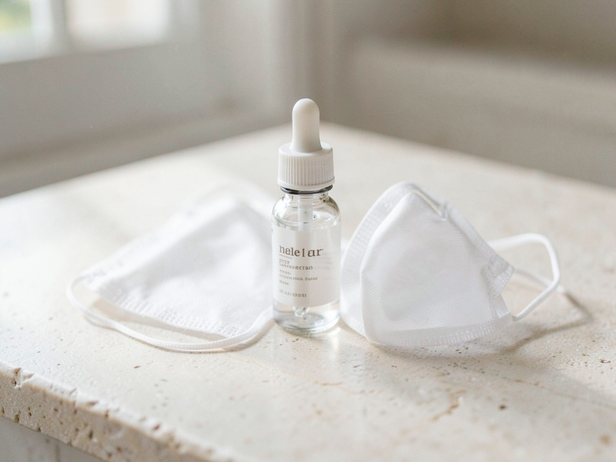
Preparing for feline asthma treatment. Essential tools for managing cat respiratory problems.
How feline asthma is diagnosed and managed
A vet will typically take a chest X-ray, which in an asthmatic cat often shows a characteristic pattern of overinflated lungs and thickened airway walls. A blood count and a tracheal wash, where a small amount of fluid is flushed into the airway and recovered for analysis, can help confirm inflammation and rule out infection or parasites, both of which can produce similar signs.
Management usually combines two things: a corticosteroid to reduce the chronic inflammation, and a bronchodilator to open the airways during an episode. In cats, inhaled medication delivered through a small spacer device and a mask is increasingly preferred over tablets, because it delivers the drug directly to the airway at a lower dose with fewer systemic effects. Your vet will advise on what is appropriate for your cat's severity and temperament.
The condition is managed, not cured. Most cats with a confirmed diagnosis and a consistent treatment plan live comfortably for years. The cats that do badly are usually the ones whose owners waited too long, or who stopped medication once the cat seemed better.
Trigger reduction at home, switching litter, stopping incense and mosquito coils near the cat, improving ventilation, is not optional maintenance. It is part of the treatment. Medication controls the immune response; removing the trigger reduces how often that response is activated.
If your cat coughs more than once or twice a week, produces nothing during those episodes, or has ever had a moment where its breathing looked laboured, that history is worth a vet visit. Chest X-rays in cats are straightforward, and an early diagnosis gives the cat, and the owner, far more options than a late one.