An indoor cat still moves through a world that is not sealed. Shoes carry things in. A window screen is not a barrier to airborne particles. A single visit to a boarding facility or a vet clinic puts your cat in a space that other cats have passed through. The core vaccine schedule exists because some pathogens are common enough, and dangerous enough, that the risk of skipping outweighs the inconvenience of the visit.
What makes a vaccine "core" for cats
The World Small Animal Veterinary Association classifies a vaccine as core when three conditions hold: the disease is widespread, it causes serious illness or death, and the vaccine is safe and effective. For cats, the core list is short. It does not include every disease a cat can get, only the ones where unvaccinated status is a genuine risk even for animals that never go outside.
The distinction matters because over-vaccination is a real concern in cats. Feline injection-site sarcoma, a rare but serious tumour, has been linked to repeated injections in the same location. Responsible vaccine protocols space boosters appropriately and rotate injection sites, something worth confirming your vet does.
![Ceramic bowl and cloth still life]()
Ceramic bowl and cloth still life
Image credit : AI
A clean ceramic bowl and cloth, ready for a cat's meal. Essential for indoor cat vaccines.
The three diseases every indoor cat's vet will discuss
The first is feline panleukopenia, caused by feline parvovirus. This is not the same virus as canine parvovirus, but it operates similarly: it attacks rapidly dividing cells, particularly in the gut and bone marrow, causing a collapse of the immune system. The virus is extraordinarily stable in the environment, it can survive on surfaces for months. A person who has been near an infected cat can carry it home on clothing. Kittens and unvaccinated adults face a high fatality rate. The vaccine is highly effective and is almost always delivered as part of a combination shot.
The second and third are feline herpesvirus type 1 and feline calicivirus, both causes of feline upper respiratory disease. These are grouped together because they are almost always combined in the same vaccine, known as the FVRCP shot, feline viral rhinotracheitis, calicivirus, panleukopenia. Herpesvirus causes sneezing, eye discharge, and in severe cases corneal ulcers; it establishes lifelong latency in the nerve tissue and can reactivate during stress. Calicivirus causes mouth ulcers, limping in some strains, and occasionally severe systemic disease. Both spread through respiratory secretions, and herpesvirus in particular can travel on hands. An indoor cat that has never been vaccinated and then boards for a week, or visits a vet clinic where other cats have been, is exposed.
Rabies: the legal and biological case
In India, rabies vaccination for cats sits in a complicated space. The disease is invariably fatal once symptoms appear, in any mammal including humans. A cat that scratches or bites a person and is unvaccinated creates a public health problem regardless of whether it goes outside. Many states have no formal mandate for cat vaccination the way they do for dogs, but the Animal Welfare Board of India and veterinary bodies recommend it because the risk is not zero for an indoor cat, an open window, a bat entering a room, a brief escape are all documented routes of exposure. If your cat ever scratches someone and that person seeks medical advice, an unvaccinated cat complicates the outcome for everyone. Ask your vet what the current local recommendation is; this is one area where the answer varies by city and clinic.
![Vial and Leaf Still Life]()
Vial and Leaf Still Life
Image credit : AI
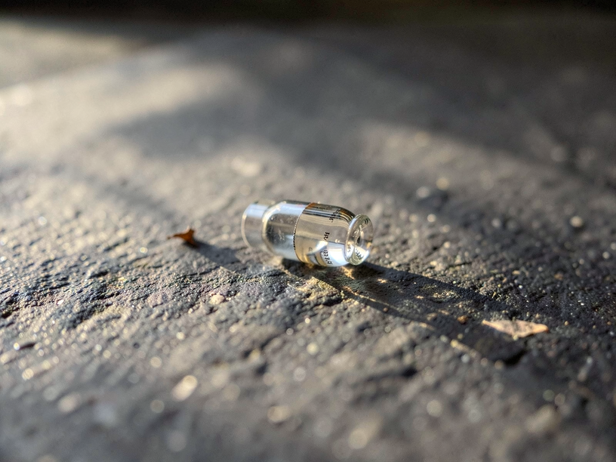
A quiet moment captured: a vial and leaf bathed in morning light. Essential for understanding cat vaccination schedule India.
What the kitten schedule looks like and why boosters matter
Kittens receive a series of FVRCP shots starting at around six to eight weeks, repeated every three to four weeks until sixteen weeks of age. This is not redundancy, maternal antibodies from the mother's milk interfere with the vaccine's ability to trigger an immune response, and the series is designed to catch the window when maternal immunity has waned enough for the vaccine to work. A single shot before sixteen weeks may do nothing if maternal antibodies are still high. Missing the series means the kitten may have gaps in protection.
After the initial series, an adult booster is given at one year. Beyond that, WSAVA guidelines support triennial boosters for FVRCP in low-risk adult cats once a solid immune response has been established, though some vets recommend annual assessment visits even when the vaccine itself is not due. Rabies boosters follow the label of the specific product used, some are annual, some are licensed for three years. Your vet will advise based on what is available locally.
The point of the adult booster is not that immunity has completely disappeared. It is that immunity wanes at different rates in different cats, and there is no practical way to test an individual cat's titre without a blood test that most owners do not request. The booster is the conservative, evidence-backed choice for an animal whose immune status is unknown.
Non-core vaccines and when they become relevant
Feline leukaemia virus vaccine is considered non-core for indoor-only cats with no contact with other cats, but core for cats with outdoor access or cats in multi-cat households where FeLV status is unknown. If you adopt a second cat, the calculation changes. Feline chlamydiosis and Bordetella vaccines exist but are generally reserved for cats in high-density environments like catteries. Your vet will ask about your cat's lifestyle before recommending either.
If your cat ever shows a fever, lethargy, or loss of appetite within 24 to 48 hours of a vaccine, contact your vet the same day. Mild tenderness at the injection site is normal and resolves quickly. A lump at the site that persists beyond four weeks, grows, or feels firm warrants a vet visit without delay, this is the early sign that needs to be assessed, not watched at home.
The core vaccines do not protect against everything, and they are not a substitute for keeping your cat's environment clean and monitoring for illness. What they do is close the doors that are most likely to open without warning, the boarding stay, the clinic visit, the shoe that tracked something in from outside. For an indoor cat, that is the honest case for keeping the schedule.