A dog's mouth works hard, chewing, carrying, exploring, and tartar builds up on teeth the same way it does in humans, except dogs rarely sit still for a scraper while awake. By the time a vet recommends scaling, there is usually a visible yellow-brown crust along the gumline, and often a layer of bacteria sitting beneath it that no toothbrush reaches.
Why anaesthesia is non-negotiable
Professional dental scaling in dogs is always done under general anaesthesia. This is not a precaution that cautious vets add, it is the clinical standard, and for good reason. The instruments used to clean below the gumline are sharp and precise. A dog that moves even slightly risks a laceration to soft tissue. Anaesthesia also allows the vet to place a tube in the airway, which prevents bacteria-laden water from the scaler from being inhaled into the lungs. Any service offering dental cleaning on an awake dog, sometimes called anaesthesia-free dental cleaning, removes tartar from the visible tooth surface only. It does nothing for the subgingival bacteria driving gum disease, and it creates the appearance of a clean mouth without addressing the infection underneath. The AVMA and WSAVA both consider it inadequate for this reason.
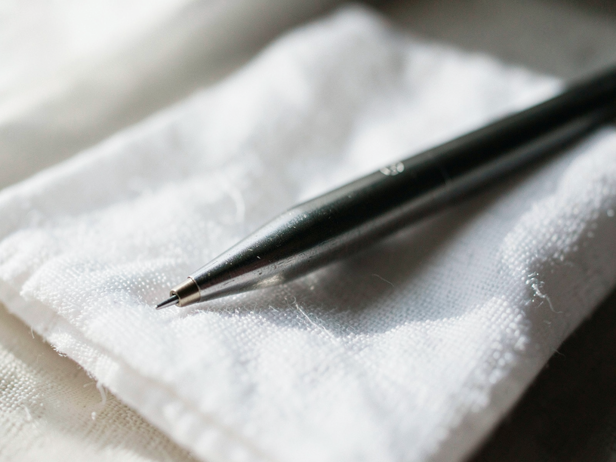
![Scaler Tip on Cloth]()
Scaler Tip on Cloth
Image credit : AI
A close-up of a dental scaler tip, essential for professional teeth cleaning for dogs.
What the procedure involves, step by step
Before the scaling begins, the vet will run a pre-anaesthetic blood panel to check kidney and liver function, since these organs process the anaesthetic drugs. Dogs with underlying organ compromise may need the drug protocol adjusted. Once the dog is under, the vet or veterinary dental technician uses an ultrasonic scaler, a vibrating metal tip with a water coolant, to break up and flush away tartar above and just below the gumline. This is followed by hand scaling with curettes, which are finer instruments shaped to fit the contour of each tooth root. The subgingival pocket, the space between the tooth and the surrounding gum, is where periodontal disease begins, and it is the part that ultrasonic scaling alone cannot fully address. After scaling, each tooth is probed. A periodontal probe is a thin, calibrated instrument inserted into the gingival pocket around each tooth. A pocket depth beyond a few millimetres signals bone loss or early periodontal disease. The vet records findings tooth by tooth; this is the chart that guides follow-up care. Teeth are then polished with a paste that smooths microscopic scratches left by the scaler, smooth enamel accumulates new plaque more slowly than roughened enamel. If any teeth need extraction, this happens under the same anaesthesia. Extractions are more common than owners expect, particularly in small breeds where teeth are crowded and root disease is harder to spot from the outside.
How long it takes and what recovery looks like
A straightforward scaling with no extractions typically takes between forty-five minutes and ninety minutes from the time anaesthesia is induced. Add pre-procedure preparation and the monitored recovery period, and most dogs spend four to six hours at the clinic. Dogs come home groggy. The anaesthetic drugs clear over several hours, and some dogs sleep through the rest of the day. Soft food for twenty-four to forty-eight hours is standard, especially if any extractions were done. The gums may be mildly inflamed for a day or two. If the vet prescribed an antibiotic course, which is common when gum disease was present, it needs to be completed in full. Most dogs are back to normal eating and behaviour within two days.
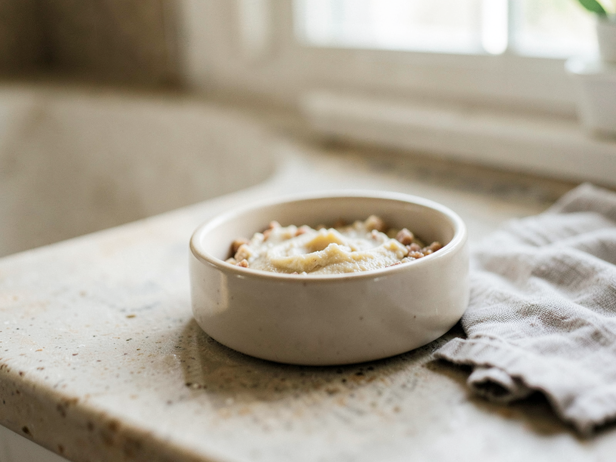
![Morning Meal, Soft Paste]()
Morning Meal, Soft Paste
Image credit : AI
A quiet morning scene with a dog's soft food, awaiting a gentle meal. Professional teeth cleaning for dogs is essential for their health.
What to watch for at home after the procedure
A degree of drooling and grogginess on the day of the procedure is expected. What is not expected: bleeding from the mouth that does not stop within a few minutes, refusal to eat beyond forty-eight hours, swelling on the face or jaw, or a dog that seems to be in significant pain despite any pain relief the vet sent home. These are reasons to call the clinic the same day, not reasons to wait and see. A dog that had extractions may paw at its mouth in the first day; this settles. If it does not, or if the socket area looks dark or has an unusual smell, that warrants a check.
How often scaling is needed and what slows it down
Frequency depends on the dog's breed, diet, and how consistently teeth are brushed at home. Small breeds, particularly Dachshunds, Shih Tzus, Pomeranians, and Chihuahuas, tend to accumulate tartar faster because their teeth are more crowded and the jaw structure leaves less self-cleaning space. Large breeds generally go longer between procedures, though they are not immune. Daily toothbrushing with a dog-specific toothpaste is the single most effective thing an owner can do to extend the interval between professional cleanings. Dental chews and water additives have some supporting evidence but are secondary to mechanical brushing. The vet's post-scaling recommendation on timing, whether that is six months or two years, is based on what they found during the procedure, not a generic schedule. That recommendation is worth following. Periodontal disease that advances to bone loss cannot be reversed; it can only be managed.