Spaying is one of the most routine surgeries a vet performs, but routine for the surgeon is not the same as routine for the cat or the person waiting at home. Knowing what happens at each stage, from the moment your cat is admitted to the day the stitches come out, makes the difference between a calm recovery and a preventable complication.
What happens at the clinic on the day
Your vet will ask you to withhold food from the night before, typically from around 10 pm, because anaesthesia on a full stomach carries a risk of vomiting and aspiration. Water is usually fine until the morning of the procedure; confirm the exact instruction when you book.
At admission, the vet or a technician checks your cat's weight, temperature, and heart rate. A pre-anaesthetic blood panel is sometimes offered, particularly for cats under six months or over five years, to confirm the liver and kidneys can clear the anaesthetic safely. This is worth doing if your vet recommends it.
Anaesthesia is delivered in two stages. An injectable sedative brings the cat down first; then a gas anaesthetic maintains the depth throughout the procedure. A tube placed in the airway keeps the breathing passage open and allows the anaesthetic gas to be controlled precisely. The cat feels nothing from this point.
The surgery itself is an ovariohysterectomy: removal of both ovaries and the uterus through a small incision in the midline of the abdomen. In a healthy young cat the procedure takes roughly twenty to forty-five minutes. Some clinics perform an ovariectomy instead, removing only the ovaries; both approaches are accepted practice. The incision is closed in layers, the muscle wall, the subcutaneous tissue, and the skin, using absorbable sutures internally and either absorbable or non-absorbable sutures at the skin surface. Your vet will tell you which type was used, because it determines whether a stitch-removal appointment is needed.
![Surgical Supplies Ready]()
Surgical Supplies Ready
Image credit : AI
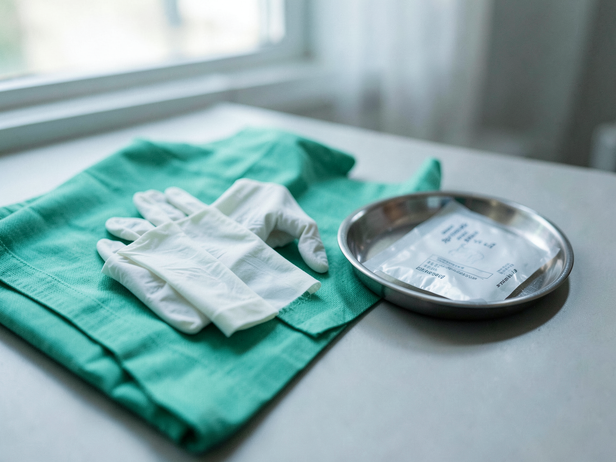
Surgical supplies, including a sealed suture packet, are prepared for a procedure. Essential for cat spaying recovery.
The first hours after surgery
Your cat wakes up in a recovery area at the clinic, monitored until she can hold her head up and her temperature is stable. Most cats go home the same day, four to six hours after surgery. She will be groggy, unsteady on her feet, and possibly vocalising in a way that sounds distressing, this is a normal effect of the anaesthetic wearing off, not pain.
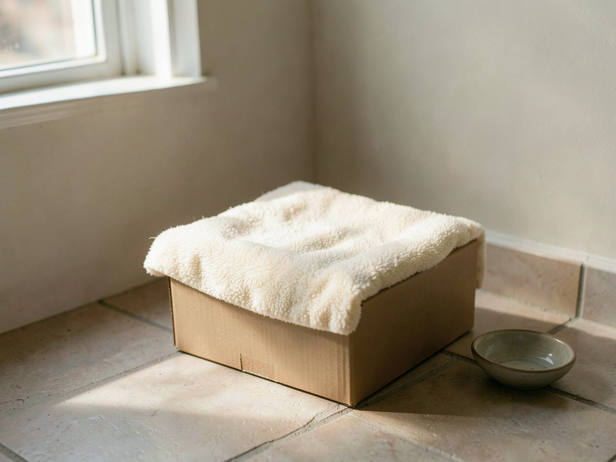
Carry her home in a secure carrier lined with something soft and absorbent. Keep the car warm; body temperature drops under anaesthesia and cats can take several hours to fully thermoregulate. At home, set up a small, quiet recovery space: a low-sided box or a bathroom with the door closed, away from other pets and children. She does not need a bed elevated off the floor, she needs to get in and out without jumping.
Offer a small amount of water when she is alert enough to drink steadily, usually two to three hours after she is home. Offer a quarter of her normal food portion that evening. A full meal on an unsettled stomach can cause vomiting. If she refuses food entirely for the first night, that is normal. If she refuses food into the second day, call the clinic.
Managing the ten-day recovery at home
The incision takes roughly ten to fourteen days to heal at the skin surface, and longer for the deeper layers. The two things that disrupt healing most are licking and jumping.
Licking introduces bacteria and can pull out sutures within minutes. An Elizabethan collar, the cone, is not optional. If your cat is distressed by a hard plastic cone, ask your vet about a soft fabric alternative or an inflatable collar; these work for some cats but not all, and the key test is whether she can still reach the incision. Check that she cannot.
Jumping on and off furniture strains the abdominal wall before the muscle layer has knit. Restrict access to sofas, beds, and windowsills for the full ten days. This is harder than it sounds in a flat with vertical space. Temporarily block favourite launch points with chairs or boxes.
Check the incision once a day in good light. A healing incision looks slightly pink at the edges in the first two or three days, then progressively less so. A small amount of dried blood at the wound edge in the first twenty-four hours is normal. What is not normal: swelling that increases after the first day, discharge that is yellow, green, or foul-smelling, a wound that is open or gaping, or skin that is hot to the touch around the site. Any of these means a same-day call to the clinic, not a wait-and-see.
Pain relief will be sent home with your cat. Give it exactly as prescribed, for the full course, even if she seems comfortable. Do not give any human painkiller, paracetamol is fatal to cats, and ibuprofen and aspirin are toxic to them as well. If the prescribed medication seems insufficient and she is guarding her abdomen, hiding, or refusing to move, call the vet rather than supplementing with anything from your own cabinet.
![Cozy Recovery Box]()
Cozy Recovery Box
Image credit : AI
Preparing for a cat spaying recovery at home. This setup ensures comfort and safety.
What changes permanently after spaying
Spaying eliminates heat cycles, which in an unspayed cat occur roughly every two to three weeks during the breeding season and involve loud vocalising, restlessness, and posturing that most owners find exhausting. It removes the risk of pyometra, a life-threatening uterine infection that is common in older unspayed cats and requires emergency surgery. It also removes the risk of ovarian cancer and substantially reduces the risk of mammary tumours, particularly when done before the first heat.
The one change that requires management is a shift in metabolism. Oestrogen influences how cats regulate appetite and energy use. After spaying, many cats become more food-motivated and gain weight if their intake is not adjusted. This does not happen overnight, and it is not inevitable, it is a reason to monitor body condition from about a month post-surgery and to discuss whether a post-neuter diet makes sense for your cat's build and activity level. Your vet is the right person to make that call based on what they see, not a general rule.
If your cat is still eating normally by day two, moving around the recovery space, and leaving the incision alone, the hardest part is already behind you. The cone comes off, the stitches come out or dissolve, and the cat you brought home is the same cat, just without the biology that was driving the cycles.