Most dog owners in India are told the same thing at the first vaccination visit: get your dog fixed at six months. The advice is well-intentioned and the surgery is safe, but the timing question has grown more complicated over the last decade, and a flat six-month rule no longer reflects what the research says, especially for larger breeds.
What spaying and neutering actually involve
Spaying is the surgical removal of a female dog's ovaries and, in most cases, the uterus. The technical term is ovariohysterectomy. The dog is placed under general anaesthesia, the abdomen is opened, the reproductive organs are located and removed, and the incision is closed in layers. The procedure typically takes thirty to sixty minutes in a healthy animal, though that varies by the dog's size, body condition, and the surgeon's approach. Some vets now perform laparoscopic spays, which use a small camera and smaller incisions; this option is available in metro cities and costs more, but recovery is generally faster.
Neutering a male dog, orchiectomy, is a simpler procedure. Both testes are removed through a small incision in front of the scrotum. It is quicker than a spay, and recovery is typically shorter. The scrotal sac remains; it shrinks over weeks.
Both surgeries eliminate the animal's ability to produce sex hormones: oestrogen and progesterone in females, testosterone in males. That hormonal change is at the centre of the timing debate.
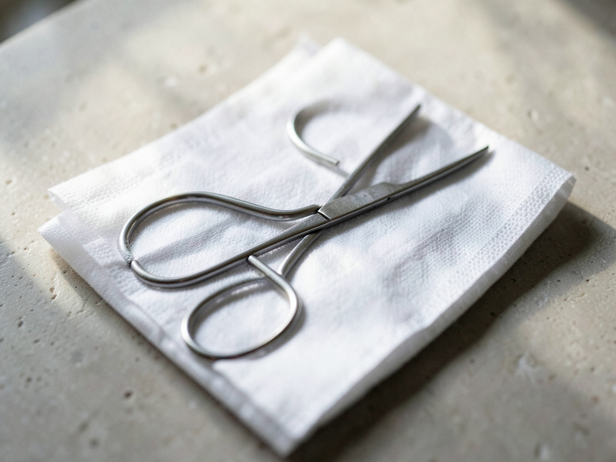
![Surgical Precision on Gauze]()
Surgical Precision on Gauze
Image credit : AI
Surgical tools ready for dog sterilisation surgery. Essential for spaying neutering dogs India.
What the surgery prevents, and what it does not
The benefits that are well established: spaying eliminates the risk of pyometra, a life-threatening uterine infection that is common in intact female dogs, particularly after repeated heat cycles. It also removes the risk of ovarian and uterine cancers, and significantly reduces the risk of mammary tumours, especially when done before the second heat. Neutering eliminates testicular cancer and reduces the risk of benign prostatic hyperplasia, a common problem in older intact males.
Behavioural effects are real but often overstated. Neutering reduces roaming, mounting, and urine-marking in many male dogs, but it does not reliably fix aggression that is already established, and it does not change a dog's fundamental temperament. A nervous dog does not become confident after neutering. An anxious dog does not become calm. Owners expecting a personality overhaul are regularly disappointed.
What the surgery does not prevent: it does not eliminate all cancer risk, and in some large breeds, removing sex hormones early appears to increase the risk of certain joint disorders and some cancers, a finding that has shifted how vets counsel owners on timing.
The timing debate, honestly explained
The six-month recommendation came from shelter medicine, where the priority is preventing reproduction before animals are rehomed. It made sense there. Applied universally to pet dogs, it has been questioned by a growing body of research, particularly out of the University of California, Davis, which looked at joint disorders, cancers, and age at neutering across dozens of breeds.
The short version of what that research found: for small breeds, under roughly ten kilograms as adults, early neutering at six months carries little measurable increase in health risk. For medium and large breeds, the picture is more complicated. Sex hormones influence the closure of growth plates. Dogs neutered before those plates close may develop slightly different joint geometry, and some studies have found higher rates of cranial cruciate ligament rupture and hip dysplasia in early-neutered large-breed dogs compared to those neutered at twelve to eighteen months or later.
The evidence is not settled, and the effect sizes vary by breed. It is not a reason to leave a large-breed dog intact indefinitely. It is a reason to have a specific conversation with your vet about your dog's breed, size, and lifestyle before defaulting to six months.
For female dogs, the mammary tumour argument still carries weight: the protective effect of spaying is strongest before the first heat, and it diminishes with each subsequent cycle. That creates a real tension for large-breed females, the joint-health argument points toward waiting, the mammary tumour argument points toward acting early. There is no universally correct answer, which is exactly why the conversation with a vet matters more than a blanket rule.
![Amber Dropper Still Life]()
Amber Dropper Still Life
Image credit : AI
My still life features an amber dropper bottle, linen, and leaf, evoking a sense of calm. Dog sterilisation surgery is a consideration.
Recovery and what to expect at home
A healthy dog having a routine spay or neuter at a competent clinic will typically go home the same day. The first forty-eight hours are the most important: the dog should be kept calm, confined to a small space, and prevented from licking or chewing the incision. An Elizabethan collar, the cone, is the standard tool for this, and most dogs resist it. Keep it on anyway. A licked incision can become infected within hours.
Sutures are usually removed at ten to fourteen days, though some clinics use absorbable sutures internally and skin glue or absorbable sutures externally that do not need removal. Activity restriction, no running, jumping, or rough play, holds for the full two weeks regardless.
Weight gain after neutering is real and worth managing. Sex hormones influence metabolism; without them, many dogs need slightly less food than before. The adjustment is straightforward: monitor body condition, reduce portions if needed, and keep the dog active. It is not inevitable that a neutered dog becomes overweight. It becomes more likely if the owner does not adjust.
When to call the vet after surgery
Normal post-operative signs include mild swelling at the incision site, some lethargy for the first day or two, and reduced appetite on the day of surgery. Signs that need a vet call: the incision opens, bleeds, or begins to smell; the dog develops a fever or stops eating beyond the first day; the abdomen becomes hard or distended; or the dog is in evident pain that is not improving. A dog that is not weight-bearing on a limb after a neuter, or that is hunched and unresponsive, needs to be seen the same day.