
Can Technology Reduce Pet Separation Anxiety?
Upasna Yadav | Feb 17, 2026, 13:30 IST

Interactive Pet Toys for Anxiety Relief in Pets
Separation anxiety leaves your pet stressed and destructive. When used correctly, this device can serve as an effective tool in a comprehensive strategy to help your pet feel secure and independent. Separation anxiety in pets manifests as uncontrollable distress with symptoms like excessive vocalization, destructive behavior, house soiling, escape attempts and self-injury triggered by being left alone
Highlights
1. Addressing the root cause of separation anxiety is more effective than providing temporary reassurance to pets through interactive pet camera features. Behavior modification strategies include reducing attention-seeking behaviors.
2. Creating a safe environment with soothing elements, exercise and mental stimulation also helps alleviate anxiety, fostering a sense of security in pets when they are alone; additional tips for managing separation anxiety .
3. Many pets find it difficult to cope when left alone, whether from anxiety, boredom or excessive attachment to their owners. While some adjust over time, others display behaviors that signal a more serious issue.
2. Creating a safe environment with soothing elements, exercise and mental stimulation also helps alleviate anxiety, fostering a sense of security in pets when they are alone; additional tips for managing separation anxiety .
3. Many pets find it difficult to cope when left alone, whether from anxiety, boredom or excessive attachment to their owners. While some adjust over time, others display behaviors that signal a more serious issue.
Understanding Separation Anxiety in Pets
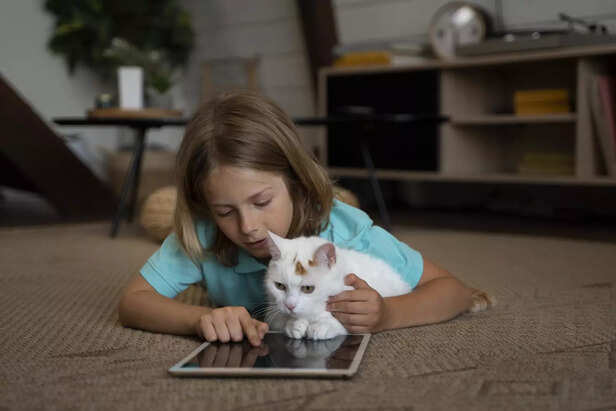
Wearable Technology for Tracking Pet Stress Level
Separation anxiety in pets is a serious condition, comparable to a human panic attack. It’s not a behavior they can control it’s an overwhelming response to fear and stress triggered by being left alone. Unlike boredom or curiosity, separation anxiety manifests as intense emotional distress.
Common signs include:
- Excessive vocalization: Barking, whining, meowing or howling that continues long after you’ve left.
- Destructive behavior: Chewing furniture, scratching doors, clawing at curtains or knocking over objects.
- House soiling: Urinating or defecating indoors despite being house-trained.
- Escape attempts: Scratching at doors or windows, often resulting in injuries.
- Self-injury: Overgrooming, chewing on paws or tails, or creating bald spots from stress.
Distinguishing Separation Anxiety from Other Behaviors
Not all disruptive or destructive behavior is caused by separation anxiety. If your pet occasionally chews on a shoe, digs through the trash or knocks over items while you’re away, it’s more likely boredom or natural exploratory behavior. True separation anxiety is marked by behaviors that occur only when you’re gone and happen consistently whenever you leave. Pets with separation anxiety also display signs of distress before you have even left the house. For example, they may pace, cling to you or vocalize anxiously as you prepare to leave. These behaviors reflect their rising fear and anticipation of being alone. If you’re unsure whether your pet is dealing with separation anxiety, a pet camera can help you assess the situation. Monitoring your pet’s behavior while you’re away can help distinguish between anxiety-driven actions and occasional mischief. This insight is essential for addressing the underlying problem effectively and ensuring your pet feels secure.
Additional Strategies to Manage Separation Anxiety in Pets
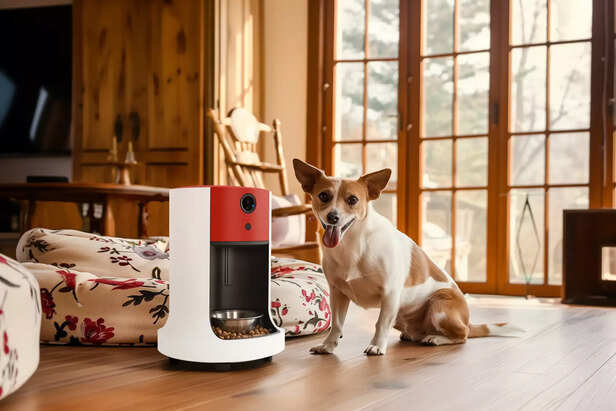
Smart Pet Feeder Supporting Routine and Calm Behavior
Addressing separation anxiety requires a comprehensive approach that includes both environmental adjustments and behavioral training. These strategies, combined with the use of pet cameras, can make a meaningful difference in your pet’s anxiety levels.
Create a safe and comforting environment:
One of the most effective ways to help a pet with separation anxiety is by providing a secure space where they feel at ease. This could be a quiet room or a crate filled with familiar bedding and toys. Adding calming elements like pheromone diffusers or playing soothing music can further reduce stress, making the environment feel safe and predictable.
Establish a consistent routine:
Pets thrive on structure and predictability. Feeding, exercising and interacting with them at the same times each day creates a sense of stability that reduces anxiety. For example, a dog that knows it will be walked and fed before you leave is less likely to feel uncertain or stressed about your absence.
Incorporate regular exercise:
Physical activity is essential for reducing stress and preventing destructive behaviors. A tired pet is generally more relaxed, so taking your dog for a brisk walk or engaging your cat in vigorous play before leaving the house can help them expend excess energy. Exercise also promotes a sense of calm that can last throughout the day.
Celebrate the bond with your pets, explore Health & Nutrition, discover Breeds, master Training Tips, Behavior Decoder, and set out on exciting Travel Tails with Times Pets!
Frequently asked questions (FAQs)
- Can technology really help reduce separation anxiety in pets?
Yes, technology can help reduce separation anxiety in pets by providing stimulation, monitoring, and a sense of connection. Tools like pet cameras, interactive toys, and smart feeders help pets feel less lonely when their owners are away. - Which types of pets benefit most from anxiety-reducing technology?
Dogs benefit the most, especially those with strong attachment to owners. Cats, birds, and even small pets can also benefit from interactive toys, calming sounds, and smart monitoring devices designed for mental stimulation. - What pet tech devices are best for separation anxiety?
Some effective devices include smart pet cameras with two-way audio, interactive treat dispensers, AI-based toys, wearable pet trackers, and automated feeders. These devices reduce boredom and help pets stay engaged.