
Why Cats Follow You Silently Instead of Seeking Attention Directly
Deepak Rajeev | May 11, 2026, 19:21 IST

The “Silent Following” as Controlled Attention Seeking
Image credit : Pexels
This article explains why cats follow humans silently instead of meowing for attention. It explores feline behavior science, emotional bonding, observation habits, and territorial instincts. Cats often use silent following as a form of trust, curiosity, and communication rather than vocal demands. The behavior reflects how cats observe, connect, and stay close to humans in subtle but meaningful ways.
When a cat follows you quietly from room to room, stopping just a few steps away without meowing or demanding attention, it often feels mysterious. Unlike dogs, which openly seek interaction, cats are more subtle, strategic, and emotionally complex in how they communicate. Modern feline behavior science shows that this “silent following” is not distance or indifference, but a layered form of communication shaped by instinct, bonding, and environmental awareness. Researchers studying domestic cat behavior note that cats use a wide range of non-verbal cues such as movement, proximity, posture, and gaze rather than constant vocal requests. In fact, domestication has changed their communication patterns, making them more flexible in how they interact with humans depending on trust and context.
![The “Silent Following” as a Trust-Based Bonding Behavior]() One of the most important reasons cats follow humans silently is emotional security. In feline behavior science, proximity itself is a form of communication. A cat that quietly follows you is often expressing comfort simply by staying close without feeling the need to vocalize. Experts explain that cats use subtle body language such as positioning, distance, and gaze to show emotional states rather than constant sound.
One of the most important reasons cats follow humans silently is emotional security. In feline behavior science, proximity itself is a form of communication. A cat that quietly follows you is often expressing comfort simply by staying close without feeling the need to vocalize. Experts explain that cats use subtle body language such as positioning, distance, and gaze to show emotional states rather than constant sound.
In real-world observations, this is especially visible in multi-room households. A cat may quietly move behind its owner while maintaining a relaxed posture, stopping when the human stops, and resuming movement without meowing. This behavior is commonly reported by cat owners during daily routines like cooking, working, or moving between rooms. It reflects attachment without anxiety or demand. In simple terms, silence here does not mean absence of communication. It means the cat already feels secure enough not to “ask loudly” for reassurance.
![The “Silent Following” as Observation]() Cats are highly observant animals. Their survival instincts are built around watching movement patterns, predicting behavior, and learning routines. Domestic cats carry this same instinct into home environments. Studies show that cats often adjust their behavior based on human activity patterns and can track daily routines over time.
Cats are highly observant animals. Their survival instincts are built around watching movement patterns, predicting behavior, and learning routines. Domestic cats carry this same instinct into home environments. Studies show that cats often adjust their behavior based on human activity patterns and can track daily routines over time.
When your cat follows you silently, it may simply be gathering information. It is watching what you do next, where you go, and whether it involves food, movement, or interaction. Unlike vocal attention-seeking, silent following allows the cat to stay close while remaining undetected as “demanding.” In real-world cases, many owners notice this behavior intensifies around predictable events like feeding time or bedtime routines. The cat does not need to meow because it has already learned the pattern.
3. The “Silent Following” as Controlled Attention Seeking
While cats are often described as independent, they do seek attention, but in a controlled and efficient way. Instead of vocal demands, many cats rely on proximity-based communication. Feline communication research shows that domestic cats primarily use body language, movement, and spatial positioning to express needs such as food, attention, or play. Silent following is often a “low effort, high success” strategy. The cat stays near you, increases visibility, and waits for the right moment when interaction is likely. This is why you may notice your cat quietly following you into the kitchen or bathroom and simply sitting nearby rather than meowing.
In real-world household behavior reports, cats often escalate to vocal cues only if silent proximity fails to get a response. This shows that silence is not a lack of communication, but a first-level strategy.
One of the more fascinating scientific interpretations is that cats may follow humans silently to regulate emotional energy in the environment. Cats are highly sensitive to tone, movement, and emotional changes in their owners. Behavioral studies indicate that cats can detect and respond to human emotional states and adjust their behavior accordingly.
In real-world cases, cats often stay closer to owners who are resting, unwell, or emotionally calm. Instead of seeking attention directly, they simply remain nearby in silence. This is especially noticeable in cats that form strong bonds with one particular human. Unlike dogs, cats often avoid direct emotional disruption. Their silent presence becomes a form of companionship that does not interrupt the human’s space.
Cats are territorial animals, even in domestic environments. Following a human silently can also reflect a shared territory behavior rather than attention-seeking. Feline behavior research shows that cats use proximity, movement patterns, and environmental positioning to establish comfort zones and social structure within their territory. When your cat follows you, it is often moving within what it considers “safe zones” of shared territory. Your presence itself becomes part of its comfort map. Instead of vocalizing, it simply stays within that shared space. Real-world observations support this, especially in indoor cats that follow owners between rooms but rarely vocalize unless separated or stressed.
Final Insight: Silence Is Not Distance in Cat Behavior
Science consistently shows that cats are not less communicative than other pets, just differently expressive. Silent following is a complex blend of trust, observation, emotional regulation, and subtle attention seeking. What feels like quiet companionship is actually a sophisticated communication system. Your cat is not ignoring you or holding back attention. It is simply choosing a quieter, more efficient way to stay connected. In the language of cats, silence is often the loudest form of presence.
Celebrate the bond with your pets, explore Health & Nutrition, discover Breeds, master Training Tips, Behavior Decoder, and set out on exciting Travel Tails with Times Pets!
1. The “Silent Following” as a Trust-Based Bonding Behavior
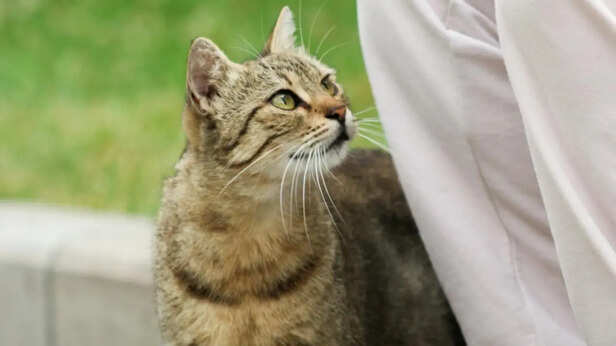
The “Silent Following” as a Trust-Based Bonding Behavior
Image credit : Pexels
In real-world observations, this is especially visible in multi-room households. A cat may quietly move behind its owner while maintaining a relaxed posture, stopping when the human stops, and resuming movement without meowing. This behavior is commonly reported by cat owners during daily routines like cooking, working, or moving between rooms. It reflects attachment without anxiety or demand. In simple terms, silence here does not mean absence of communication. It means the cat already feels secure enough not to “ask loudly” for reassurance.
2. The “Silent Following” as Observation and Routine Tracking
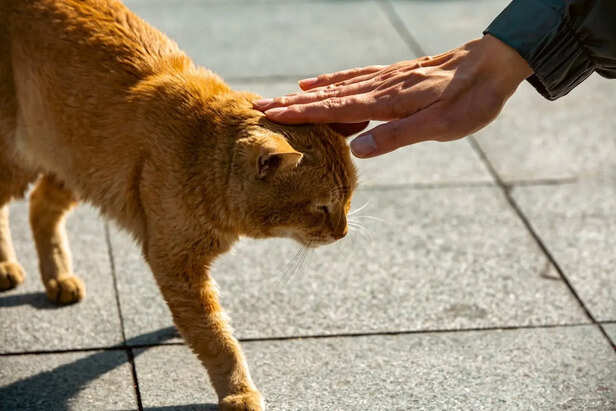
The “Silent Following” as Observation
Image credit : Pexels
When your cat follows you silently, it may simply be gathering information. It is watching what you do next, where you go, and whether it involves food, movement, or interaction. Unlike vocal attention-seeking, silent following allows the cat to stay close while remaining undetected as “demanding.” In real-world cases, many owners notice this behavior intensifies around predictable events like feeding time or bedtime routines. The cat does not need to meow because it has already learned the pattern.
3. The “Silent Following” as Controlled Attention Seeking
While cats are often described as independent, they do seek attention, but in a controlled and efficient way. Instead of vocal demands, many cats rely on proximity-based communication. Feline communication research shows that domestic cats primarily use body language, movement, and spatial positioning to express needs such as food, attention, or play. Silent following is often a “low effort, high success” strategy. The cat stays near you, increases visibility, and waits for the right moment when interaction is likely. This is why you may notice your cat quietly following you into the kitchen or bathroom and simply sitting nearby rather than meowing.
In real-world household behavior reports, cats often escalate to vocal cues only if silent proximity fails to get a response. This shows that silence is not a lack of communication, but a first-level strategy.
4. The “Silent Following” and Emotional Co-Regulation
One of the more fascinating scientific interpretations is that cats may follow humans silently to regulate emotional energy in the environment. Cats are highly sensitive to tone, movement, and emotional changes in their owners. Behavioral studies indicate that cats can detect and respond to human emotional states and adjust their behavior accordingly.
In real-world cases, cats often stay closer to owners who are resting, unwell, or emotionally calm. Instead of seeking attention directly, they simply remain nearby in silence. This is especially noticeable in cats that form strong bonds with one particular human. Unlike dogs, cats often avoid direct emotional disruption. Their silent presence becomes a form of companionship that does not interrupt the human’s space.
5. The “Silent Following” as Safe Territory Sharing
Cats are territorial animals, even in domestic environments. Following a human silently can also reflect a shared territory behavior rather than attention-seeking. Feline behavior research shows that cats use proximity, movement patterns, and environmental positioning to establish comfort zones and social structure within their territory. When your cat follows you, it is often moving within what it considers “safe zones” of shared territory. Your presence itself becomes part of its comfort map. Instead of vocalizing, it simply stays within that shared space. Real-world observations support this, especially in indoor cats that follow owners between rooms but rarely vocalize unless separated or stressed.
Final Insight: Silence Is Not Distance in Cat Behavior
Science consistently shows that cats are not less communicative than other pets, just differently expressive. Silent following is a complex blend of trust, observation, emotional regulation, and subtle attention seeking. What feels like quiet companionship is actually a sophisticated communication system. Your cat is not ignoring you or holding back attention. It is simply choosing a quieter, more efficient way to stay connected. In the language of cats, silence is often the loudest form of presence.
Celebrate the bond with your pets, explore Health & Nutrition, discover Breeds, master Training Tips, Behavior Decoder, and set out on exciting Travel Tails with Times Pets!