A zebra danio will survive the errors that kill most beginner fish. Temperature fluctuates because the heater was set wrong, the cycle was not finished, the water change was too large and too cold, the danio keeps swimming. That tolerance is not an invitation to be careless, but it does mean the fish is honest about what a beginner tank actually looks like in the first few months.
What the fish is and where it comes from
Danio rerio is a small cyprinid native to the streams and rice paddies of South Asia, the Ganges basin, parts of Nepal, Bangladesh, and the northeastern states of India. In the wild it lives in fast-moving, well-oxygenated, relatively shallow water with a lot of horizontal space. The horizontal blue and gold stripes that run the length of its body are what give it the common name. Adults reach about four to five centimetres. The GloFish versions sold in some Indian aquarium shops are genetically modified zebra danios that express fluorescent proteins; the care is identical, but the modification is permanent and heritable, and that is worth knowing before buying.
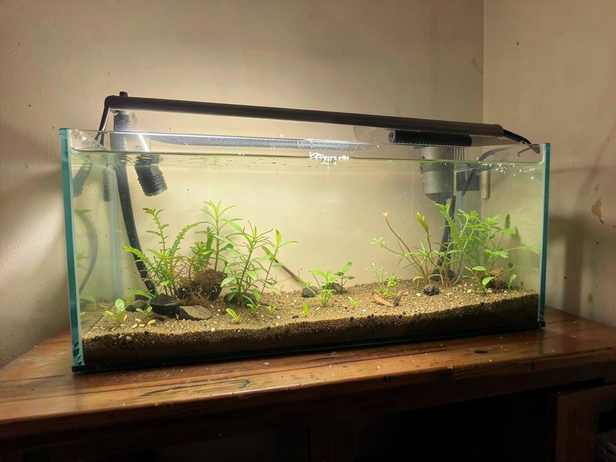
![Simple Beginner Aquarium Setup]()
Simple Beginner Aquarium Setup
Image credit : AI
My new beginner aquarium setup, perfect for hardy fish like zebra danio.
What it needs in a tank
Zebra danios are schooling fish. A single danio is a stressed danio, it will dart erratically, hide, and lose colour. The minimum is six fish of the same species; eight to ten is better and the shoaling behaviour becomes genuinely interesting to watch at that number. The tank should be long rather than tall, because these fish swim in the middle and upper column and cover ground quickly. A 60-litre tank handles a school of eight comfortably. They are jumpers. A lid or a tight cover is not optional.
Water temperature between 18 and 26 degrees Celsius suits them, which means they can run without a heater in most Indian metros through most of the year, though a heater set low is still useful insurance during cold nights in December and January in northern cities. pH between 6.5 and 7.5 is the working range. They are not sensitive to moderate hardness. Weekly water changes of around 25 to 30 percent, matched in temperature to the tank, keep nitrates manageable. Filtration that moves the water and adds surface agitation matters more than the type of filter; these fish come from oxygenated streams.
Feeding
Zebra danios are omnivores and unfussy. A quality flake or micro-pellet as a daily staple covers their nutritional needs. Occasional frozen or live foods, daphnia, baby brine shrimp, bloodworm, improve colour and condition and trigger natural foraging behaviour. Feed once or twice a day in amounts the fish clear in two minutes. Uneaten food that sits and breaks down is the single most common cause of water quality problems in beginner tanks, and danios eat fast enough that overfeeding is the real risk rather than underfeeding.
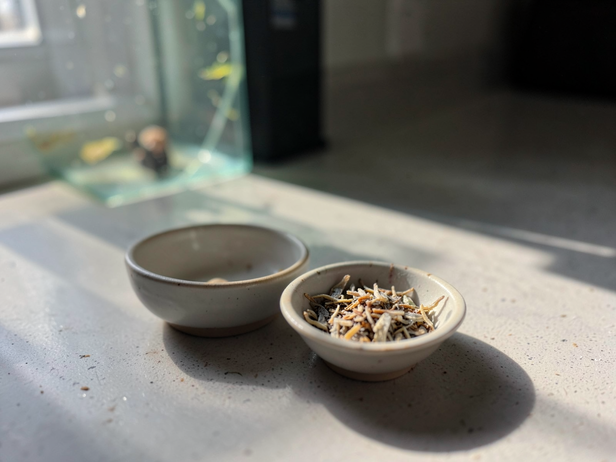
![Morning Fish Food Ritual]()
Morning Fish Food Ritual
Image credit : AI
Preparing a meal for my hardy fish for small tank. The morning light highlights the simple setup.
Tank mates and temperament
Zebra danios are peaceful with fish of a similar size that can handle their energy. Good pairings in an Indian beginner tank include other danio species, small rasboras, corydoras catfish, and platys. Avoid slow, long-finned fish like bettas or fancy guppies, danios are fast and curious and will nip fins they can reach. Avoid anything large enough to eat a four-centimetre fish. The danio's speed means it competes well at feeding time, so slower tank mates may need to be fed separately or at a different part of the tank.
Health and what to watch for
Zebra danios are hardy but not immune. The most common problems in a beginner tank are ich (white spot disease, caused by the parasite Ichthyophthirius multifiliis), fin rot from poor water quality, and swim bladder issues from overfeeding or constipation. Ich shows as small white grains on the body and fins; it spreads quickly in a tank and needs treatment promptly. Fin rot appears as fraying or darkening at the fin edges and is almost always a water quality signal first. A danio that sits at the surface, lists to one side, or stops schooling is telling you something is wrong, check water parameters before assuming disease. If a fish declines despite stable water and no visible infection, a visit to an aquatic vet or a specialist aquarium shop with diagnostic capacity is the right next step.