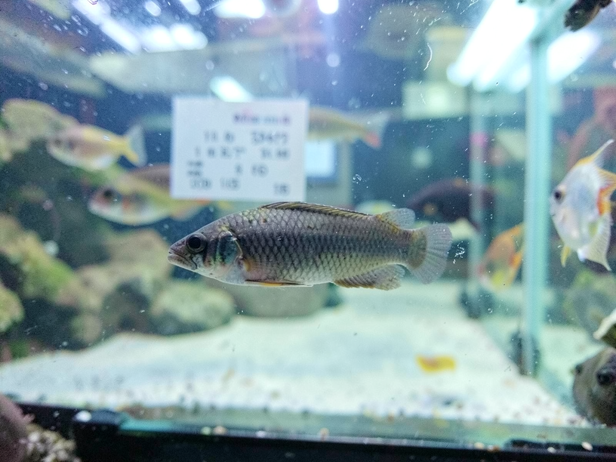
The pleco on the shop shelf is usually five to eight centimetres long, pressed flat against the glass, eating algae quietly. It costs less than a hundred rupees in most Indian fish shops and is sold as a maintenance fish rather than a pet. What the label does not say is that this fish, almost always a common pleco, Hypostomus plecostomus, is a juvenile that will grow to 30 to 45 centimetres given the space and water quality to do it. Most do not reach that size in a home tank, not because they stop growing, but because the tank stops them.
What the common pleco actually is
![Juvenile Pleco on Glass]()
Juvenile Pleco on Glass
Image credit : AI
A juvenile pleco, an algae eater fish for small tanks, pressed against aquarium glass. Subtle grain and shallow depth of field.
The common pleco is a suckermouth armoured catfish from the rivers of South America, specifically the Amazon basin and surrounding river systems. In the wild it grazes on biofilm, decaying wood, and soft algae along riverbeds. It is a large-river fish: the water it comes from is warm, oxygenated, and flows across a wide area. The pet trade began exporting it in large numbers decades ago because it does one visible, useful thing in an aquarium, it eats algae off the glass. That function is real, but it describes what a juvenile pleco does. An adult pleco produces more waste than it removes and needs a tank that most flat-dwellers in Gurgaon or Pune simply cannot accommodate.
How fast it grows, and how big
In good conditions, a tank of 200 litres or more, clean water, regular feeding, a common pleco grows roughly two to three centimetres per month in its first year. By the time it is eighteen months old it is often 20 centimetres. The 45-centimetre ceiling is realistic for a well-kept adult over five to ten years. In a small tank, growth slows but does not stop entirely, and a fish kept in cramped conditions shows it: the spine curves, the belly stays thin, and the fish becomes lethargic. Stunting from a small tank is a welfare problem, not a solution to the size issue.
What it needs to live well
![Driftwood Aquarium Still Life]()
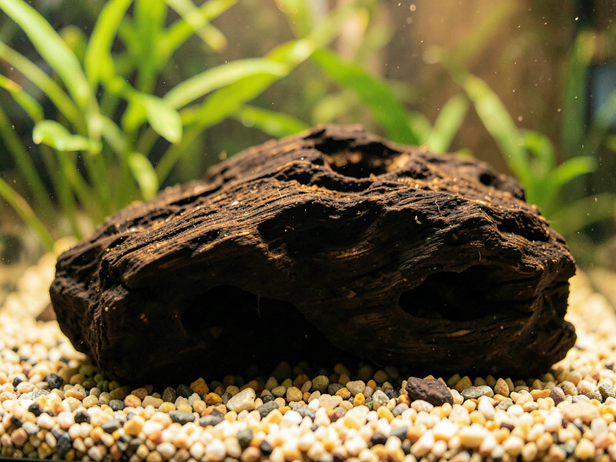
Driftwood Aquarium Still Life
Image credit : AI
Textured driftwood with a cave-like hollow, a natural element in a home aquarium. Essential for pleco fish care.
A juvenile common pleco can be kept in a 100-litre tank temporarily, but an adult needs a minimum of 300 to 400 litres, a tank roughly 150 centimetres long. It is nocturnal, so it needs hiding places: driftwood and caves matter more than open swimming space. It grazes on wood as part of its diet, and a piece of driftwood in the tank is not optional decoration. Algae alone will not feed it past the first few months; adults need supplemental feeding with sinking wafers, blanched vegetables like zucchini or cucumber, and occasional protein. Water temperature between 23 and 28 degrees Celsius suits it, and it needs high oxygenation because it comes from moving water.
Smaller alternatives worth knowing
The pleco family, Loricariidae, has over 150 genera and hundreds of species, and several stay genuinely small. The bristlenose pleco (Ancistrus sp.) reaches 12 to 15 centimetres and does a comparable algae-grazing job in a 100-litre tank. The clown pleco (Panaqolus maccus) stays under 10 centimetres and is a wood-grazing specialist. The rubber-lip pleco (Chaetostoma sp.) reaches 10 to 12 centimetres and handles algae well in cooler water. All three are available in Indian fish markets in larger cities, though they are less common than the Hypostomus and cost more. If the goal is algae control in a 100 to 150-litre community tank, a bristlenose is the correct fish. The common pleco is not.
What to do if you already have one
If a common pleco is already in a tank it will outgrow, the options are honest ones. A larger tank is the right answer if the space and budget exist. Some fish shops and aquarium clubs will take healthy plecos back, particularly if the fish is in good condition, it is worth asking before the fish reaches a size where rehoming becomes difficult. A pleco that has reached 25 centimetres in a 60-litre tank is not thriving; the cramped conditions affect its immune system and increase susceptibility to ich and bacterial infections. Watching for laboured breathing, a clamped dorsal fin, or white patches on the body is the signal that the fish needs either more space or veterinary attention from a vet with fish experience. The common pleco is a long-lived, robust fish when kept correctly. The problem is almost never the fish.