
Why the Harpy Eagle Chick Spotted in Brazil Has the World Holding Its Breath
Anushka Tripathi | Feb 09, 2026, 14:00 IST

Harpy Eagle Chick
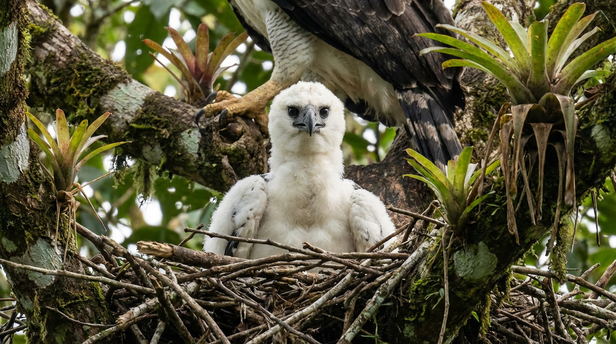
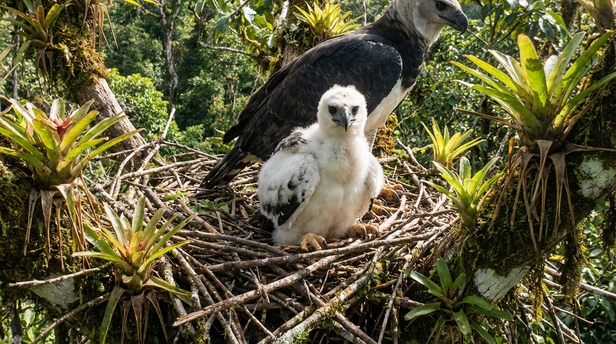
Deep inside Brazil’s rainforests, the rare sighting of a harpy eagle chick has stirred global emotions and renewed hope for one of the world’s most powerful yet threatened birds. This moment is more than a wildlife update. It reflects resilience, the quiet success of conservation efforts, and the fragile future of shrinking forests. As deforestation continues to challenge survival, the presence of this chick reminds us that nature still fights to endure when given protection, patience, and space to breathe.
Deep inside Brazil’s dense rainforests, high above the forest floor where human eyes rarely reach, a moment unfolded that quietly rewrote hope for one of the world’s most powerful yet vulnerable birds. A harpy eagle chick was spotted alive in its nest, clinging to life in a world that has steadily been shrinking for its kind. This was not just another wildlife sighting. It was a reminder that nature, even when pushed to the edge, still tries to survive. For conservationists, bird lovers, and ordinary people scrolling through their screens, this sighting felt deeply emotional. The harpy eagle is not a bird we see often. It is elusive, majestic, and increasingly rare. To witness a chick means more than reproduction. It means resilience. It means the forest still breathes.
Meet The Harpy Eagle, The Silent Guardian Of The Rainforest
The harpy eagle is one of the largest and strongest eagles on Earth. Native to the tropical rainforests of Central and South America, it is instantly recognizable by its crown of feathers, piercing eyes, and massive talons that can rival the grip of a grizzly bear. But beyond its physical power lies a fragile reality. Harpy eagles require vast stretches of untouched forest to survive. They nest high in towering trees and rely on healthy ecosystems to hunt prey like sloths and monkeys. When forests fall, harpy eagles disappear quietly, without noise or protest. Over the years, sightings have become rare, nests have been abandoned, and populations have declined. That is why the presence of a chick in the wild feels almost unbelievable.
Why This Chick Matters More Than We Realize
One chick may seem small in the larger picture of conservation, but for endangered species, every birth carries immense weight. Harpy eagles reproduce slowly. A breeding pair may raise just one chick every few years. This makes each successful nesting event incredibly significant. The survival of this chick suggests that a pair of adult eagles found safety, stability, and enough resources to bring new life into the world. In landscapes increasingly disturbed by human activity, such security is rare. This chick represents continuity. It represents the possibility that the skies above the rainforest may not fall silent just yet.
The Emotional Power Of A Nest High Above The Forest Floor
There is something deeply moving about a nest suspended high in the canopy. Harpy eagles build their nests in the tallest and strongest trees, often returning to the same site year after year. These nests symbolize trust in the forest and faith in its future. The chick, fragile and dependent, relies completely on its parents and the environment around it. One fallen tree or one human intrusion could alter its fate. Seeing the chick alive forces us to confront how delicate wildlife survival truly is.
How Deforestation Pushes Eagles To The Edge
Brazil’s rainforests are among the most biodiverse regions on the planet, yet they are also among the most threatened. Logging, agriculture, mining, and expanding infrastructure continue to break forests into fragments. For harpy eagles, fragmentation is devastating. They need continuous forest cover to hunt and raise their young. When forests shrink, food sources disappear, and nesting sites become unsafe. Many harpy eagles abandon nests when human activity gets too close. Others are killed out of fear or misinformation. This chick exists despite these pressures, not because they are gone.
The Role Of Conservation In Making This Sighting Possible
Harpy Eagle Chick
Moments like this do not happen by chance. They are the result of years of conservation work carried out quietly and patiently. Protected forest zones, monitoring programs, and community education play a crucial role in creating safe spaces for wildlife. Researchers often observe harpy eagle nests from a distance, ensuring minimal disturbance while keeping track of their survival. This chick is a silent reward for decades of effort that rarely makes headlines. It proves that conservation works when given time and commitment.
Why Harpy Eagles Struggle To Coexist With Humans
Unlike smaller birds that adapt to urban life, harpy eagles cannot easily coexist with humans. Their size, hunting needs, and nesting habits demand space and silence. They are also victims of fear. Their powerful appearance has led to myths and misunderstandings, causing some communities to see them as threats. In reality, attacks on humans are extremely rare. This sighting challenges those fears. It reminds us that this fearsome-looking bird is also a parent, carefully protecting a single chick in a dangerous world.
What This Chick Teaches Us About Time And Patience
Harpy eagles raise their young slowly. The chick will remain in the nest for months, learning survival step by step. Even after it leaves the nest, it may depend on its parents for food for more than a year. This slow pace stands in contrast to human life, where speed often defines success. The eagle teaches us that survival depends on patience, stability, and balance. Protecting this chick means protecting a rhythm of life that deserves to continue.
The Internet’s Emotional Response To The Sighting
When news of the chick surfaced, the response was immediate and emotional. People across the world expressed awe, relief, and hope. In a time when environmental news is often filled with loss, this sighting felt like rare good news. That emotional connection matters. When people feel moved, they care. When they care, they are more likely to support conservation efforts. This chick became more than a biological event. It became a shared symbol of hope.
Why Rare Wildlife Moments Go Viral
Wildlife moments like this resonate because they offer hope without denying reality. We know forests are disappearing and species are under threat. Yet seeing life persist reminds us that the story is not finished. Such moments go viral not because they are entertaining, but because they touch something deeply human. The instinct to protect the young and celebrate survival against the odds is universal.
What Happens Next For The Harpy Eagle Chick
The journey ahead remains uncertain. Storms, predators, habitat disturbance, and human activity all pose risks. Survival in the wild is never guaranteed. But for now, the chick lives, grows, and learns. That alone is worth acknowledging. Conservationists will continue to monitor the area carefully, ensuring that the nest remains undisturbed and the surrounding forest is protected.
What We Can Learn From One Small Life
Harpy Eagle
This chick forces us to ask difficult questions. How much forest is enough? How much loss are we willing to accept? What kind of world do we want to leave behind? Protecting wildlife is not only about saving animals. It is about preserving balance, humility, and respect for life beyond ourselves.
Why Hope Needs Protection Too
Hope, like this chick, is fragile. It survives only when nurtured. When forests are ignored, hope fades. When conservation is supported, hope grows. The harpy eagle chick reminds us that hope still exists high above the treetops of Brazil, but it will not survive on hope alone.
A Future Written In Wings
One day, if the forest holds and threats remain distant, this chick may spread its massive wings and soar above the canopy. It may hunt, nest, and raise young of its own. That future depends on choices made today. Choices about forests, wildlife, and responsibility. This sighting is not the end of a story. It is the beginning of one.
Celebrate the bond with your pets, explore Health & Nutrition, discover Breeds, master Training Tips, Behavior Decoder, and set out on exciting Travel Tails with Times Pets!