The cheetah is the fastest land animal alive, but it cannot make the sound most people expect from a large cat. No roar. What it produces instead is a purr, continuous, on both the inhale and the exhale, along with a repertoire of chirps, churrs, and a high yelp that sounds more like a bird than a predator. The reason sits in a small bone at the base of the skull, and it splits the entire cat family into two groups.
The hyoid bone decides everything
Deep at the throat of every cat lies a structure called the hyoid apparatus, a chain of small bones connecting the skull to the larynx. In lions, tigers, leopards, and jaguars, part of this chain is replaced by an elastic ligament. That ligament stretches when the cat forces air through the larynx, allowing the vocal folds to vibrate at a low frequency. The result is a roar that carries for kilometres. In cheetahs, the hyoid is fully ossified, all bone, no elastic segment. The larynx cannot flex the same way. The vocal folds vibrate on both inhale and exhale at a higher frequency, producing a purr rather than a roar. Snow leopards share this fully boned hyoid and also cannot roar, despite their size. Cheetahs and snow leopards sit in a different branch of the family tree than lions and tigers, and their voices mark that split as clearly as their skeletons do.
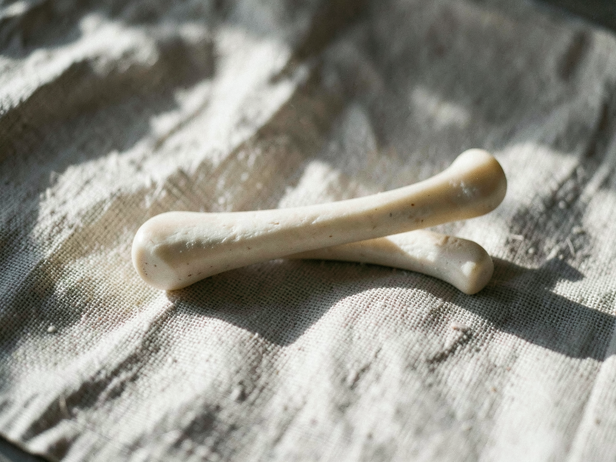
![Bone on Linen]()
Bone on Linen
Image credit : AI
Examining the delicate structure of a bone, a reminder of nature's quiet beauty. Cheetahs purr, but cannot roar.
What cheetahs say instead
Because roaring is off the table, cheetahs have developed a wider call vocabulary than most big cats. The churr is a stutter-like sound used during social contact between individuals who know each other, mothers and cubs, siblings from the same coalition. The chirp is higher and sharper, used to locate other cheetahs across open ground; researchers studying wild cheetahs in East Africa have recorded it carrying over a kilometre in still air. The yelp functions as an alarm. Cubs produce a soft, high trill when their mother returns. None of these sounds require the roar mechanism. They work precisely because the cheetah's larynx is built for fine, rapid modulation rather than raw volume.
Where the cheetah fits in the cat family
The cheetah belongs to the genus Acinonyx, which sits outside the two main cat groupings, the Panthera lineage that includes lions, tigers, leopards, jaguars, and snow leopards, and the Felis lineage that includes domestic cats, wildcats, and most small species. Acinonyx is its own branch, and it is ancient. Fossil evidence places cheetah-like cats in Africa and Asia going back roughly five million years. The modern cheetah, Acinonyx jubatus, is the sole surviving species. Its semi-retractable claws, another trait no other cat shares, and its hyoid structure both point to a body shaped almost entirely around speed and open-ground hunting rather than the ambush and strength strategies of the roaring cats. The purr is not a limitation. It belongs to a different set of solutions.
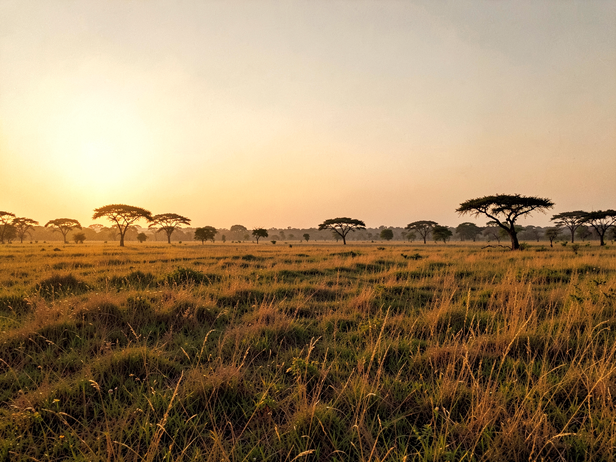
![Savanna Dawn Awakening]()
Savanna Dawn Awakening
Image credit : AI
I observe the vast savanna at dawn, a perfect habitat for animals whose vocal anatomy differs from roaring big cats.
The purr mechanism itself
A purring cat uses the muscles of the larynx to open and close the glottis, the gap between the vocal folds, rapidly and rhythmically during normal breathing. In domestic cats this happens at roughly 25 to 150 times per second, producing the familiar vibration on both the in-breath and the out-breath. Cheetahs purr the same way, at a similar frequency range, for the same reason: continuous airflow, continuous sound. Roaring cats cannot do this. Their elastic hyoid means the larynx is less stable at rest; they produce sound only on the exhale and at much lower frequencies. The trade is direct. An elastic hyoid gives you a roar. A rigid hyoid gives you a purr. A cheetah got the purr, along with everything else that made it the animal it is.