A Shiba Inu will find the gap in your balcony grill, the unsecured latch on the front door, and the moment your back is turned, often in that order. This is not a training failure. It is a breed doing exactly what centuries of selection built it to do.
What the Shiba was bred for
The Shiba Inu is Japan's smallest and oldest native spitz breed, developed in the mountainous Chubu region to flush small game through dense brush. The name is contested, it may mean brushwood dog, small dog, or both, but the function is clear: a compact, agile hunter working largely on its own initiative, far ahead of any hunter, making fast decisions without instruction.
That independent decision-making is not a personality quirk. It is the core of the breed. A dog that waited for commands in thick mountain scrub would have been useless. The Shiba learned to read a landscape, assess a situation, and act. That capacity did not disappear when the breed moved into apartments.
![Shiba Inu waits patiently]()
Shiba Inu waits patiently
Image credit : AI
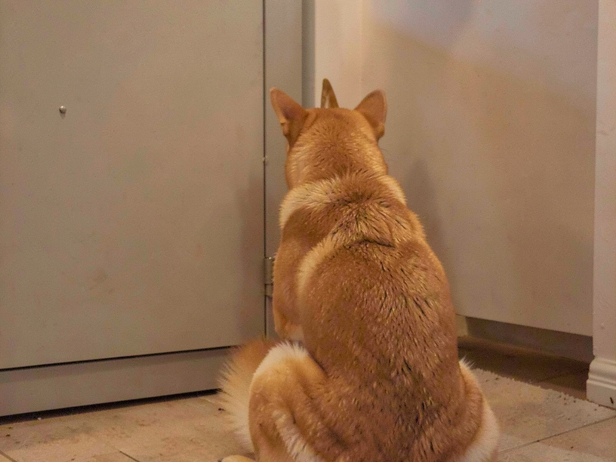
This alert Shiba Inu, a Japanese dog breed, waits patiently by the door. Its pricked ears suggest a keen awareness of its surroundings.
How independence shows up in a flat
Shiba owners use the word stubborn, but the more accurate word is self-directed. The Shiba is not being difficult. It is running its own cost-benefit calculation, and the result does not always include you.
This matters for training. A Labrador wants to please and will repeat a behaviour because it made you happy. A Shiba will repeat a behaviour because it worked for the Shiba. Positive reinforcement still works, the Shiba is not untrainable, but the reward must be genuinely worth it from the dog's point of view, and the Shiba's point of view is specific. High-value food, delivered the instant the correct behaviour happens, is the foundation. Praise alone rarely moves the needle.
In a flat, the independence shows up as selective recall. A Shiba may come when called in a quiet corridor and completely ignore the same command when a squirrel is in the sightline. This is not defiance. The prey drive, the same drive that made it an effective hunter, simply outranks the recall command in that moment. Owners who understand this plan for it rather than being surprised by it.
The escape problem, specifically
Shiba Inus are escape artists in a technical sense. They are small enough to fit through gaps that larger dogs cannot, agile enough to scale surfaces that would stop a heavier breed, and motivated enough to problem-solve a barrier rather than accept it.
Common escape routes in Indian homes: balcony grills with vertical bars spaced for human children rather than a 10-kg dog, front doors opened briefly for a delivery, lift lobbies where the dog slips out while the owner manages bags, and terrace access left unsecured. The Shiba does not need a large opening. It needs one moment of inattention and one gap it has already assessed.
The practical response is environmental, not just behavioural. Check every grill, gate, and latch before the dog arrives home, not after. A double-door system at the flat entrance, a small vestibule or a baby gate set back from the main door, gives a second line of containment when the front door opens. On walks, a correctly fitted harness with a back clip is more secure than a collar; Shiba Inus are known to back out of collars, a manoeuvre they appear to have practised. A martingale collar as a backup on the same walk is a reasonable precaution.
A Shiba off-lead in an unfenced space is a Shiba at risk. Recall in a high-distraction environment takes months of consistent work to become reliable, and even a well-trained Shiba may override it when prey drive activates. Fenced parks exist in some Indian cities; they are worth finding.
![Dog Harness and Collar]()
Dog Harness and Collar
Image credit : AI
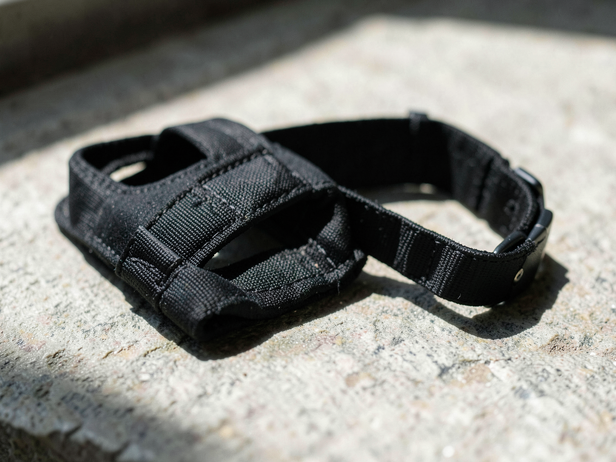
Essential gear for your Shiba Inu in India. This harness and collar ensure safety and comfort.
Health predispositions worth knowing
The Shiba is a generally hardy breed with a lifespan typically in the range of 12 to 15 years. There are predispositions a prospective owner should know before committing.
Allergies, environmental and food-related, appear at higher rates in the breed than in many others. Chronic itching, recurring ear infections, and paw licking are the common presentations. A vet familiar with canine dermatology is useful here; the management is long-term, not a single fix.
Patellar luxation, where the kneecap slips out of position, is seen in the breed. A dog that occasionally skips a step or holds a hind leg up briefly for a few strides warrants a vet check. Hip dysplasia occurs but at lower rates than in larger breeds. Glaucoma is a known predisposition; any sudden eye redness, cloudiness, or apparent pain is a reason to reach a vet the same day, not the next.
The Shiba's double coat sheds moderately year-round and heavily twice a year. In an Indian flat without regular brushing, that coat becomes a management problem quickly. The coat is self-cleaning to a degree, the Shiba grooms itself with cat-like attention, but it does not eliminate the need for weekly brushing and occasional bathing.
What the Shiba needs in an Indian flat, honestly
The Shiba is not a beginner's dog, and it is not a dog that thrives on being left alone for long stretches. It is not destructive in the way a bored Labrador is, but an under-stimulated Shiba finds its own entertainment, and that entertainment often involves the gap in the balcony grill.
Two solid walks a day, with genuine sniff time rather than a quick circuit of the building, address a significant portion of the stimulation need. Mental engagement, food puzzles, scent games, short training sessions that the Shiba finds rewarding, handles the rest. The breed is not high-energy in the way a Border Collie is, but it is alert and curious, and that alertness needs somewhere to go.
Socialisation started early and maintained consistently produces a Shiba that is manageable around other dogs and neutral with strangers. A Shiba that missed early socialisation can be reactive and difficult to manage in the lift, the lobby, and the park, all unavoidable in flat life. This is not a dealbreaker, but it is a project, and it is better handled with a qualified trainer than alone.
The Shiba suits an owner who finds the independence interesting rather than frustrating, who is willing to engineer the environment as carefully as they train the dog, and who understands that a Shiba's cooperation is given, not assumed. That combination produces a dog that is genuinely loyal, low-drama indoors, and companionable in a way that is quieter and less performative than many breeds, which, for the right owner in the right flat, is exactly what they wanted.