The puppy fit in your palm at eight weeks. By eight months, it needed its own corner of the bedroom. If you have ever adopted an Indie mixed-breed and watched it grow into a dog that looked nothing like the puppy you carried home, you are not imagining things, and you are not alone.
Why Indie mixed-breeds are genetically unpredictable
Most Indie dogs carry ancestry from multiple generations of free-ranging dogs that were never selectively bred for a fixed size or type. Unlike a purebred Labrador or a Beagle, where breeders have spent decades fixing traits by pairing dogs with the same genes, a street-born Indie puppy may carry size-related genes from four, five, or more distinct ancestral lines. Each parent contributes one copy of each gene, but which copy gets passed on is largely random. Size in dogs is polygenic, meaning it is controlled by many genes acting together, not one switch. When those genes come from a genetically mixed pool, the combinations that show up in a litter can vary enormously, and the puppy's appearance at eight weeks reflects only the genes that happened to be expressed early in development, not the full hand it was dealt.
![Puppy Paws on Stone]()
Puppy Paws on Stone
Image credit : AI
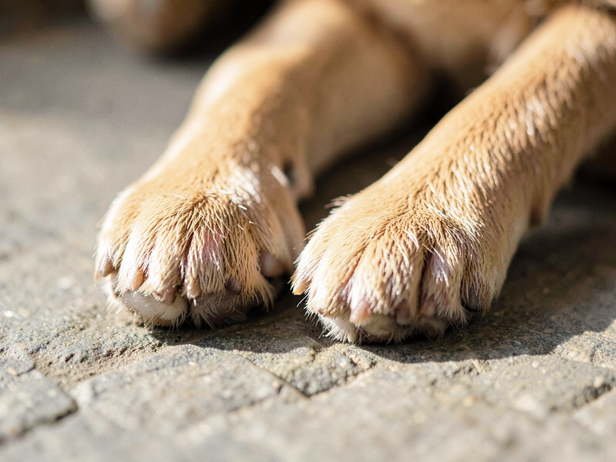
These large paws hint at the future size of an Indie mixed breed puppy. Estimating adult weight can be tricky!
What puppy size actually predicts, and what it does not
Paw size is the most common shortcut people use, and it is the least reliable one. Large paws on a puppy do suggest bones that still have growing to do, but they say nothing about how much growing. A puppy with large paws and a compact body may finish at 18 kg. Another with similarly large paws and a leaner frame may reach 30 kg. The relationship between paw size and adult weight is loose even in purebreds, and in a mixed-breed it is close to meaningless as a precise predictor. Coat type at eight weeks is similarly unreliable. A puppy born with a short, smooth coat may develop a denser, slightly longer adult coat once the juvenile coat sheds, particularly if one parent carried a longer-coat gene that was not yet expressed. The reverse happens too: a slightly fluffy puppy can shed out to a sleek adult.
What you can actually go by
The most useful early signal is the mother's size, if you have seen her. Because the mother's size is known, not estimated, it sets a real lower bound, your puppy is unlikely to finish significantly smaller than her. The father is usually unknown in street litters, which is precisely why the upper end stays open. Beyond the mother, body weight at 8 weeks is a better predictor than visual appearance. A rough field rule used by many vets is that a puppy's weight at 8 weeks, multiplied by four, gives a rough adult weight estimate for medium-sized mixed-breeds. It is a starting point, not a promise, and it works less reliably at the extremes. Growth plates, the soft cartilage zones at the ends of long bones where growth happens, close at different ages depending on the dog's eventual size. Smaller dogs typically finish growing by 10 to 12 months. Medium dogs by 12 to 15 months. Larger dogs may still be filling out at 18 months. If your Indie puppy is still gaining height and length past 12 months, it is telling you something about its ancestry that its eight-week appearance did not.
![Urban Park Dog Portrait]()
Urban Park Dog Portrait
Image credit : AI
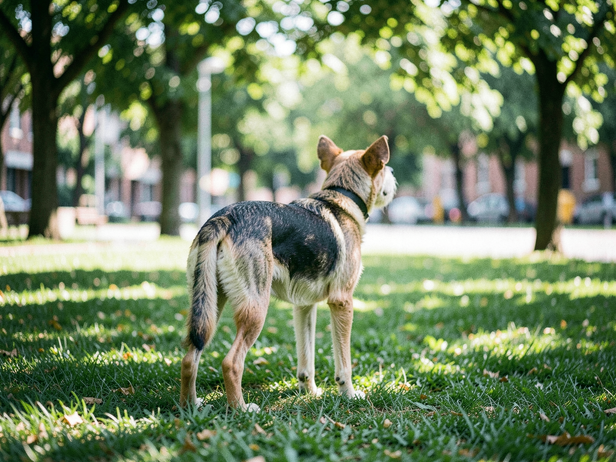
My Indie dog enjoys the morning light in the park. Estimating my mixed breed puppy size is a common concern for owners.
Why this matters beyond curiosity
Knowing your dog's likely adult size has practical consequences. Nutrition requirements change with size, a dog heading toward 30 kg needs a different feeding plan than one finishing at 12 kg, and overfeeding a puppy that will be large can stress developing joints. Space, exercise load, and even harness sizing all depend on a reasonable size estimate. For Indie mixed-breeds, the honest answer is often a range rather than a number, and a range is enough to plan around. Your vet can track growth curves across the first year and give you a progressively narrowing estimate as the puppy develops. That is more reliable than any puppy photograph.
Indie mixed-breeds are among the most genetically diverse dogs in the world, which is part of what makes them resilient and healthy, and part of what makes them impossible to predict from a single snapshot. The puppy you adopted is not a puzzle to solve at eight weeks. It is an animal that will tell you what it is, steadily, over its first year.