Poodles are one of the few breeds that come in three officially recognised sizes, each with its own weight range, energy profile and health tendencies. The size you pick shapes your daily routine more than almost any other choice you make about the breed.
Where the sizes come from
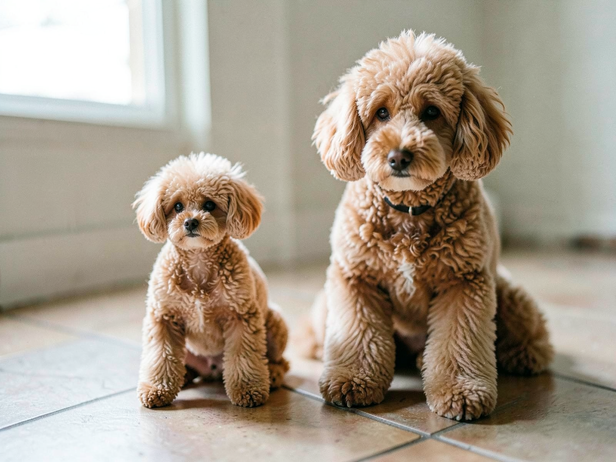
![Poodle Companionship: Size Contrast]()
Poodle Companionship: Size Contrast
Image credit : AI
Exploring poodle sizes: a charming toy poodle beside its larger standard counterpart. Ideal for Indian flats, understanding breed differences is key.
The standard poodle is the original. Bred in Germany and refined in France as a working water retriever, it was trained to fetch waterfowl in cold lakes and rivers. The curly coat was not decorative, it protected joints from icy water while the trimmed sections reduced drag. The miniature poodle was developed as a truffle-hunting dog in forests, small enough to work between tree roots. The toy poodle came last, bred down further as a companion animal for European nobility. All three sizes share the same intelligence and trainability because they share the same working origin. The breed was built to solve problems, and that has not been diluted across size.
Size, weight and what that means in a flat
A toy poodle stands under 25 cm at the shoulder and typically weighs between 2 and 4 kg. A miniature poodle stands between 28 and 38 cm and weighs roughly 5 to 9 kg. A standard poodle stands 45 cm or taller and can weigh anywhere from 20 to 32 kg. In a two-bedroom flat in Pune or Delhi, a toy or miniature poodle needs significantly less floor space to feel settled. A standard poodle can live in a flat, but it needs at least one long walk and one genuine run every day, not a ten-minute loop around the building. Without that outlet, a standard poodle in a small space becomes restless and vocal.
Coat, grooming and the real cost of ownership
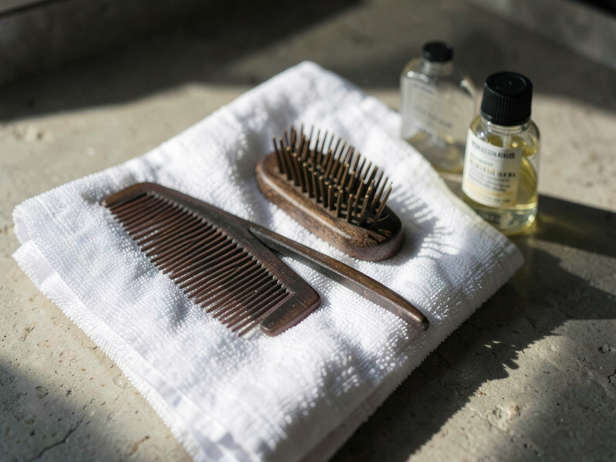
![Grooming Essentials Still Life]()
Grooming Essentials Still Life
Image credit : AI
Essential grooming tools for your poodle. Discover poodle sizes in India and their care needs.
All three sizes carry the same dense, curly, low-shedding coat that makes poodles popular with people who have allergies, though no dog is truly hypoallergenic. What the coat does not do is maintain itself. A poodle in full coat needs brushing every two to three days to prevent matting, and professional grooming every six to eight weeks. This is not optional. A neglected poodle coat mats down to the skin and causes pain and skin problems. In India, where humidity accelerates matting, the grooming calendar is non-negotiable. Factor the grooming cost into your monthly budget before you commit to any poodle size.
Health predispositions by size
Toy and miniature poodles share a predisposition to dental crowding, small jaws, full complement of adult teeth, and nowhere for them to sit cleanly. This makes dental hygiene critical from puppyhood, not optional. Toy poodles are also prone to luxating patella, where the kneecap slips out of position, and to progressive retinal atrophy, a degenerative eye condition. Miniature poodles carry similar risks. Standard poodles have their own set: bloat, formally called gastric dilatation-volvulus, is a serious and potentially fatal condition in deep-chested large breeds, and the standard poodle sits in that risk group. Hip dysplasia and sebaceous adenitis, a skin condition that damages hair follicles, are also seen in the breed. These are predispositions, not certainties. A well-bred poodle from health-tested parents has meaningfully lower risk, which is why the source of your puppy matters.
Temperament and what to expect day to day
All three sizes are highly intelligent, emotionally sensitive and prone to boredom if under-stimulated. A poodle that is not given enough mental engagement, training sessions, puzzle feeders, new experiences, will find its own entertainment, and that entertainment is rarely what you had in mind. Toy poodles can be more anxious and reactive than the larger sizes, partly because of how they were bred down and partly because small dogs are often over-protected by their owners, which reinforces nervous behaviour rather than reducing it. Miniature poodles tend to sit in a middle ground: active, sociable and adaptable. Standard poodles are often described as the most even-tempered of the three, calmer with strangers and steadier in unpredictable environments. All three sizes bond closely with their household and do not do well with long hours alone. The breed is a poor fit for a home where the dog will be left by itself for most of the working day without any enrichment.
The three poodle sizes are the same breed wearing different proportions, but the proportions change enough to make each one genuinely better suited to a different kind of household. The toy fits a quieter, smaller home with someone who has time for daily handling and is prepared for the dental and joint work. The miniature suits an active flat-dweller who wants a sociable, adaptable companion. The standard rewards a family or individual who can give it space, exercise and consistent training, and who is ready for the grooming and the vet bills that come with a large, long-lived dog.