A single female guppy can produce a new batch of fry every four weeks, and she can do it without a male present in the tank. If you brought home three guppies and now have thirty, nothing went wrong with your setup. The fish did exactly what guppies do.
Why guppies reproduce so quickly
Guppies are livebearers, which means the female carries fertilised eggs inside her body and gives birth to free-swimming young rather than scattering eggs across the substrate. Each birth produces between ten and sixty fry depending on the female's age and size. The interval between births is short because gestation runs roughly four weeks at typical tropical tank temperatures of 24 to 26 degrees Celsius.
The detail that surprises most beginners is sperm storage. A female guppy can store sperm from a single mating for several months and use it to fertilise multiple successive batches of eggs. This means a female bought from a pet shop, even one kept alone after purchase, will very likely give birth. She mated before you got her, and she is carrying the evidence.
![Submerged Aquatic Moss]()
Submerged Aquatic Moss
Image credit : AI
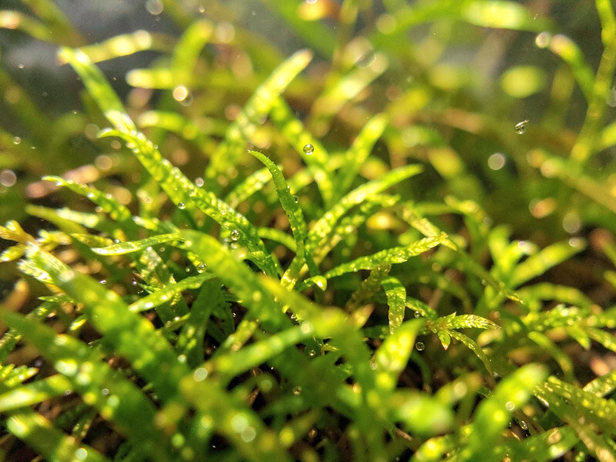
I observe delicate java moss, its fine leaves adorned with tiny air bubbles, bathed in soft aquarium light. This scene reminds me of the peaceful underwater world, a perfect backdrop for livebearers fish care beginners.
What happens inside a community tank
In a mixed tank with males and females together, breeding is continuous. Males are persistent courters and will attempt to mate dozens of times a day. Females under constant pursuit show stress signs: clamped fins, hiding near the bottom or behind plants, reduced feeding. A tank stocked at a ratio of one male to two or three females distributes the attention and reduces pressure on any individual female.
Fry survival in a community tank is naturally low. Adult guppies, including the mother, will eat newborns. Dense planting with fine-leaved species like java moss or hornwort gives fry hiding cover and raises survival rates without any intervention from you. If you want most fry to survive, you need a separate grow-out container. If you are content with a stable population rather than maximum output, heavy planting and a mixed community of fish that treat fry as food does the work for you.
Practical ways to manage population
The most straightforward control is sex ratio. Keeping only males produces a colourful, active tank with no reproduction at all. Males are typically more vividly coloured than females and are sold readily at pet shops. A male-only tank still needs the same water quality and space as any other guppy setup, but the population stays exactly where you put it.
If you want a mixed tank, separating males and females into different tanks or tank sections stops unplanned breeding entirely. A simple tank divider works for this. For owners who enjoy the breeding cycle but do not want numbers to spiral, removing fry to a separate container and rehoming them through a local aquarium club or a pet shop is a reliable rhythm. Many shops accept healthy juvenile guppies, particularly selectively bred colour strains.
Overfeeding accelerates growth and breeding frequency. Feeding once a day, with only what the fish consume in two to three minutes, keeps fish healthy without pushing the tank toward its carrying capacity faster than you can manage.
![Simple Aquarium Setup]()
Simple Aquarium Setup
Image credit : AI
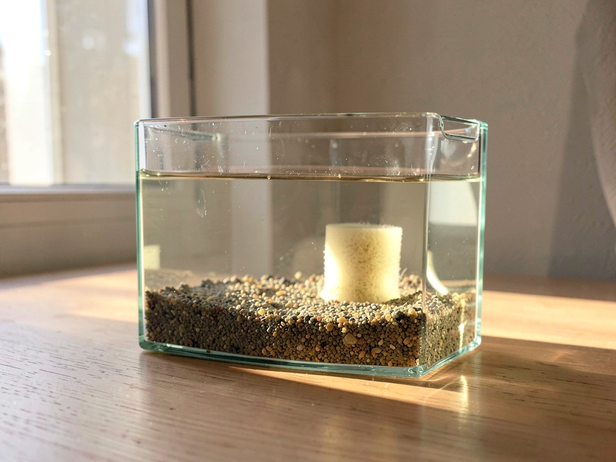
My simple aquarium setup, perfect for beginners learning about guppy fish care.
Tank size and water quality as the real limit
Guppies are small, reaching two to six centimetres depending on sex and strain, and they tolerate a range of water conditions better than most tropical fish. This adaptability is part of why they became a beginner staple. But a small tank with a large population degrades quickly. Ammonia from fish waste accumulates faster than the biological filter can process it, and the first sign is usually fish hanging at the surface gasping, or a sudden loss of several fish at once.
A reasonable starting point is ten litres of water per adult guppy, though a larger tank with an established nitrogen cycle gives you more margin when the population grows faster than expected. Weekly partial water changes of around twenty to thirty percent of the tank volume are more effective than infrequent large changes and keep parameters stable without stressing the fish.
If fish begin clamping their fins, sitting at the bottom, or showing white patches or fraying on their tails, test the water before assuming disease. Poor water quality produces symptoms that look like illness and resolves with a water change and a reduction in stocking density. A basic liquid test kit measuring ammonia, nitrite, nitrate and pH is worth having before you notice a problem, not after.
Guppies reward a little planning at the start. Decide whether you want a display tank, a breeding project, or something in between, and set the sex ratio accordingly. The fish will do the rest.