A Tibetan Mastiff puppy costs more than most Indians spend on a car. Breeders in metro cities have sold them for anywhere between two and fifteen lakh rupees, and the price has driven a certain prestige around the breed. The dog behind the price tag is a different conversation entirely.
What this dog was actually built to do
Tibetan Mastiffs were developed over centuries on the Tibetan plateau and in the Himalayan foothills, where they guarded nomadic camps and monastery grounds against wolves, leopards, and bears. The job required a dog that could work alone through the night, make independent decisions without human direction, and be deeply suspicious of anything unfamiliar. That is not a personality trait that fades in a few generations of selective breeding for appearance. It is the core of the dog.
The breed is classified by the Fédération Cynologique Internationale under Group 2 as a molossoid mountain-type dog. Males typically weigh between 45 and 73 kilograms and stand 66 centimetres or more at the shoulder. The double coat is dense and heavy, built for temperatures that regularly drop well below freezing.
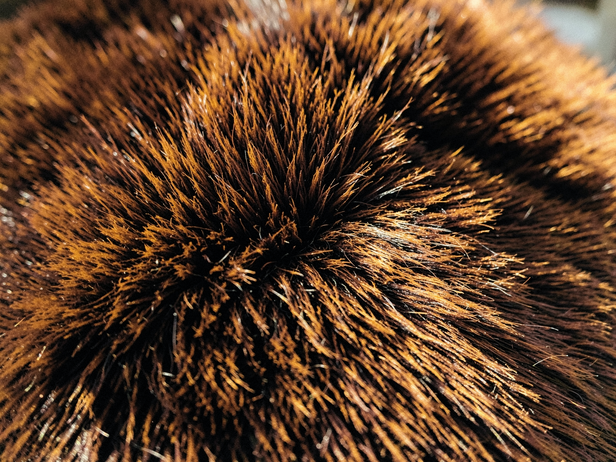
![Amber and Black Fur Macro]()
Amber and Black Fur Macro
Image credit : AI
Close-up of a Tibetan Mastiff's rich amber and black fur, showcasing its dense texture in soft morning light. Ideal for Indian climate.
The climate problem is not a minor inconvenience
Most of India sits between 25 and 45 degrees Celsius for a significant part of the year. The Tibetan Mastiff's coat is not decorative, it is a thermal regulation system designed for an entirely different climate. In sustained heat, these dogs are at real risk of heat exhaustion. Owners who keep them in air-conditioned rooms around the clock are managing a physiological mismatch, not solving it. A dog that cannot spend time outdoors without medical risk is a dog whose basic quality of life is compromised.
The Himalayan foothills and parts of Himachal Pradesh and Uttarakhand are the only regions of India where the climate approaches something tolerable for this breed without constant intervention. Everywhere else, Chennai, Mumbai, Hyderabad, Kolkata, most of the Deccan plateau, the heat load is a chronic welfare concern.
Space, exercise, and what independence actually means in a flat
A dog bred to patrol several kilometres of mountain terrain overnight does not decompress in a two-bedroom flat. Tibetan Mastiffs are not high-energy in the way a Border Collie is; they do not need two hours of running. But they need space to move, space to be alone, and the ability to patrol a defined territory. A flat denies all three.
The independence that made this breed effective as a livestock guardian translates, in a home setting, to a dog that does not naturally defer to its owner, is slow to respond to commands it has not internalised over months of consistent work, and can be territorial with strangers in ways that are difficult to manage in a building with shared lifts, corridors, and security staff. This is not stubbornness in the way the word is used loosely. It is a dog operating exactly as its genetics intended.
First-time dog owners, or owners whose previous experience is with retrievers, spaniels, or even German Shepherds, often find the Tibetan Mastiff's response to training genuinely disorienting. The dog is intelligent. It simply does not prioritise human approval the way breeds selected for cooperative work do.
![Dog Bowl and Health Record]()
Dog Bowl and Health Record
Image credit : AI
I've arranged a large dog bowl and a veterinary health record, showcasing the care for a Tibetan Mastiff in India.
Health predispositions worth knowing before you buy
The breed carries known predispositions to hip and elbow dysplasia, hypothyroidism, and a hereditary condition called canine inherited demyelinative neuropathy, which affects the nervous system and has been documented in Tibetan Mastiff lines. Eye conditions including entropion have also been reported. None of these are certainties, but they are patterns seen often enough that prospective owners should ask breeders for health screening documentation on both parents, and understand that in India, the quality of health screening in Tibetan Mastiff breeding operations varies considerably.
Veterinary costs for a dog of this size are higher than for medium breeds across every category: anaesthesia dosing, surgical equipment, medication quantities, and specialist referrals. A dog with a chronic condition like hypothyroidism requires lifelong management. If a dog this size develops a serious orthopaedic problem, treatment is expensive and recovery is slow.
What responsible ownership would actually require
A Tibetan Mastiff in India needs a large, walled property, not a flat, not a small house with a token garden. It needs a climate that does not push it into heat stress for six months of the year, or an air-conditioning arrangement that accounts for the dog's need to move freely. It needs an owner with prior experience managing large, independent-minded dogs, and ideally access to a trainer with specific experience in the breed. It needs socialisation begun before twelve weeks and continued consistently, because a poorly socialised Tibetan Mastiff that weighs sixty kilograms is a serious safety concern for visitors, delivery workers, and anyone else who enters the home.
None of this is impossible. It is simply rare. The combination of the right climate, the right property, the right experience, and the sustained commitment the breed requires exists in a small fraction of Indian households. The price of the puppy is the smallest cost in the equation. If the prestige of the breed is the main draw, that is worth sitting with honestly, because the dog will be living the consequences of that decision for the next ten to fourteen years.