
The Animal That Can "Disappear" in Front of You, Science Says
Deepak Rajeev | May 08, 2026, 18:17 IST

Nature's camouflage skills (Image Credit: AI)
This article explains how certain animals appear to disappear right in front of human eyes. It explores the science of camouflage, stillness behavior, environmental blending, and human perception limits. Together, these factors create the illusion of invisibility in nature. The article reveals how evolution has perfected survival strategies that make animals nearly impossible to detect even when they are visible.
In nature, some moments feel almost unreal. An animal is right there in front of you one second, and then it seems to vanish the next. No dramatic movement, no obvious escape, just sudden absence. This illusion of “disappearing” has fascinated scientists, wildlife photographers, and observers for decades. While it may feel like something mysterious is happening, the explanation lies in one of nature’s most powerful survival tools: camouflage, perception control, and environmental blending. What appears like disappearance is actually a perfect combination of biology and physics working together to make an animal nearly impossible to detect.
![Stick insect camouflaging on a branch]() Many animals have evolved extraordinary camouflage abilities that allow them to blend seamlessly into their surroundings. This is not just about color matching. It involves texture, shape disruption, shadow control, and even movement reduction. Species like stick insects, leaf-tailed geckos, and certain moths can align their bodies so closely with branches, bark, or leaves that the human brain stops recognizing them as separate objects. Instead, they become part of the background. This is why an animal may seem to “disappear” even when it is standing still in plain sight. The human visual system is designed to detect contrast and movement. When both are minimized, the brain often fails to register the presence of the animal entirely.
Many animals have evolved extraordinary camouflage abilities that allow them to blend seamlessly into their surroundings. This is not just about color matching. It involves texture, shape disruption, shadow control, and even movement reduction. Species like stick insects, leaf-tailed geckos, and certain moths can align their bodies so closely with branches, bark, or leaves that the human brain stops recognizing them as separate objects. Instead, they become part of the background. This is why an animal may seem to “disappear” even when it is standing still in plain sight. The human visual system is designed to detect contrast and movement. When both are minimized, the brain often fails to register the presence of the animal entirely.
![Stick Insect]() One of the most powerful techniques used by animals is not movement, but the absence of it. Remaining completely still is often more effective than running or hiding. Many predators rely on motion detection to identify prey, so when an animal freezes, it essentially removes itself from the predator’s sensory radar. Research in behavioral ecology shows that freeze behavior is a deeply embedded survival response across multiple species. When combined with camouflage, this stillness creates the illusion of disappearance. The animal is physically present, but functionally invisible to the observer. This explains why many people later “lose sight” of an animal they were just watching moments before.
One of the most powerful techniques used by animals is not movement, but the absence of it. Remaining completely still is often more effective than running or hiding. Many predators rely on motion detection to identify prey, so when an animal freezes, it essentially removes itself from the predator’s sensory radar. Research in behavioral ecology shows that freeze behavior is a deeply embedded survival response across multiple species. When combined with camouflage, this stillness creates the illusion of disappearance. The animal is physically present, but functionally invisible to the observer. This explains why many people later “lose sight” of an animal they were just watching moments before.
The human brain does not process visual information like a camera. Instead, it constructs reality by filling in gaps based on expectations, focus, and attention. This creates natural blind spots in perception, especially when the brain is overloaded or distracted. Scientists refer to this as inattentional blindness, where a person fails to notice something clearly visible because their attention is directed elsewhere. In wildlife environments, this is extremely common. An animal that remains still and blends into its surroundings can easily slip outside the observer’s focus without any actual movement. This means the “disappearance” is often happening inside the observer’s perception, not in physical reality.
Environmental conditions play a major role in making animals seem invisible. Shifting light, moving foliage, and changing shadows can completely alter how an animal appears within seconds. A slight change in angle can break visual contrast, making outlines vanish. Some animals even position themselves intentionally to take advantage of this. By staying on the edge of shadow or aligning with natural patterns in their environment, they enhance their invisibility. This is especially common in forests and grasslands, where light is constantly fragmented. To the human eye, these small environmental shifts can feel like the animal has suddenly disappeared, when in reality it has simply merged into a more favorable visual background.
The illusion of disappearance is the result of multiple systems working together: advanced camouflage, motionless behavior, environmental blending, and human perceptual limits. None of these involve anything supernatural, yet the experience can still feel extraordinary when witnessed in real time. Nature has perfected the art of invisibility not by making animals vanish, but by making them indistinguishable from everything around them. What feels like magic is actually survival refined over millions of years. The next time an animal seems to disappear in front of your eyes, it is not escaping reality. It is simply becoming part of it in a way your senses are not trained to notice.
Celebrate the bond with your pets, explore Health & Nutrition, discover Breeds, master Training Tips, Behavior Decoder, and set out on exciting Travel Tails with Times Pets!
The Mastery of Camouflage That Confuses the Human Eye
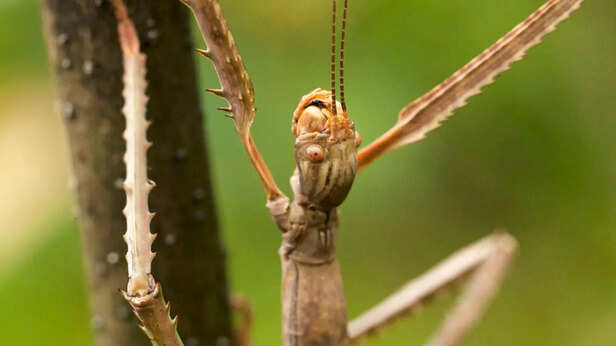
Stick insect camouflaging on a branch
Image credit : Pexels
Stillness as a Survival Strategy, Not Inactivity
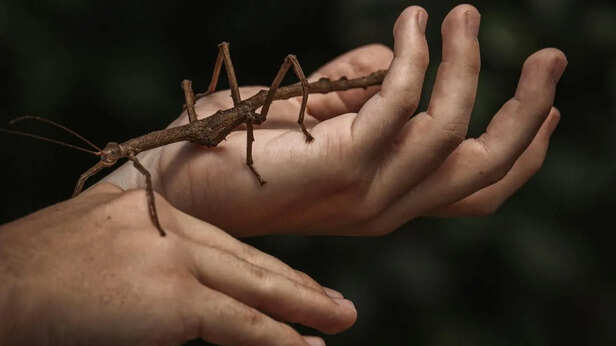
Stick Insect
Image credit : Pexels
The Psychology of Human Perception and Visual Blind Spots
The human brain does not process visual information like a camera. Instead, it constructs reality by filling in gaps based on expectations, focus, and attention. This creates natural blind spots in perception, especially when the brain is overloaded or distracted. Scientists refer to this as inattentional blindness, where a person fails to notice something clearly visible because their attention is directed elsewhere. In wildlife environments, this is extremely common. An animal that remains still and blends into its surroundings can easily slip outside the observer’s focus without any actual movement. This means the “disappearance” is often happening inside the observer’s perception, not in physical reality.
How Light, Shadow, and Environment Complete the Illusion
Environmental conditions play a major role in making animals seem invisible. Shifting light, moving foliage, and changing shadows can completely alter how an animal appears within seconds. A slight change in angle can break visual contrast, making outlines vanish. Some animals even position themselves intentionally to take advantage of this. By staying on the edge of shadow or aligning with natural patterns in their environment, they enhance their invisibility. This is especially common in forests and grasslands, where light is constantly fragmented. To the human eye, these small environmental shifts can feel like the animal has suddenly disappeared, when in reality it has simply merged into a more favorable visual background.
Why It Feels Like a “Vanishing Act” in Real Life
The illusion of disappearance is the result of multiple systems working together: advanced camouflage, motionless behavior, environmental blending, and human perceptual limits. None of these involve anything supernatural, yet the experience can still feel extraordinary when witnessed in real time. Nature has perfected the art of invisibility not by making animals vanish, but by making them indistinguishable from everything around them. What feels like magic is actually survival refined over millions of years. The next time an animal seems to disappear in front of your eyes, it is not escaping reality. It is simply becoming part of it in a way your senses are not trained to notice.
Celebrate the bond with your pets, explore Health & Nutrition, discover Breeds, master Training Tips, Behavior Decoder, and set out on exciting Travel Tails with Times Pets!