
Sacred Horses of India From Ashwamedha to Kalki’s Steed
Kashish Pandey | Sep 03, 2025, 10:00 IST

horse
Image credit : Pixabay
Horses have occupied a unique place in Indian civilization. They are not only animals of speed and power but also sacred beings woven into myths, rituals, and royal traditions. In Indian history and spirituality, horses symbolize strength, sovereignty, and divine connection. From the ancient Vedic ritual of Ashwamedha to the prophesied steed of Kalki, the last avatar of Vishnu, horses mark turning points in the journey of kings and gods.
Exploring their sacred role offers a window into the spiritual imagination and cultural memory of India.
The earliest sacred references to horses in India can be found in the Rigveda, composed thousands of years ago. In those ancient hymns, the horse is not just an animal but a divine gift, a living symbol of motion, vitality, and cosmic energy. For the Vedic people, the horse was more than a companion in daily life. It was a bridge between the earthly and the heavenly, its gallop echoing the rhythm of creation and its neighing likened to the voice of the cosmos. The horse’s strength and vitality were celebrated as reflections of the rising sun and the endless cycles of nature.
Interestingly, horses were not originally native to the Indian subcontinent. They arrived through waves of trade and migration from Central Asia. Yet once they entered the cultural landscape, their impact was transformative. Unlike cattle, which represented stability, wealth, and nourishment, horses came to embody expansion, conquest, and dynamic energy. Their close connection with rituals and gods elevated them above ordinary animals in the Vedic imagination, making them enduring symbols of power and divine favor.
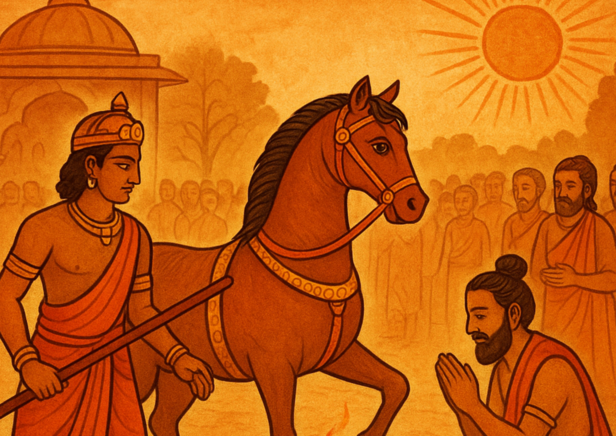
![Ashwamedha Yajna]() Among the most significant Vedic rituals was the Ashwamedha, or horse sacrifice. This was not a simple religious act but a complex ceremony that symbolized the authority and sovereignty of a king. The ritual involved releasing a consecrated horse to wander freely for a year. The territories the horse crossed without challenge were claimed by the king as his domain. If another ruler stopped the horse, it led to battle and conquest.
Among the most significant Vedic rituals was the Ashwamedha, or horse sacrifice. This was not a simple religious act but a complex ceremony that symbolized the authority and sovereignty of a king. The ritual involved releasing a consecrated horse to wander freely for a year. The territories the horse crossed without challenge were claimed by the king as his domain. If another ruler stopped the horse, it led to battle and conquest.
At the end of the year, the horse returned to the king’s capital where elaborate rituals were performed. Priests chanted Vedic hymns, queens participated in symbolic acts, and the horse was sacrificed to the gods. Through this ritual, the king asserted that his power was sanctioned by divine will.
The Ashwamedha yajna was not only a political declaration but also a cosmic act. The horse represented the universe itself. Its body was mapped onto the cosmos, with its breath as the wind, its eyes as the sun, and its voice as thunder. Sacrificing the horse meant merging the ruler’s authority with cosmic order. This fusion of politics and spirituality made the Ashwamedha one of the most influential rituals in Indian tradition.
![arjuna in his rath]() The Mahabharata and the Ramayana, India’s great epics, continued the sacred role of horses. In the Ramayana, King Dasharatha performed the Ashwamedha yajna to secure sons, leading to the birth of Rama and his brothers. The horse here was both a political and spiritual medium for divine intervention.
The Mahabharata and the Ramayana, India’s great epics, continued the sacred role of horses. In the Ramayana, King Dasharatha performed the Ashwamedha yajna to secure sons, leading to the birth of Rama and his brothers. The horse here was both a political and spiritual medium for divine intervention.
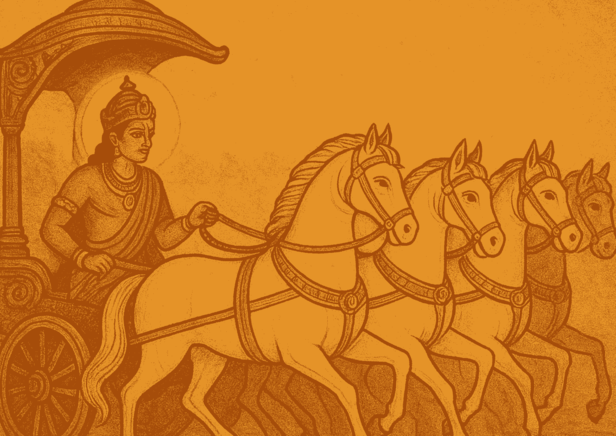
In the Mahabharata, horses are central to the imagery of war. Arjuna’s chariot, guided by Krishna, is pulled by white horses that symbolize purity and divine energy. The chariot itself represents the human body, while the horses are the senses. Krishna, as the charioteer, represents the higher self guiding human impulses toward righteousness. This allegory became central to Indian philosophy, teaching that only discipline and divine guidance can control the wild forces within.
The epic battles are filled with descriptions of horses charging across the battlefield, their manes flying, their hooves pounding like thunder. They carried warriors, bore divine weapons, and embodied the courage and fury of combat. Horses in the epics were not mere animals but symbols of destiny and divine will.
Beyond rituals and epics, horses hold a recurring presence in Indian mythology. Several gods are linked with sacred horses.
While mythology celebrated horses as divine, history witnessed their central role in politics and warfare. Horses transformed the landscape of Indian kingdoms. The speed and power of cavalry changed military strategies and became a decisive factor in empire building.
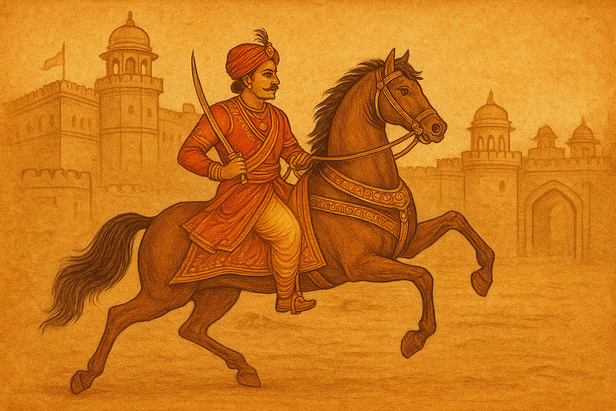
From the Mauryas to the Guptas, and from the Rajputs to the Marathas, horses symbolized royal strength. The Rajputs in particular became known for their skillful horsemanship and loyalty to their steeds. Legendary horses such as Chetak, the companion of Maharana Pratap, entered folklore as symbols of bravery and sacrifice. Chetak carried his wounded master to safety before collapsing, becoming immortal in Rajasthani memory.
The Mughals too valued horses, importing breeds from Central Asia and Arabia. They maintained detailed manuals on horse care, training, and classification. A ruler’s stables were a mark of his wealth and prestige. Festivals often included horse parades where breeds were displayed, showing the vitality of the kingdom.
In Indian imagination, the white horse holds a special place. It is seen as pure, divine, and associated with spiritual transformation. White horses appear repeatedly in art, literature, and religious visions.
The color white stands for light, clarity, and transcendence. A white horse is not just a physical being but a vehicle of the gods. In many depictions, deities ride white horses during moments of cosmic importance. Even today, processions in villages and towns often feature decorated white horses, carrying forward the ancient symbolism of sacred purity.
Beyond mainstream Hinduism, horses play important roles in tantric practices and folk traditions. In some regions, terracotta horse figurines are offered to village deities as symbols of devotion and protection. The Ayyanar shrines of Tamil Nadu are famous for their life-size horse statues, believed to be mounts of guardian spirits.
In tantric rituals, the horse sometimes symbolizes prana, or life force, that practitioners attempt to harness and channel. Folk songs and dances in states like Rajasthan, Bengal, and Maharashtra often include horse imagery, showing the animal’s role in popular imagination.
Perhaps the most powerful image of a sacred horse in Indian tradition is yet to come. According to prophecy, the tenth and final avatar of Vishnu, known as Kalki, will appear at the end of the current age, the Kali Yuga. He will ride a blazing white horse, wielding a sword to destroy evil and restore dharma.
Kalki’s horse is not only a vehicle but a cosmic force of renewal. It represents the unstoppable energy of truth and justice. The image of the rider on the white horse brings together centuries of symbolism: purity, power, and divine authority. For many, it is a reminder that no matter how dark the times, renewal will eventually come, carried on the hooves of a sacred steed.
![royal horses]() Even today, traces of the sacred horse tradition remain alive in Indian culture. Festivals, folklore, and rituals continue to honor the horse. In Rajasthan, decorated horses are paraded during fairs. In Tamil Nadu, terracotta horses guard village shrines. In religious art, gods still ride on horse d rawn chariots.
Even today, traces of the sacred horse tradition remain alive in Indian culture. Festivals, folklore, and rituals continue to honor the horse. In Rajasthan, decorated horses are paraded during fairs. In Tamil Nadu, terracotta horses guard village shrines. In religious art, gods still ride on horse d rawn chariots.
The symbolism of the horse has also influenced yoga and philosophy. The Katha Upanishad compares the body to a chariot, the senses to horses, the mind to reins, and the soul to the rider. Mastery of life means guiding the horses of the senses with wisdom and restraint. This teaching echoes the imagery of the Bhagavad Gita and continues to inspire seekers.
The story of sacred horses in India stretches from the hymns of the Rigveda to the prophecy of Kalki. Horses have been cosmic symbols, royal companions, and divine messengers. They carried kings to power, gods to victory, and ideas to eternity. In rituals like the Ashwamedha, they embodied the universe itself. In mythology, they became forms of wisdom, health, and light. In history, they became partners in valor and loyalty.
The white horse of Kalki stands as the final chapter in this journey, a promise of renewal. Sacred horses of India remind us that animals are not just part of nature but are woven into the spiritual and cultural fabric of humanity. Their speed and strength are more than physical qualities. They are expressions of the eternal cycle of creation, preservation, and transformation.
From Ashwamedha to Kalki’s steed, the horse remains a timeless symbol of power, purity, and divine destiny in Indian tradition.
Discover expert advice and the latest tips on pet care, training, health, and more. Stay updated with all things pets at Times Pets!
Frequently Asked Questions[FAQs]
Horses in Early Vedic India
Interestingly, horses were not originally native to the Indian subcontinent. They arrived through waves of trade and migration from Central Asia. Yet once they entered the cultural landscape, their impact was transformative. Unlike cattle, which represented stability, wealth, and nourishment, horses came to embody expansion, conquest, and dynamic energy. Their close connection with rituals and gods elevated them above ordinary animals in the Vedic imagination, making them enduring symbols of power and divine favor.
The Ashwamedha Yajna
Ashwamedha Yajna
Image credit : Chatgpt[Ai]
At the end of the year, the horse returned to the king’s capital where elaborate rituals were performed. Priests chanted Vedic hymns, queens participated in symbolic acts, and the horse was sacrificed to the gods. Through this ritual, the king asserted that his power was sanctioned by divine will.
The Ashwamedha yajna was not only a political declaration but also a cosmic act. The horse represented the universe itself. Its body was mapped onto the cosmos, with its breath as the wind, its eyes as the sun, and its voice as thunder. Sacrificing the horse meant merging the ruler’s authority with cosmic order. This fusion of politics and spirituality made the Ashwamedha one of the most influential rituals in Indian tradition.
Horses in the Epics
arjuna in his rath
Image credit : Chatgpt[Ai]
In the Mahabharata, horses are central to the imagery of war. Arjuna’s chariot, guided by Krishna, is pulled by white horses that symbolize purity and divine energy. The chariot itself represents the human body, while the horses are the senses. Krishna, as the charioteer, represents the higher self guiding human impulses toward righteousness. This allegory became central to Indian philosophy, teaching that only discipline and divine guidance can control the wild forces within.
The epic battles are filled with descriptions of horses charging across the battlefield, their manes flying, their hooves pounding like thunder. They carried warriors, bore divine weapons, and embodied the courage and fury of combat. Horses in the epics were not mere animals but symbols of destiny and divine will.
Horses in Indian Mythology
- Surya, the Sun God, rides across the sky in a golden chariot drawn by seven radiant horses. These seven steeds are not just carriers of the sun but cosmic symbols. They stand for the seven days of the week, the seven colors of light seen in a rainbow, and the seven chakras that govern the human body. Each morning, as Surya’s horses begin their journey, they renew life on earth, bringing warmth, energy, and the promise of a new day. Without their eternal movement, time itself would seem to stand still.
- Hayagriva, a revered form of Vishnu with the head of a horse, embodies wisdom and learning. He is celebrated as the restorer of the stolen Vedas and is worshipped as a guardian of knowledge and sacred scriptures. In art and temples, his horse head represents brilliance, sharpness of intellect, and mental clarity. Devotees turn to Hayagriva when seeking success in studies, enlightenment in meditation, and mastery over confusion. His presence in mythology reminds us that knowledge is divine, and that clarity of thought can triumph over ignorance.
- The Ashwini Kumaras, twin horse-headed gods, are immortal physicians who bring healing to humanity. Revered in the Rigveda, they are praised as youthful, radiant deities who ride swiftly across the skies to answer prayers. They are associated with dawn, symbolizing the renewal of life each morning. Their healing powers extend to both body and spirit, offering vitality, fertility, and hope. The Ashwini Kumaras are also linked to miraculous cures, the protection of travelers, and blessings in times of difficulty.
- Another significant figure is Uchchaihshravas, the celestial seven-headed horse that emerged during the churning of the cosmic ocean, the Samudra Manthan. This magnificent steed was claimed by Indra, the king of gods, and is often described as the king of horses. Uchchaihshravas symbolizes majesty, divine authority, and the extraordinary gifts that arise from cosmic balance. Its seven heads mirror the idea of perfection, completeness, and higher consciousness.
- Horses also appear in the imagery of Yama, the god of death, who rides a powerful buffalo or sometimes a dark horse, depending on regional traditions. In these depictions, the horse becomes a vehicle of transition, guiding souls from the earthly realm to the afterlife.
- In many folk legends, horses are seen as carriers of divine messages. They appear in dreams and visions, sometimes as white steeds bringing omens of good fortune, other times as restless animals signaling change. This mystical association deepens the bond between the horse and the unseen forces guiding human destiny.
While mythology celebrated horses as divine, history witnessed their central role in politics and warfare. Horses transformed the landscape of Indian kingdoms. The speed and power of cavalry changed military strategies and became a decisive factor in empire building.
From the Mauryas to the Guptas, and from the Rajputs to the Marathas, horses symbolized royal strength. The Rajputs in particular became known for their skillful horsemanship and loyalty to their steeds. Legendary horses such as Chetak, the companion of Maharana Pratap, entered folklore as symbols of bravery and sacrifice. Chetak carried his wounded master to safety before collapsing, becoming immortal in Rajasthani memory.
The Mughals too valued horses, importing breeds from Central Asia and Arabia. They maintained detailed manuals on horse care, training, and classification. A ruler’s stables were a mark of his wealth and prestige. Festivals often included horse parades where breeds were displayed, showing the vitality of the kingdom.
Symbolism of White Horses
The color white stands for light, clarity, and transcendence. A white horse is not just a physical being but a vehicle of the gods. In many depictions, deities ride white horses during moments of cosmic importance. Even today, processions in villages and towns often feature decorated white horses, carrying forward the ancient symbolism of sacred purity.
The Horse in Tantric and Folk Traditions
In tantric rituals, the horse sometimes symbolizes prana, or life force, that practitioners attempt to harness and channel. Folk songs and dances in states like Rajasthan, Bengal, and Maharashtra often include horse imagery, showing the animal’s role in popular imagination.
Kalki and the Final Horse
Kalki’s horse is not only a vehicle but a cosmic force of renewal. It represents the unstoppable energy of truth and justice. The image of the rider on the white horse brings together centuries of symbolism: purity, power, and divine authority. For many, it is a reminder that no matter how dark the times, renewal will eventually come, carried on the hooves of a sacred steed.
The Cultural Legacy of Sacred Horses
royal horses
Image credit : Chatgpt[Ai]
The symbolism of the horse has also influenced yoga and philosophy. The Katha Upanishad compares the body to a chariot, the senses to horses, the mind to reins, and the soul to the rider. Mastery of life means guiding the horses of the senses with wisdom and restraint. This teaching echoes the imagery of the Bhagavad Gita and continues to inspire seekers.
The white horse of Kalki stands as the final chapter in this journey, a promise of renewal. Sacred horses of India remind us that animals are not just part of nature but are woven into the spiritual and cultural fabric of humanity. Their speed and strength are more than physical qualities. They are expressions of the eternal cycle of creation, preservation, and transformation.
From Ashwamedha to Kalki’s steed, the horse remains a timeless symbol of power, purity, and divine destiny in Indian tradition.
Discover expert advice and the latest tips on pet care, training, health, and more. Stay updated with all things pets at Times Pets!
Frequently Asked Questions[FAQs]
- Why were horses considered sacred in ancient India?
Horses were seen as symbols of strength, speed, and divine energy in ancient India. They were closely associated with gods, rituals like the Ashwamedha yajna, and epics such as the Ramayana and Mahabharata. Their presence often represented authority, vitality, and cosmic order. - What was the purpose of the Ashwamedha yajna?
The Ashwamedha yajna was a Vedic ritual performed by kings to assert their sovereignty and divine approval to rule. A consecrated horse was released to roam freely for a year, and the territories it crossed without challenge were claimed by the king. - Which gods are associated with horses in Hinduism?
Surya rides a chariot of seven horses, Vishnu appears as Hayagriva, the Ashwini Kumaras are divine horse-headed twins, and Indra owns the celestial horse Uchchaihshravas. - Who was Chetak in Indian history?
Chetak was the loyal horse of Maharana Pratap. Known for his bravery during the Battle of Haldighati, he carried his wounded master to safety before dying, becoming a symbol of loyalty and courage.