
Rarest Animals in the World That Only Appear Once in Years
Deepak Rajeev | May 07, 2026, 19:11 IST

Saola, snow leopard & Cuban solenodon
This article explores the rarest animals in the world that appear only once in years. It highlights elusive species like the saola and snow leopard, explaining why they are so rarely seen due to habitat loss, isolation, and natural secrecy. It also reveals how these hidden creatures survive in extreme environments, making each sighting a scientifically significant and extraordinary event.
Across dense forests, deep oceans, and remote mountain ranges, there are creatures so elusive that even scientists may go years without seeing them. Some are so rare that their existence is confirmed only through camera traps, scattered sightings, or a handful of documented encounters. When an animal appears only once in years, it is not just rare. It becomes almost legendary in the world of wildlife science. These species represent the extreme edge of survival, where biology, geography, and human impact intersect in extraordinary ways.
![Saola | Instagram - @thehoomaneclub]() In scientific terms, rarity is not just about low population numbers. It is also about visibility, habitat access, and behavior. Some species live in extremely isolated environments such as dense rainforests, deep ocean trenches, or high-altitude mountain regions where humans rarely travel. Others are naturally nocturnal, highly secretive, or extremely sensitive to human presence. According to conservation research, a rare species is typically one with very small population numbers or extremely limited geographic distribution, sometimes fewer than 10,000 individuals globally, but the truly “once in years” category often involves far fewer sightings, not just population estimates. This means an animal may exist in small numbers, yet still be almost invisible to humans due to its behavior and environment.
In scientific terms, rarity is not just about low population numbers. It is also about visibility, habitat access, and behavior. Some species live in extremely isolated environments such as dense rainforests, deep ocean trenches, or high-altitude mountain regions where humans rarely travel. Others are naturally nocturnal, highly secretive, or extremely sensitive to human presence. According to conservation research, a rare species is typically one with very small population numbers or extremely limited geographic distribution, sometimes fewer than 10,000 individuals globally, but the truly “once in years” category often involves far fewer sightings, not just population estimates. This means an animal may exist in small numbers, yet still be almost invisible to humans due to its behavior and environment.
![Cuban solenodon | Instagram - @journalofcesare]() Some of the world’s rarest animals are so difficult to observe that entire decades pass between confirmed sightings. One example is the saola, often called the “Asian unicorn,” discovered only in 1992 in the remote forests of Laos and Vietnam. Very few confirmed sightings have ever been recorded, and scientists still estimate its population only in extremely small numbers, possibly in the dozens. Similarly, animals like the snow leopard, often called the “ghost of the mountains,” are known more through camera traps than direct human encounters. These cats live in rugged Himalayan terrain and are so well camouflaged that even experienced researchers may search for months without seeing one in the wild. In both cases, rarity is not just about being endangered. It is about being almost invisible.
Some of the world’s rarest animals are so difficult to observe that entire decades pass between confirmed sightings. One example is the saola, often called the “Asian unicorn,” discovered only in 1992 in the remote forests of Laos and Vietnam. Very few confirmed sightings have ever been recorded, and scientists still estimate its population only in extremely small numbers, possibly in the dozens. Similarly, animals like the snow leopard, often called the “ghost of the mountains,” are known more through camera traps than direct human encounters. These cats live in rugged Himalayan terrain and are so well camouflaged that even experienced researchers may search for months without seeing one in the wild. In both cases, rarity is not just about being endangered. It is about being almost invisible.
Some species are so rare that they are recorded only a few times in modern scientific history. The spade-toothed beaked whale, for example, is known from only a handful of strandings and has never been observed alive in its natural habitat, making it one of the most mysterious marine mammals on Earth. Similarly, the Cuban solenodon, a nocturnal insect-eating mammal, was once thought extinct and has been documented only a very small number of times since its discovery in the 19th century. These animals highlight a crucial reality of wildlife science. Sometimes, we know a species exists not because we see it regularly, but because we occasionally catch a rare glimpse that confirms it is still surviving in hidden corners of the planet.
Why Some Animals Disappear for Years at a Time
There are several reasons why certain animals are only seen once in years. Habitat loss is one of the most significant, pushing species into smaller and more isolated regions. Climate change further reduces suitable living spaces, forcing animals into areas that are harder for humans to reach. At the same time, many rare species naturally avoid human contact. Evolution has shaped their behavior to prioritize survival through silence, camouflage, and secrecy. In dense forests or deep ocean environments, being unseen is often the best survival strategy. This combination of shrinking habitat and extreme secrecy creates the illusion that some animals “appear” only occasionally, when in reality they are simply living hidden lives beyond human observation.
What makes these rare animals so fascinating is not just their scarcity, but what they represent. Each rare sighting is a reminder of how much of Earth’s biodiversity still remains unexplored or barely understood. A single appearance after years of absence often becomes a major scientific event, sometimes captured only by a camera trap or a remote expedition. In a world where wildlife is increasingly under pressure, these rare appearances carry deep significance. They are proof of survival against extreme odds and reminders that nature still holds mysteries waiting to be uncovered. The rarest animals in the world are not just biological curiosities. They are living symbols of resilience, quietly persisting in places where human eyes almost never reach.
Celebrate the bond with your pets, explore Health & Nutrition, discover Breeds, master Training Tips, Behavior Decoder, and set out on exciting Travel Tails with Times Pets!
What Makes an Animal “Once in Years” Rare
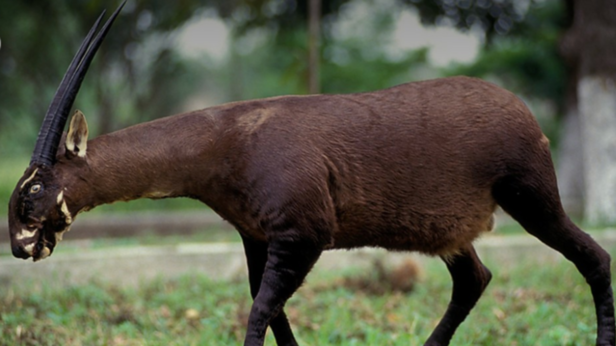
Saola | Instagram - @thehoomaneclub
The Elusive Survivors of the Wild
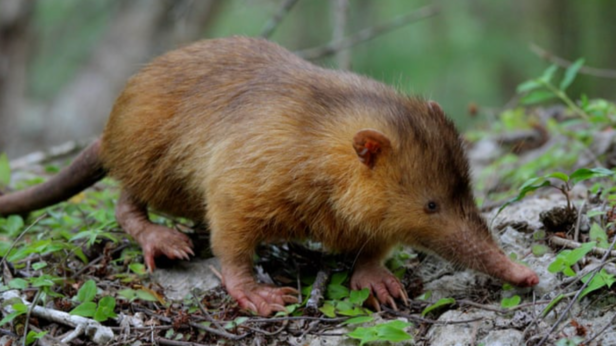
Cuban solenodon | Instagram - @journalofcesare
Animals Known From Only a Handful of Sightings
Some species are so rare that they are recorded only a few times in modern scientific history. The spade-toothed beaked whale, for example, is known from only a handful of strandings and has never been observed alive in its natural habitat, making it one of the most mysterious marine mammals on Earth. Similarly, the Cuban solenodon, a nocturnal insect-eating mammal, was once thought extinct and has been documented only a very small number of times since its discovery in the 19th century. These animals highlight a crucial reality of wildlife science. Sometimes, we know a species exists not because we see it regularly, but because we occasionally catch a rare glimpse that confirms it is still surviving in hidden corners of the planet.
Why Some Animals Disappear for Years at a Time
There are several reasons why certain animals are only seen once in years. Habitat loss is one of the most significant, pushing species into smaller and more isolated regions. Climate change further reduces suitable living spaces, forcing animals into areas that are harder for humans to reach. At the same time, many rare species naturally avoid human contact. Evolution has shaped their behavior to prioritize survival through silence, camouflage, and secrecy. In dense forests or deep ocean environments, being unseen is often the best survival strategy. This combination of shrinking habitat and extreme secrecy creates the illusion that some animals “appear” only occasionally, when in reality they are simply living hidden lives beyond human observation.
The Fragile Beauty of Rare Wildlife
What makes these rare animals so fascinating is not just their scarcity, but what they represent. Each rare sighting is a reminder of how much of Earth’s biodiversity still remains unexplored or barely understood. A single appearance after years of absence often becomes a major scientific event, sometimes captured only by a camera trap or a remote expedition. In a world where wildlife is increasingly under pressure, these rare appearances carry deep significance. They are proof of survival against extreme odds and reminders that nature still holds mysteries waiting to be uncovered. The rarest animals in the world are not just biological curiosities. They are living symbols of resilience, quietly persisting in places where human eyes almost never reach.
Celebrate the bond with your pets, explore Health & Nutrition, discover Breeds, master Training Tips, Behavior Decoder, and set out on exciting Travel Tails with Times Pets!