Few freshwater fish stop people mid-step the way a mature discus does. The flattened, disc-shaped body, the concentric rings of electric blue, red, and orange, the slow and deliberate way it moves through the water column, it is genuinely one of the most beautiful animals kept in a home aquarium. It is also one of the most unforgiving of beginner mistakes.
Where discus come from and why that matters
Discus (Symphysodon aequifasciatus and related species) are native to the Amazon basin, specifically the warm, slow-moving, blackwater tributaries of the Rio Negro and surrounding river systems. The water there is soft, acidic, and extremely warm, often above 28°C, sometimes touching 30°C. It is also remarkably stable. The fish evolved in conditions that barely fluctuate, and that evolutionary history is the root of almost every challenge discus pose in captivity. A fish that has never had to tolerate instability has no tolerance for it.
![Water Clarity Study]()
Water Clarity Study
Image credit : AI
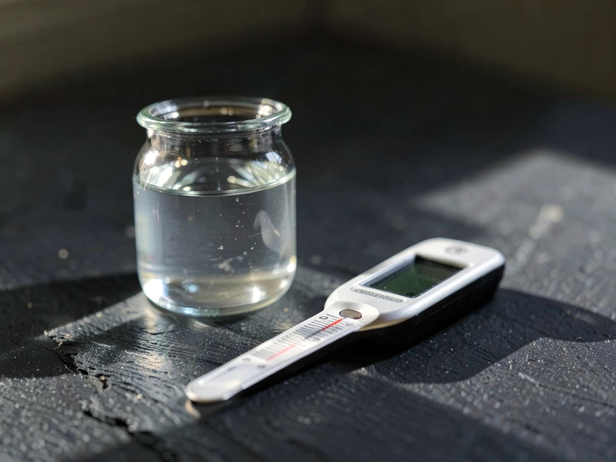
I examine the water clarity, essential for discus aquarium keeping, with a digital thermometer.
Water: the parameter that will not forgive you
Temperature is the first number discus keepers talk about, and for good reason. Most tropical fish are kept between 24°C and 26°C. Discus need 28°C to 30°C, consistently. At lower temperatures their immune systems are suppressed, they stop eating, and they become vulnerable to parasites and bacterial infections that a healthy discus at the right temperature would fight off without trouble. In a warm Indian summer, maintaining this range is manageable. In an air-conditioned flat set to 18°C year-round, a reliable aquarium heater, and a backup, is not optional. pH should sit between 6.0 and 7.0, and hardness should be low, ideally below 4 dGH. Tap water in most Indian cities is alkaline and moderately hard. Keeping discus on untreated municipal water is a slow way to lose them. Reverse osmosis filtration with careful remineralisation is the standard approach serious keepers use. Ammonia and nitrite must be zero, and nitrates should be kept as low as possible, discus are more sensitive to nitrate accumulation than most other fish. This means frequent partial water changes, often 25 to 30 percent two or three times a week, not once a fortnight.
Tank size, setup, and companions
Adult discus reach 15 to 20 centimetres in diameter. They are not small fish, and they are not solitary by nature. A single discus in a tank is a stressed discus. They are best kept in groups of six or more, which immediately sets the minimum tank size at 200 litres, and a larger tank is more stable and easier to manage. Discus are peaceful but hierarchical. In a group, some individuals will be more dominant, and a tank that is too small concentrates that pressure. Companions should be chosen carefully. Cardinal tetras are a classic pairing, they share similar water requirements and the contrast is striking. Many other popular community fish, including goldfish and most livebearers, are kept at temperatures discus cannot tolerate or vice versa. Corydoras catfish are sometimes kept with discus but need lower temperatures; research the specific species before combining them. Avoid any fish that nips fins or competes aggressively for food.
![Serene Aquatic Garden]()
Serene Aquatic Garden
Image credit : AI
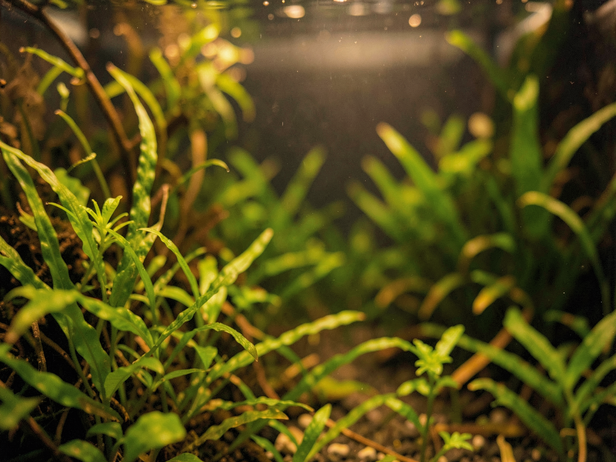
Exploring the serene beauty of an aquarium, a peaceful haven for discus fish care in India.
Feeding discus correctly
Discus are carnivorous and need a high-protein diet. In the wild they eat small invertebrates, insect larvae, and organic matter. In captivity, the accepted staples are high-quality frozen or freeze-dried bloodworms, beef heart (prepared as a paste, sometimes mixed with other ingredients by experienced keepers), and commercially produced discus-specific pellets or granules from reputable manufacturers. Live food carries a risk of introducing parasites and pathogens, so most experienced keepers use it sparingly and source it carefully. Discus should be fed two to four small meals a day rather than one large one. Uneaten food must be removed promptly, it degrades water quality fast in the warm, high-maintenance environment discus require. A discus that stops eating is a discus under stress or showing early signs of illness. It is one of the first signals to take seriously.
Health, disease, and when to call a specialist
Discus are prone to several conditions: hole-in-the-head disease (hexamitosis), which presents as pitting around the head and lateral line; internal parasites, which cause wasting and stringy white faeces; bacterial infections, which can follow any period of poor water quality or temperature instability; and skin flukes. Most of these conditions are treatable when caught early, but discus deteriorate quickly once they are sick. If a discus shows clamped fins, refuses food for more than two days, develops visible lesions or discolouration, or hangs near the surface or the bottom, it needs assessment by a vet with aquatic or exotic animal experience, not a home remedy and a wait-and-see approach. Finding a vet in India who is comfortable treating ornamental fish takes research; it is worth identifying one before you need one urgently.