Walk into a room with a Lhasa Apso and you will notice it notices you first. It does not rush over. It watches, it assesses, and it decides, and that pause is not stubbornness or bad breeding. It is a dog doing exactly what it was shaped to do across several hundred years of monastery life in the Tibetan highlands.
What the breed was actually built for
Lhasa Apsos were kept inside Tibetan Buddhist monasteries, often as gifts from the Dalai Lama, and their job was interior sentinel work. Tibetan Mastiffs handled the perimeter; the Lhasa handled anything that got past them. This meant the dog needed to be alert to strangers, suspicious of the unfamiliar, and capable of making its own judgment calls without waiting for a human to tell it what to think. That is the dog that arrived in Indian homes. The long, dense coat that looks purely decorative served a real function in high-altitude cold, and the low-slung, sturdy build let it move quickly in confined stone spaces. The breed is not a lapdog that happened to end up in a monastery. It is a working sentinel that happens to be small.
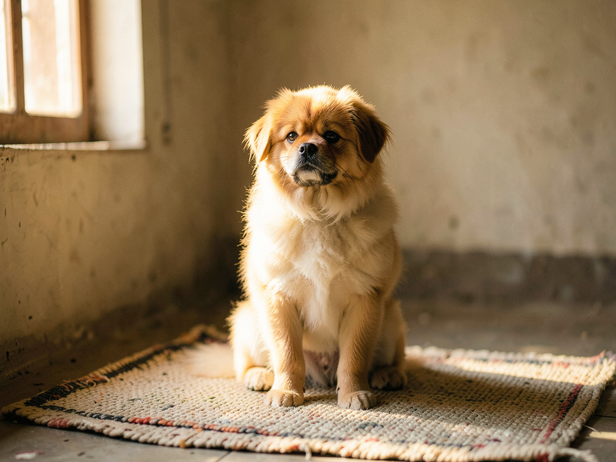
![Lhasa Apso in Golden Light]()
Lhasa Apso in Golden Light
Image credit : AI
My Lhasa Apso enjoys the golden afternoon light, a peaceful moment in our Indian flat. Perfect for apartment dogs.
What independence looks like in a flat
A Lhasa will bond closely with its household but remain reserved with strangers for a long time, sometimes permanently. This is not a flaw to fix; it is the breed's baseline. Owners who expect the same open enthusiasm they might get from a Labrador or a Golden Retriever will misread the Lhasa as cold or difficult. The dog is neither. It is selective, and selectivity was the point.
The independence shows up most clearly in training. A Lhasa understands what you are asking far sooner than it agrees to comply. Repetitive drills bore it quickly, and a bored Lhasa invents its own agenda. Short sessions, clear markers, and a reward the dog actually values, not what you think it should value, work better than long, structured obedience runs. The breed responds well to positive reinforcement; it does not respond to pressure or correction-based methods, and pushing harder produces a dog that shuts down or digs in.
Living with a Lhasa in an Indian flat
The exercise requirement is moderate, which makes the Lhasa genuinely suited to flat life in a way that larger working breeds are not. Two walks a day and some indoor play cover the physical need. Mental stimulation matters more: a Lhasa left with nothing to think about finds something to think about, and the results are usually the owner's problem. Puzzle feeders, scent games, and varied routes on walks all help.
The coat is the real daily commitment. The full show coat requires brushing every day without exception, and matting in the dense undercoat happens fast in humid Indian summers. Most pet owners keep the coat trimmed short, a practical choice that does not affect the dog's temperament or health. Either way, the ears need regular checking because the drop-ear shape traps moisture and debris, and ear infections are common in the breed if ears are not kept clean and dry.
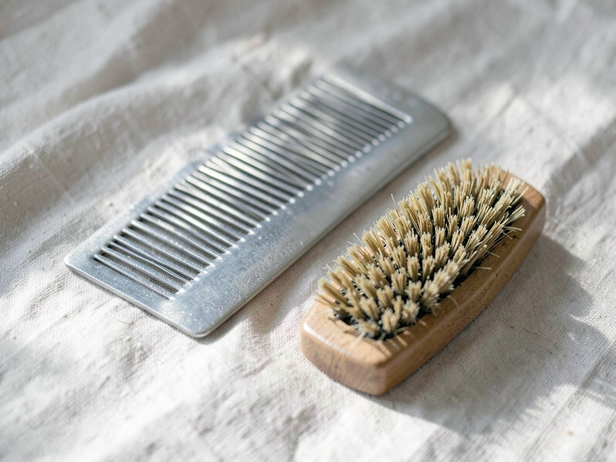
![Grooming Tools on Linen]()
Grooming Tools on Linen
Image credit : AI
Essential grooming tools for your Lhasa Apso, ready for a gentle brush.
Health predispositions worth knowing
Lhasas are generally a long-lived breed, with many reaching fourteen to sixteen years. They carry a few known predispositions. Progressive retinal atrophy, a degenerative eye condition, appears in the breed line; responsible breeders screen for it, and any owner who notices changes in how their dog navigates in low light should have the eyes checked promptly. Kidney disease, specifically a condition called hereditary nephritis, is documented in Lhasa lines; annual bloodwork from middle age onward is reasonable practice. Patellar luxation, a kneecap that slips out of position, is seen in many small breeds including the Lhasa, and a dog that skips a step or holds up a hind leg intermittently is worth showing a vet.
The flat face is not as extreme as in a Pug or a French Bulldog, but the Lhasa is still a brachycephalic breed with a shortened muzzle. In the heat and humidity of Indian summers, this matters. The dog needs access to cool air, should not be exercised in the middle of the day between April and June, and should never be left in a parked car. Breathing that sounds laboured at rest, not just after exercise, is a reason to see a vet, not something to wait out.
Who this dog suits, and who it does not
The Lhasa Apso fits well with an owner who wants a dog with a genuine personality rather than a dog that agrees with everything. It is not a breed for someone who needs immediate, reliable recall in off-leash situations, or for a household with very young children who want a dog that tolerates rough handling without complaint. The Lhasa will communicate its limits, and it communicates clearly.
It suits a quieter household, a single owner, or a couple. It does well in flats because it is not a dog that needs to run. It asks for consistency, for training that respects its intelligence, and for an owner who reads it rather than overrides it. Given that, the dog the monasteries kept for centuries, watchful, loyal to its own, and entirely self-possessed, is exactly what shows up at home.