Most people walk into a puppy purchase the way they walk into an impulse buy, they see the face, they feel the pull, and the questions come later. By then the money has moved and the puppy is home. These nine questions are not a formality. They are the fastest way to tell a responsible breeder from someone running a backyard operation or a puppy mill with a presentable front.
About the puppy's parents
Can I meet the mother in person? A breeder who says the mother is elsewhere, unavailable, or belongs to someone else is telling you something important. The mother should be on the premises, healthy, and in a condition that reflects how the breeder keeps animals. Her temperament matters too, anxiety and aggression have a heritable component, and a nervous dam is worth noting. Ask also whether the father has been health-tested for the conditions the breed is known to carry. Hip scores for large breeds, eye certificates for Cavaliers and Collies, cardiac clearances for Boxers. A breeder who has done these tests will have the paperwork. One who hasn't will have an explanation.
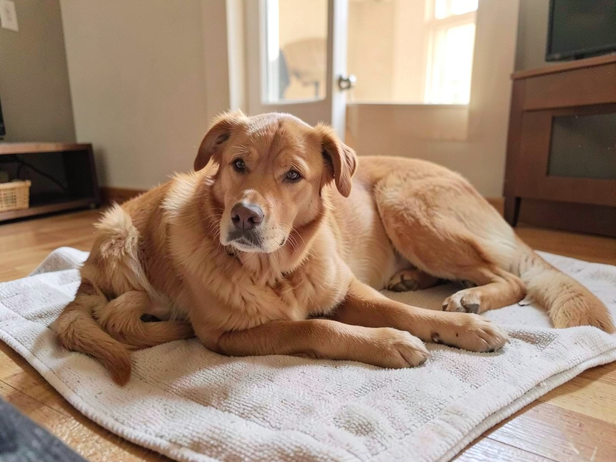
![Calm Dog on Mat]()
Calm Dog on Mat
Image credit : AI
I observe a calm dog resting, a peaceful scene that makes me think about how to choose a responsible breeder.
About the litter's health history
Have the puppies been vet-checked, and can I see the records? A responsible breeder takes the litter to a vet before selling. That visit should produce a written record of what was checked and what was found. Ask about the deworming schedule that has been followed so far and which vaccinations have been given. You are not asking for a medical opinion, you are asking whether a vet has seen this puppy. If the answer is no, or if the records are vague, that is a gap you will be filling at your own expense shortly after the puppy arrives home.
About the breed in your specific situation
What does this breed actually need, and does my home suit it? This is the question breeders who care about their dogs ask you first. If they don't, ask it yourself and watch how they answer. A Mudhol Hound in a two-bedroom flat with no garden is a different proposition from a Beagle in the same space. A Siberian Husky in Chennai is a different conversation from one in Shimla. A breeder who knows the breed will tell you honestly whether your living situation is a fit, what the daily exercise load looks like, and what the coat demands in an Indian summer. One who just wants to close the sale will tell you any breed suits any home.
![Morning Light on Notebook and Collar]()
Morning Light on Notebook and Collar
Image credit : AI
Considering buying a puppy from a breeder? This scene evokes thoughtful preparation and care.
About the kennel's practices
How many litters do you produce in a year, and are the dogs kept as pets or in kennels? Volume is one of the clearest signals. A breeder producing several litters simultaneously across multiple breeds is almost certainly prioritising output over welfare. Dogs kept in kennels with minimal human contact produce puppies that have not been socialised during the window, roughly three to twelve weeks, when it matters most. Ask where the puppies sleep, what they have been exposed to (children, other animals, household sounds, car journeys), and how much individual handling each puppy has had. The answers tell you what the puppy's first weeks of life looked like, and those weeks shape the dog for years.
About what happens after you pay
What support do you offer once the puppy is home, and what is your policy if something goes wrong? A breeder who disappears after the transaction is a warning sign in itself. Ask whether they are reachable for questions in the first weeks. Ask what they expect you to do, and what they will do, if the puppy develops a hereditary condition that was not apparent at the time of sale. Ask whether they would take the dog back if your circumstances changed and you could no longer keep it. You may never need to use any of this. But a breeder who has thought about these situations, and who has a clear answer, is one who sees the dog's life as something they remain connected to. That attitude tends to show up everywhere else in how they work.