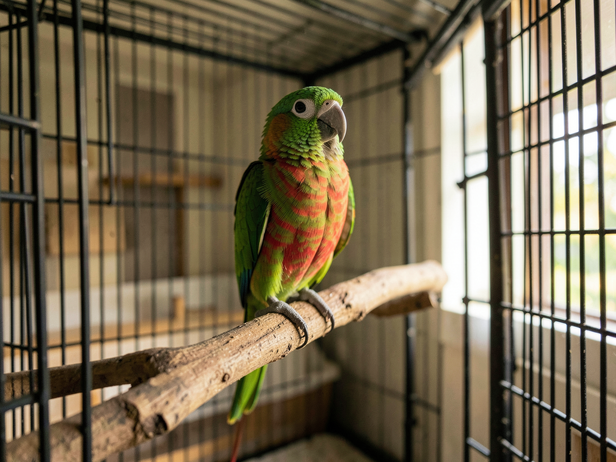
A conure will find every quiet corner of your flat and fill it. These small to medium parrots from Central and South America are wired for flock life, and in your home, you are the flock. That shapes everything about living with one, the noise, the time, the mess, and the reward when it works.
What conures actually are
![Alert Green-Cheeked Conure]()
Alert Green-Cheeked Conure
Image credit : AI
A vibrant Green-Cheeked Conure, showcasing its vivid plumage. This pet parrot is a popular choice for experienced bird keepers.
Conures are a loose grouping of parrots across two genera, Aratinga and Pyrrhura, among others, rather than a single species. The birds commonly kept as pets include the Sun Conure, the Green-Cheeked Conure, the Jenday Conure, and the Nanday Conure. Each has its own temperament and noise level, but all share the core traits: high intelligence, strong social bonding, a need for daily handling, and a voice that carries through walls.
In the wild, conures live in large, noisy flocks. They roost together, forage together, and communicate constantly. A pet conure has not lost this wiring. It has simply redirected it at whoever is home.
The noise question, answered honestly
Sun Conures are among the loudest small parrots kept anywhere. Their contact call, the sound they make when they want to know where you are, can reach 120 decibels. In a Bengaluru high-rise with shared walls, that is a neighbour problem within weeks. Green-Cheeked Conures are meaningfully quieter and are often recommended for flat life on that basis, though no conure is a quiet bird.
Noise is not a training problem you solve later. It is the species. A conure that screams at dusk is not misbehaving; it is doing what conures do at dusk. If the noise ceiling in your home is low, a different species is the honest answer.
What daily care looks like
![Conure's Morning Meal]()
Conure's Morning Meal
Image credit : AI
Nourishing a pet parrot with a vibrant mix of greens and carrots. Essential for conure diet and lifespan.
Conures need a minimum of three to four hours of out-of-cage time each day, spread across the morning and evening. A large cage, at minimum 60 cm wide, 60 cm deep, and 90 cm tall for a single bird, is a starting point, not a substitute for that time. Bar spacing matters: 1.5 cm to 2 cm for most conure species, narrow enough that a bird cannot get its head through.
They are destructive by design. Foraging and chewing are how a parrot keeps its beak conditioned and its mind occupied. Rotating toys, foraging puzzles, and wood blocks for chewing are not optional enrichment, they are what stands between a mentally healthy bird and a feather-plucking one.
Diet in the wild is varied: seeds, fruit, insects, flowers. A seed-only diet in captivity leads to fatty liver disease and nutritional deficiency over time. A balanced diet for a pet conure is built around a quality pelleted base, supplemented with fresh vegetables, some fruit, and the occasional cooked grain. Avocado, chocolate, onion, garlic, and any food cooked with these are toxic to birds. Caffeine and alcohol are toxic. The pit and skin of fruit from the Prunus family, peaches, cherries, plums, contain compounds that are harmful. If you are uncertain about a food, do not offer it until you have confirmed it with an avian vet.
The experience requirement is real
Conures bond deeply and can become aggressive toward anyone they perceive as a rival for their person's attention. Biting in a stressed or undertreated conure is not rare, and a conure bite from a large species draws blood. This is not a temperament flaw, it is a bird that has not had its social and cognitive needs met, or one that has not been handled consistently from a young age.
An experienced keeper understands how to read body language: a fanned tail, pinning eyes, raised feathers at the nape. A first-time bird owner often does not, and the gap between the two is where most conure rehomings happen. The bird is not the problem in those cases. The match was.
Conures live 15 to 30 years depending on species and care. That is not a pet-store purchase. It is a commitment that will outlast most cars, several moves, and possibly a marriage. Anyone considering one should spend time with an adult conure, not a hand-fed chick in a shop, before deciding.
Finding a conure in India
Several conure species are legally kept and bred in India. The Sun Conure and the Green-Cheeked Conure are the most commonly available from established breeders. Before purchasing, confirm that the bird is captive-bred and that the seller can provide documentation, wild-caught birds are both illegal under the Wildlife Protection Act and far harder to settle into captivity.
An avian vet visit within the first week of bringing a bird home is not optional. Conures can carry bacterial infections or internal parasites without showing obvious symptoms. A baseline health check, a confirmed diet plan, and a vet you can call are the three things to have in place before the bird arrives, not after.