A Persian's face is one of the most recognisable in the cat world, wide, flat, almost circular, with enormous eyes set close together. That look did not arrive by accident. Decades of selective breeding pushed the skull bones closer, flattened the muzzle, and in doing so rearranged nearly every structure inside the head. The result is a cat that breathes, sees, and swallows differently from a cat with a longer face, and an owner who needs to know the difference between normal for this breed and a sign that something is wrong.
What brachycephaly actually does to the skull
Brachycephaly means, literally, short head. In cats, it describes a skull where the facial bones are compressed horizontally while the soft tissue inside, the soft palate, the nasal turbinates, the tear ducts, stays roughly the same size. The tissue has nowhere to go. The nostrils narrow. The soft palate lengthens relative to the throat and partially blocks the airway. The nasal passages fill with turbinate tissue that leaves almost no room for air. This cluster of changes is called brachycephalic obstructive airway syndrome, or BOAS. It is not a disease a cat catches. It is a structural consequence of how the skull was shaped.
The breeds most affected in India are the Persian, the Exotic Shorthair, and the Himalayan. The Scottish Fold carries a separate skeletal condition, a cartilage mutation affecting the ears and joints, but many Folds are also bred with flat faces, compounding the problem. Munchkins with flat faces carry the same airway risk. The flatter the face relative to the skull width, the more compressed the internal structures.
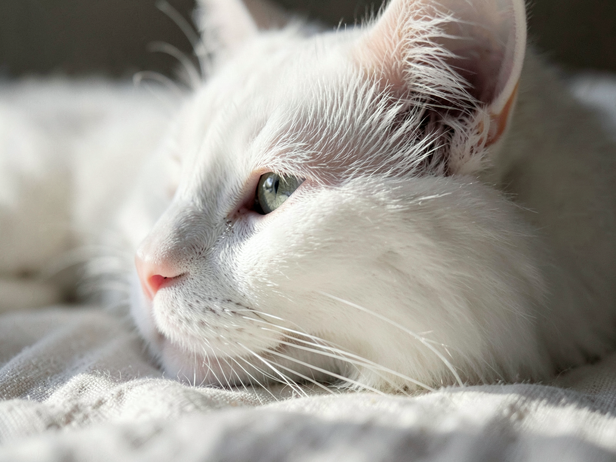
![Persian Cat's Profile]()
Persian Cat's Profile
Image credit : AI
A close-up reveals the distinctive flat-faced profile of a Persian cat, highlighting its prominent eye. This breed can face breathing challenges.
Breathing: what normal sounds like and what it does not
Some stertor, a low, snuffly breathing sound, is common in flat-faced cats and does not by itself mean the cat is in distress. The line is crossed when breathing becomes audible effort: open-mouth breathing in a resting cat, extended neck posture to pull air in, rapid shallow breathing after minimal exertion, or a cat that avoids play because movement makes breathing harder. In hot and humid conditions, which are the norm across most of India for much of the year, the risk rises sharply. Cats cool themselves partly through respiration. A cat with compromised airways cannot do this efficiently, and heatstroke becomes a real danger in a flat without reliable air conditioning.
Narrow nostrils, called stenotic nares, are visible to an owner, the nostril openings look like thin slits rather than open ovals. A vet can assess whether the degree of narrowing warrants surgical widening, a minor procedure that can meaningfully improve airflow. Elongated soft palate and everted laryngeal saccules, tissue that gets pulled into the airway by the effort of breathing, are assessed by a vet under sedation. If a flat-faced cat is working to breathe at rest, snoring loudly, or breathing through its mouth, that is a vet visit, not a wait-and-see.
Eyes: the cost of a shallow orbit
The flat skull gives flat-faced cats their characteristic large, prominent eyes. The orbit, the bony socket, is shallower than in a cat with a longer face, which means the eye sits more exposed. Two problems follow directly from this. First, the eyelids may not close fully during sleep or blinking, leaving part of the cornea dry and at risk of ulceration. Second, the nasolacrimal duct, the channel that drains tears from the eye into the nasal cavity, is kinked or compressed by the same bone structure that flattens the face. Tears overflow onto the face rather than draining internally, producing the brown or rust-coloured staining below the eyes that owners of Persians see constantly.
Tear staining is cosmetic when the eye itself is healthy. It becomes a medical issue when the skin fold below the eye stays wet and develops a secondary bacterial or yeast infection, the skin reddens, smells, and the cat rubs at its face. Daily gentle cleaning of the fold with a damp cloth is maintenance, not a treatment. Corneal ulcers, by contrast, are painful and fast-moving. A cat squinting, pawing at one eye, or holding an eye partially closed needs a vet the same day. Flat-faced cats are also prone to entropion, a condition where the eyelid rolls inward so the lashes contact the cornea. A vet can diagnose this by watching how the lid sits.
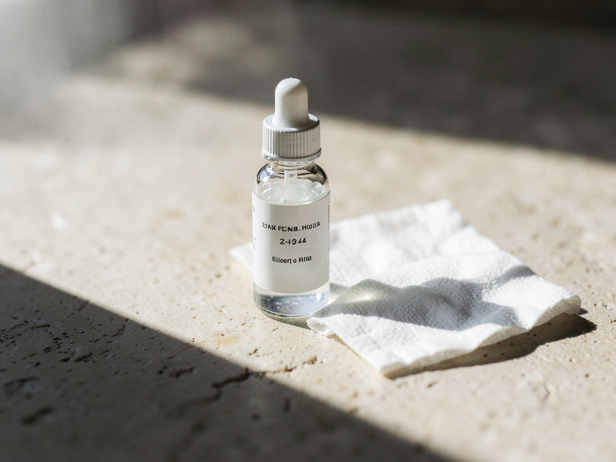
![Saline Dropper and Cotton]()
Saline Dropper and Cotton
Image credit : AI
Gentle care for brachycephalic cats, this saline solution aids in managing their health.
Dental crowding and skin folds
The compressed skull affects more than the airway and eyes. The same number of teeth that fit comfortably in a longer jaw are crowded into a shorter one, making dental disease, tartar buildup, gum inflammation, tooth resorption, more common and harder to manage. Flat-faced cats benefit from regular dental checks and professional scaling more than most cats do, and owners should expect this to be part of the ongoing cost of the breed.
Deep facial skin folds, present in many Persians and Exotics, trap moisture and debris. Fold dermatitis is the result: the skin inside the fold becomes red, sore, and prone to infection. Keeping folds clean and dry is a daily task, not a weekly one. If the fold is deep enough that cleaning does not resolve the irritation, a vet can assess whether the fold itself needs surgical correction.
What to ask before bringing a flat-faced cat home
In India, Persians and Exotic Shorthairs are widely bred, and the degree of facial flattening varies significantly between breeders. An extreme flat, where the nose sits level with or above the lower eyelid, carries a heavier health burden than a moderate flat where the nose bridge sits slightly below the eyes. Asking to see the parents, and looking at how easily the breeding cats breathe at rest, gives a reasonable indication of what the kitten will carry. A reputable breeder will not be offended by the question.
Flat-faced cats can live comfortable, full lives. The conditions above are manageable, not inevitable emergencies. But they require an owner who watches for the specific signs this skull shape produces, and who does not mistake laboured breathing for personality, or a weeping eye for normal breed variation. The structure is the starting point; daily attention is what keeps it from becoming the whole story.