A Lionhead rabbit's mane is not decorative in the way a bow on a collar is decorative. It is a genetic trait produced by the mane gene, and it comes with a coat that behaves differently from any other rabbit breed you might have kept. The mane grows around the head, sometimes extending to the chest and flanks, and it mats faster than it looks like it should. Understanding what you are committing to before the rabbit comes home is the whole point.
Where the mane comes from
![Lionhead Rabbit's Woolly Mane]()
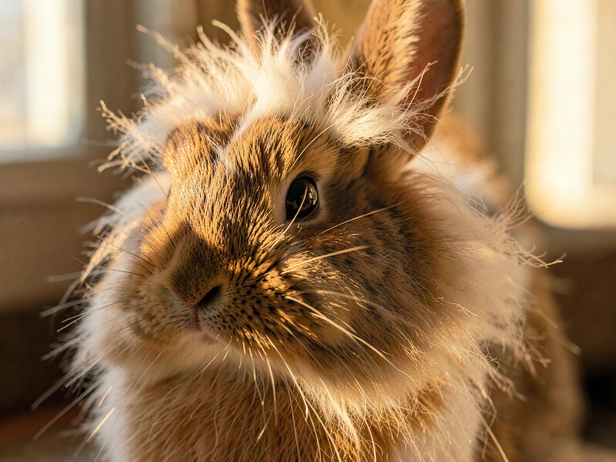
Lionhead Rabbit's Woolly Mane
Image credit : AI
Close-up of a Lionhead rabbit's distinctive woolly mane, highlighting its texture. Essential for understanding lionhead rabbit grooming.
The Lionhead is a relatively recent breed, developed in Belgium in the 1990s by crossing a Swiss Fox rabbit with a Netherland Dwarf. The mane gene is a natural genetic mutation that breeders selected for. A rabbit with one copy of the gene produces a single mane, concentrated around the head and sometimes a skirt around the hindquarters. A rabbit with two copies produces a double mane, which is fuller, extends further down the body, and requires considerably more grooming time. Most rabbits sold in India are single-mane animals, but it is worth asking the breeder which you are getting, because the grooming load is not the same.
What the mane actually does day to day
The mane wool is finer and softer than the rabbit's body fur, which means it catches hay, bedding, and loose fur from moulting faster than the rest of the coat. Rabbits groom themselves constantly, and when they ingest their own fur, it can accumulate in the digestive tract. Rabbits, unlike cats, cannot vomit. A fur blockage in the gut is a serious condition, not a minor inconvenience. Regular brushing removes loose fur before the rabbit swallows it, which is the practical reason grooming is non-negotiable rather than cosmetic. In a flat with air conditioning and dry air, the mane can also develop static that pulls strands into tangles more quickly.
A realistic grooming routine
![Rabbit Grooming Essentials]()
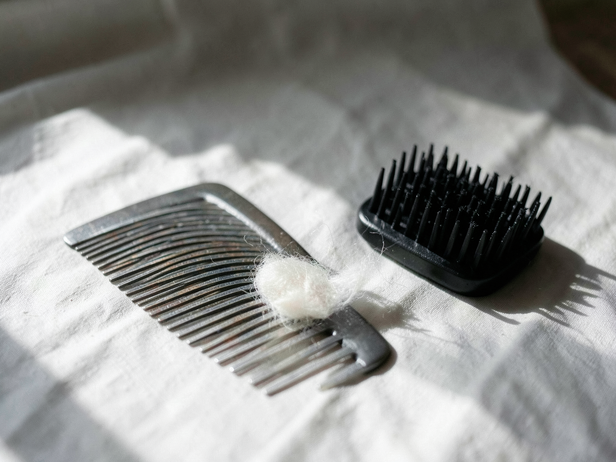
Rabbit Grooming Essentials
Image credit : AI
Essential tools for maintaining a rabbit's mane, preventing matting. Gentle grooming for healthy fur.
For a single-mane Lionhead, brushing three to four times a week is the minimum outside of moulting season. During a moult, which happens roughly twice a year, daily brushing is necessary. Use a slicker brush for the body coat and a wide-tooth comb for the mane itself, working from the tips inward rather than pulling through from the root. Matting in the mane behind the ears and under the chin is the most common problem. A mat that has tightened against the skin should not be pulled or cut blindly, because rabbit skin is thin and tears easily. If a mat will not loosen with careful finger separation and a detangling comb, a vet or an experienced rabbit groomer is the right next step. Attempting to cut a tight mat at home without training is how rabbits end up with a skin wound.
Health issues the mane can mask or cause
The wool around the face can trap moisture near the eyes and mouth, which creates conditions where skin fold dermatitis develops. Check the skin under the mane weekly: it should be dry, pale pink, and free of redness or flaking. Lionheads are also prone to dental problems because of their compact skull, a trait inherited from the Netherland Dwarf side of their lineage. Overgrown teeth can cause drooling, which then wets the chin fur and leads to fur loss and skin irritation. If you notice persistent wet fur under the chin or around the mouth, or if the rabbit stops eating hay, that is a reason to see a vet rather than a grooming problem to solve at home. Eye discharge that mats the fur near the inner corner of the eye is another sign worth getting checked, since blocked tear ducts are common in flat-faced rabbit breeds.
What a Lionhead needs beyond the mane
The breed is small, typically between 1.3 and 1.7 kilograms, and active. In a flat, that means daily free-roaming time outside the enclosure, a minimum of two to three hours, and a space large enough to binky, which is the full-body jump-and-twist a rabbit does when it feels good. A rabbit that cannot express this behaviour is not thriving regardless of how well its coat looks. Lionheads are social animals and do better in pairs than alone, though introductions between rabbits require a gradual process and should not be rushed. They eat primarily grass hay, which should make up the bulk of the diet, supplemented with leafy greens and a small amount of pellets. The mane is the most visible thing about this breed, but the animal underneath it needs the same careful attention.