The Kanni does not announce itself. It stands at the edge of the room, watches everything, and decides whether you have earned its trust. That restraint is not a temperament flaw, it is the whole point of the breed, and the first thing a prospective owner needs to understand before anything else.
Where the Kanni comes from
The Kanni is a native sighthound from Tamil Nadu, found historically in the districts around Tirunelveli and Thoothukudi. The name means pure or maiden in Tamil, and the breed was traditionally gifted, never sold, to a bridegroom as a mark of trust and protection. That cultural weight is not incidental. It shaped a dog that bonds with a household as a unit, not with strangers, and that treats its people with a quiet, almost formal loyalty.
It belongs to the same ancient sighthound family as the Chippiparai and the Rajapalayam, developed for coursing small game across the dry, open scrubland of southern India. Speed, endurance, and the ability to hunt by sight rather than scent are what the breed was selected for across generations. A Kanni can reach speeds that would surprise anyone who has only seen it resting, which is most of the time.
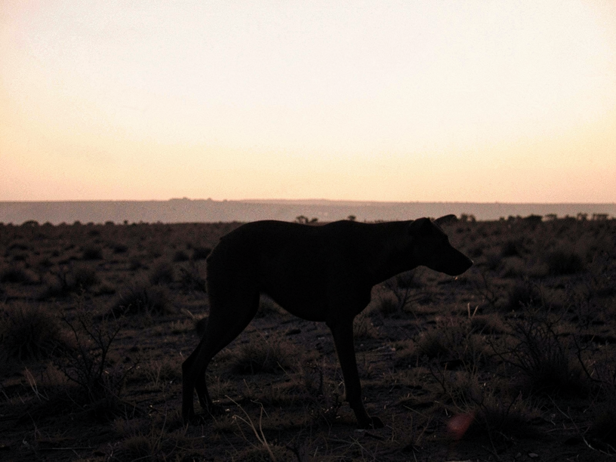
![Sighthound at Dusk]()
Sighthound at Dusk
Image credit : AI
I observe the vast scrubland, a lone Kanni dog breed silhouetted against the fading light.
What the Kanni looks like and how it is built
The Kanni is a lean, deep-chested dog with a tucked abdomen, long limbs, and a fine, short coat. It comes in black and tan, or black and sable, though some lines carry a cream or fawn base. The build is functional rather than decorative, every part of it exists to move fast and turn quickly on uneven ground.
The coat needs almost no maintenance. A weekly wipe-down is enough. There is no undercoat to shed in clumps, no grooming appointment required, and no breed-specific odour that owners of heavier-coated dogs will recognise. For a flat, that part is genuinely easy.
The dog is medium to large in size, typically between 25 and 33 kilograms, with males running larger. It is not a heavy dog for its height, the frame is built for efficiency, not bulk.
How the Kanni bonds with a family
This is where the breed either fits a household or does not. The Kanni is a one-family dog in a way that few breeds match. It will accept the people it grew up with completely, following them from room to room, settling close but rarely demanding contact, and watching the home with a calm, unhurried alertness. With those people, it is gentle, sensitive, and surprisingly easy to live alongside.
With strangers, it is a different animal. Not aggressive, the Kanni is not a breed known for biting or territorial displays with people, but genuinely withdrawn. A visitor to the home should expect to be ignored, or watched from a distance, for a long time. Forcing the introduction does not help. The Kanni decides its own timeline, and owners who understand that find the eventual acceptance, when it comes, is complete and lasting.
Children who grow up with a Kanni are typically included in the inner circle. Children who arrive later are treated the same as any other stranger and need the same patient introduction. This is worth knowing before bringing one home to a household that changes composition regularly.
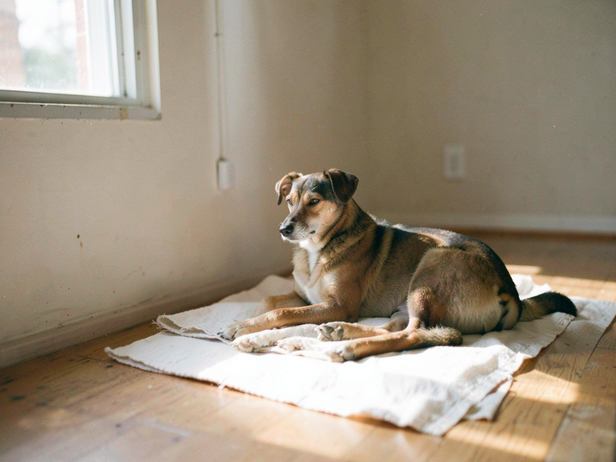
![Calm Kanni by the Window]()
Calm Kanni by the Window
Image credit : AI
My Kanni dog, a beautiful example of Indian sighthound breeds, enjoys the morning sun by the window.
Exercise, space, and what a flat actually demands
The Kanni was bred to run. That is not a metaphor, it has the cardiovascular and musculoskeletal build of an animal designed for sustained sprinting across open ground. In a flat, that need does not disappear; it has to be managed deliberately.
Two solid runs a day in a secure open area are the minimum. A Kanni let off-lead in an unsecured space will be gone before the owner finishes the thought, because sighthounds chase by instinct and at full speed. A long leash in a park is not the same as a run. A secure ground-floor compound, a gated community park, or a fenced sports ground gives it what it actually needs.
Inside the flat, the Kanni is calm. It is not a dog that paces, barks at walls, or destroys furniture when bored in the way some working breeds do, provided the exercise need is genuinely met. If it is not, the restlessness becomes visible, and no amount of indoor enrichment substitutes for the run.
Health, lifespan, and what to watch for
Native breeds that have not passed through heavy commercial breeding tend to be constitutionally hardy, and the Kanni is no exception. It does not carry the respiratory, joint, or skin problems that have been concentrated into many imported breeds through selective breeding for appearance alone.
That said, the lean build and low body fat that make sighthounds fast also make them sensitive to anaesthesia. Any vet treating a Kanni needs to know this before any procedure, including routine spaying or neutering. It is not a contraindication, it is a dosing and monitoring consideration that a vet familiar with sighthound physiology will already understand. If your vet has not worked with sighthounds before, say so at the first visit.
The thin coat and low subcutaneous fat also mean the Kanni feels cold more than most breeds. In a city flat with air conditioning running through the night, a dog bed with a blanket is not optional.
Lifespan is typically in the range of 14 to 16 years for a well-kept dog, which is long for a breed of this size. That is a commitment worth sitting with before deciding.
The Kanni's reserve with strangers, its need for real daily exercise, and its sensitivity are not problems to be trained away, they are what the breed is. A household that can meet those terms will find it an unusually calm, loyal, and low-maintenance companion for a very long time.