The Turkish Van is one of the few cat breeds where the water fascination is not a quirk picked up in kittenhood, it is woven into the breed's physical make-up and its centuries-long history around Lake Van in eastern Turkey. Understanding why it behaves the way it does makes it easier to decide whether a Turkish Van fits the life you can actually offer it.
Where the breed comes from and why it matters
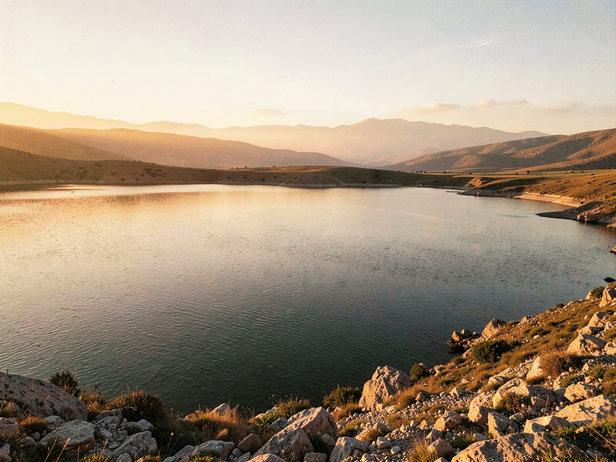
The Turkish Van developed as a landrace cat in the Lake Van region of eastern Anatolia, living around one of the largest high-altitude lakes in the world. The environment shaped the cat: cold winters, hot summers, and proximity to water. Cats that thrived there were robust, athletic, and comfortable in conditions that would stress a more sedentary breed. The breed reached Europe in the 1950s when two British photographers brought a pair back from Turkey. The Governing Council of the Cat Fancy recognised it in 1969. The Cat Fanciers' Association followed later. In Turkey itself, the Van cat, particularly the all-white variety with odd eyes, is considered a national treasure and is protected by a breeding programme at Van Yüzüncü Yıl University.
![Anatolian Highland Lake Glow]()
Anatolian Highland Lake Glow
Image credit : AI
I'm drawn to the serene beauty of this Anatolian highland lake, a perfect scene for a Turkish Van cat breed to explore.
The coat and why it behaves differently in water
The Turkish Van's coat is single-layered, with no dense undercoat to trap water and weigh the cat down. The texture is cashmere-like, soft, semi-long, and water-resistant in the way a waxed fabric is water-resistant rather than waterproof. Water beads and rolls off rather than soaking through. This is the physical reason the breed tolerates and often seeks out water. A double-coated breed that fell into a lake would emerge sodden and cold; a Turkish Van shakes off and moves on. In an Indian flat, this coat has a practical upside: it mats less than a full double coat and sheds seasonally rather than constantly. It still needs weekly combing, more during the spring shed, but it is not the daily commitment of a Persian or a Maine Coon.
Temperament in a flat: what the breed was built to do
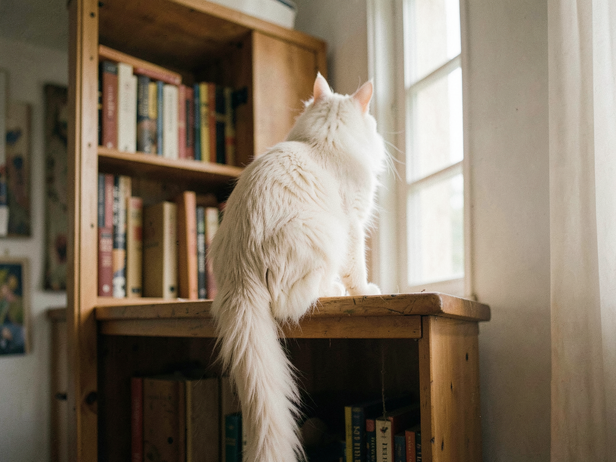
The Turkish Van was not bred to sit on a cushion. It was bred, through natural selection rather than deliberate human programme, to cover ground, hunt, and problem-solve in a varied landscape. In a flat, that energy has to go somewhere. These cats climb, they jump to the highest point in any room, they open cupboards, and they play with genuine intensity rather than the polite batting a less active breed might offer. They bond closely with their people but on their own terms, they are affectionate without being lap cats, and they tend to follow their person from room to room rather than settling in one spot. They are vocal, not in the persistent way a Siamese is, but they will tell you when something is wrong or when they want attention. For a working owner in a Bengaluru or Mumbai flat who is away for eight or nine hours a day, a Turkish Van kept alone without enough enrichment will redecorate. Two cats, or a very well-structured environment with climbing space and rotating toys, makes a real difference.
![Cat surveys its domain]()
Cat surveys its domain
Image credit : AI
I, a Turkish Van cat, enjoy a quiet moment by the window, surveying my surroundings from the highest point.
Health predispositions the breed carries
The Turkish Van is a generally hardy breed, the landrace origin means it was not narrowed through the kind of intensive selective breeding that concentrates genetic problems. That said, a few things are worth knowing before you bring one home. Hypertrophic cardiomyopathy, the most common heart disease in cats, appears in Turkish Vans as it does in most breeds; there is no breed-specific screening programme the way there is for Maine Coons, so an annual cardiac check with a vet who can auscultate carefully is reasonable. The all-white Turkish Van with two blue eyes carries a higher risk of congenital deafness, a link seen across white-coated, blue-eyed cats of many breeds and connected to the W gene's effect on the cochlear melanocytes. A white Van with one blue and one amber eye is often deaf on the blue-eyed side. This is worth testing for in a kitten, because a deaf cat in a flat near a busy road needs a different management approach than a hearing one. The breed is not known for flat-faced airway problems, exaggerated body proportions, or the joint issues that affect very large breeds.
Finding a Turkish Van in India and what to expect
The Turkish Van is rare in India. The Kennel Club of India does not register cats, and the Cat Fanciers' Association of India has a small but active community. Breeders exist, but they are few, and waiting lists are common for a well-bred kitten from parents with health records. Import from a registered European or Turkish cattery is possible but involves DGFT documentation, an import permit, airline-specific live animal policies, and a quarantine-adjacent acclimatisation period, none of these rules should be taken from this article as current, because they change; confirm every requirement with the relevant authority and the airline before committing. A Turkish Van kitten from a reputable source in India will cost significantly more than a common breed, and that cost reflects the rarity, not a guarantee of health. Ask to see the parents, ask about cardiac history in the line, and ask specifically about the deafness status of any white kitten. The rarity of the breed in India also means that if something goes wrong medically, you may need a vet with feline specialist experience rather than a general small-animal practice.