Walk into any aquarium shop in Delhi or Bengaluru and you will find Corydoras catfish in a corner tank, often sold as an afterthought, a few fish to clean the bottom. The cleaning part is a myth, and the afterthought part is the real problem. Corydoras are shoaling fish in the strictest sense of the word, and keeping one or two alone produces a fish that hides, barely moves, and stops eating well. The group is not a preference. It is a biological requirement.
What shoaling actually means for a Corydoras
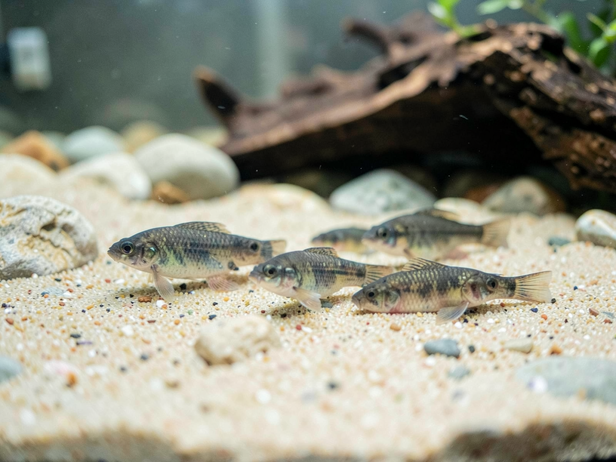
Shoaling is not the same as schooling. A school is a tightly coordinated formation; a shoal is a social group that stays loosely together by choice. Corydoras shoal. In the wild, across rivers in South America from the Andes to the Amazon basin, they move in groups of dozens to hundreds, foraging along the substrate together, resting in contact with each other, and responding to threats as a unit. The behaviour is hardwired. A lone Corydoras has no framework for interpreting its environment safely, because it evolved in a context where the group was always there. Without that reference, the fish reads everything as threat and spends most of its time motionless under cover.
![Catfish shoal glides gracefully.]()
Catfish shoal glides gracefully.
Image credit : AI
Observing Corydoras shoaling behaviour in a serene freshwater aquarium setting. These bottom dwellers thrive in groups.
The minimum group size, and why it matters
Six is the number most experienced keepers and aquatic welfare guidance converge on as a working minimum. Below six, the social structure breaks down. Three fish will often pair off and leave a third isolated; four or five produce a fragile group that destabilises if one fish dies. At six, the fish begin to show the behaviours they are built for: synchronised foraging sweeps along the bottom, resting in a pile, darting up to the surface together to gulp air. That last behaviour is not distress. Corydoras have a modified intestine that allows them to extract oxygen from air, a trait that evolved in seasonally low-oxygen waters. Seeing a group do it in unison is normal and healthy. A single fish doing it repeatedly while gasping at the surface is a different matter and warrants checking water parameters.
Species mixing: what works and what does not
There are over 160 described Corydoras species, and they do not all recognise each other as conspecifics. Corydoras paleatus will shoal with Corydoras paleatus. It will tolerate Corydoras aeneus in the same tank, but the two species will not form a coherent social group. Each will cluster with its own kind when given the choice. This matters practically: a tank with three paleatus and three aeneus does not give either species a group of six. It gives each species a group of three, which is below the functional threshold. For a home aquarium, the simplest rule is to pick one species and keep six or more of that species. The common Corydoras kept in India, paleatus, aeneus, julii, and the peppered Cory, are all hardy, widely available, and undemanding about water chemistry within a reasonable range.
![Aquarium Sand and Stone]()
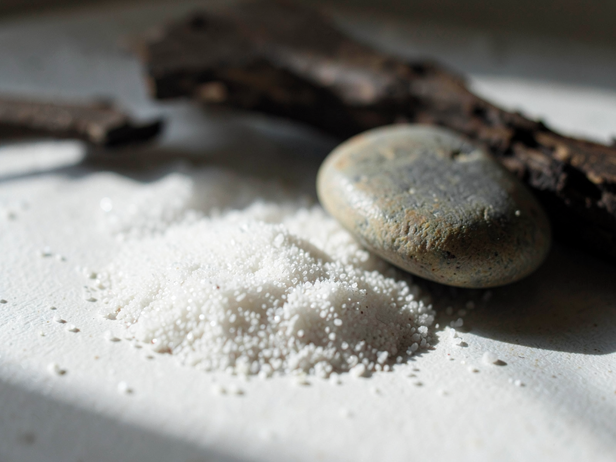
Aquarium Sand and Stone
Image credit : AI
A serene arrangement of aquarium sand, stone, and driftwood, perfect for bottom dweller fish.
Tank setup for a group
The bottom matters more than the water column for Corydoras. They have sensitive barbels, the whisker-like sensory organs around the mouth, and sharp or coarse substrate damages them over time, leading to barbel erosion that looks like the tips have been worn away. Fine sand is the correct substrate. Smooth rounded gravel is acceptable. Anything sharp, angular, or coarse is not. A group of six adult Corydoras of a medium species like aeneus or paleatus needs a minimum of 60 litres, with the footprint of the tank mattering more than the height, since these fish live entirely in the bottom third. Flat stones, smooth driftwood, and broad-leafed plants give the group resting spots and cover. Strong filtration with a gentle output suits them well; they come from rivers with current but not turbulence.
What a healthy group looks like day to day
A Corydoras group in good conditions is active during the day, particularly in the morning and early evening. The fish move together along the substrate, occasionally scatter and regroup, and rest in loose contact with each other. Colour is good, the pale base coat and dark markings are distinct, not washed out. Barbels are intact to the tip. Eyes are clear. A fish that sits apart from the group, clamps its fins, or shows faded colouring is signalling something is wrong, and the first check is always water quality: ammonia, nitrite, and nitrate, in that order. If parameters are clean and the fish is still isolated and lethargic, it is worth consulting an aquatic vet or an experienced aquarist, because internal parasites and bacterial infections are not visible from outside the tank.