The first question most people ask before getting a pet is what it eats or how much space it needs. The question that causes the most friction with neighbours, landlords, and family members is one that comes later: how loud is it going to be? Noise is not a minor consideration in a flat. It shapes which hours of the day you can manage the animal, whether your neighbours will complain, and whether you yourself will find the sound soothing or exhausting over years.
The silent end: fish, turtles, and invertebrates
Fish produce no audible sound. A well-maintained aquarium hums faintly from the filter and aerator, but the animals themselves are silent. Freshwater fish, goldfish, bettas, guppies, tetras, are the most common choice for flat-dwellers who want living creatures without any noise at all. Bettas are solitary and need a tank to themselves; community fish need adequate volume and compatible tankmates, which requires some research before buying.
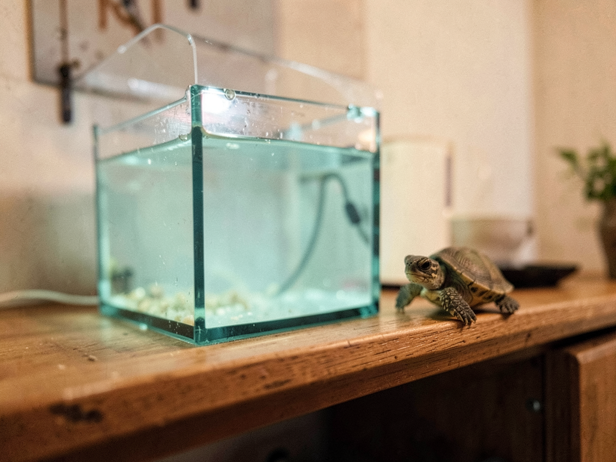
Freshwater turtles are similarly quiet. They splash when they move in and out of water, and a basking lamp adds a small electrical hum, but there is no vocalisation. The care requirement is higher than fish, a proper basking setup, UVB lighting, and a large enough enclosure, but the noise footprint is effectively zero.
Land hermit crabs and certain invertebrates fall in the same category. They are active at night, which can be heard as gentle scratching inside their enclosure, but nothing that travels through walls.
![Serene Turtle's Aquatic Home]()
Serene Turtle's Aquatic Home
Image credit : AI
A peaceful scene, perfect for quiet pets in Indian flats. This aquarium brings calm to any space.
Very low noise: most reptiles and small rodents
Leopard geckos, bearded dragons, and most other commonly kept lizards are quiet animals. Leopard geckos occasionally make a soft chirping sound, usually when stressed or during mating behaviour, but it is rare and brief. Bearded dragons are almost entirely silent. Both need specific temperature gradients and UVB lighting, and their enclosures take up meaningful floor space, but they will not disturb a neighbour.
Small rodents, hamsters, gerbils, mice, are quiet during the day because they are nocturnal or crepuscular. At night they run on wheels, dig, and move around, which produces a low-level rustling and, if the wheel is not properly maintained, a repetitive squeak. A silent-spinner wheel eliminates most of this. The animals themselves make very little sound; the enclosure setup determines the noise level more than the animal does.
Guinea pigs sit slightly higher. They produce a range of vocalisations, soft purring when content, a mid-pitched wheek when they want food or attention, that are audible in the same room but rarely carry through walls. They are social animals and do better in pairs, which doubles the sound but keeps it in the same quiet register.
Moderate noise: rabbits, cats, and small birds
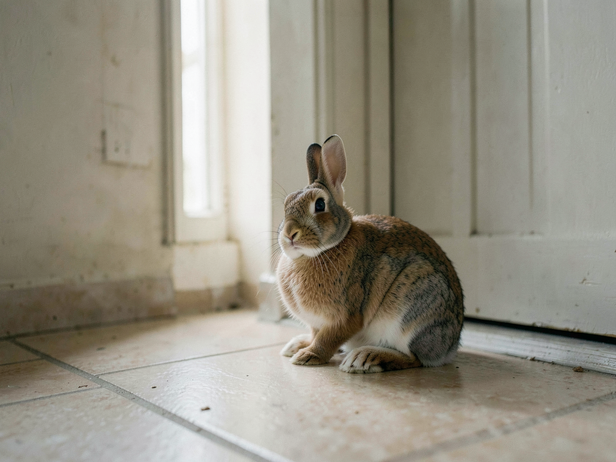
Rabbits are often thought of as silent, but they thump their hind legs against the floor when alarmed, and this travels through the structure of a flat, particularly in older buildings. The thumping is not constant, but it happens at night when rabbits are most active. Otherwise they are quiet animals with no vocalisation beyond the occasional soft tooth-grinding when content.
Cats vary considerably by individual and by breed. Most domestic cats are quiet most of the time. Siamese and their close relatives, Oriental Shorthairs, Balinese, are genuinely vocal breeds that will hold a conversation with you and call loudly when they want something. A quiet Indie cat is a different animal from a chatty Siamese. If noise is a concern, the individual matters as much as the breed. Cats in heat produce a loud, persistent yowling that is eliminated by spaying or neutering.
Budgerigars and cockatiels sit in the moderate range. Budgies chatter and chirp through the day, a pleasant background sound in the same room, audible but not piercing. Cockatiels are louder and have a contact call they use when they cannot see their owner, which can be sharp and repetitive. Both can be managed with routine and attention, but neither is truly quiet.
![Rabbit's Morning Stillness]()
Rabbit's Morning Stillness
Image credit : AI
A quiet pet for Indian flats, this rabbit enjoys a peaceful morning by the door. Low noise pets are ideal for apartment living.
High noise: dogs, large parrots, and roosters
Dogs are the most common source of noise complaints in Indian residential buildings. Barking is a normal behaviour; the question is frequency and trigger. Breeds matter here in a specific way: dogs bred to alert or guard, Beagles, Dachshunds, most terriers, German Shepherds, bark more readily and more persistently than breeds that were not selected for vocalisation. A Labrador Retriever or a Golden Retriever is not a silent dog, but it is typically less reactive than a Beagle or a Miniature Pinscher. Indie dogs vary widely by individual. Separation anxiety, boredom, and insufficient exercise all increase barking regardless of breed, so the management load is real.
Large parrots, African Greys, Amazons, Macaws, Cockatoos, are in a category of their own. A Cockatoo's contact scream can reach 135 decibels, comparable to a chainsaw. African Greys and Amazons are somewhat quieter but still capable of sustained loud calling, particularly at dawn and dusk. These birds are intelligent, long-lived, and need substantial social interaction; an under-stimulated large parrot is a loud one. They are not suitable for flat living unless the flat is large, well-insulated, and the neighbours are either absent or very understanding.
Roosters are occasionally kept in urban areas, particularly in semi-urban outskirts. They crow at dawn and intermittently through the day. Most residential societies and municipal bylaws prohibit them, and for good reason.
Matching noise to your situation
The honest way to use this information is to map it against three things: your flat's construction (older buildings transmit sound more readily), your neighbours' schedules, and your own tolerance for sound across years, not weeks. A budgie's chatter is pleasant at first and becomes background noise; a Cockatoo's scream does not soften with familiarity.
Noise level is also not fixed. A dog that is well-exercised, mentally stimulated, and not left alone for long stretches is a quieter dog than the same breed under-stimulated and isolated. Management shapes the outcome as much as the animal's baseline. The choice of pet sets the ceiling; how you keep it determines where you actually land.