Small rabbits get chosen for the wrong reason almost every time. The ears are floppy, the face is round, the size feels manageable, and the decision is made before anyone has asked what the animal needs to stay healthy and unstressed in a home with no garden.
The Holland Lop and the Netherland Dwarf are the two breeds most likely to end up in an Indian flat, and they are genuinely different animals in temperament, health risk, and daily care load. Getting that difference wrong costs the rabbit more than it costs the owner.
Where each breed comes from and what that built into them
The Holland Lop was developed in the Netherlands in the 1950s by crossing the French Lop with the Netherland Dwarf and then introducing the English Lop for the ear carriage. The goal was a small rabbit with the lopped ear of a large breed. The result is a compact, broad-bodied animal that typically weighs between 1.8 and 2 kg, with ears that hang close to the cheeks rather than flaring outward. The breeding selected for a calmer disposition alongside the physical trait, and Holland Lops are generally the more placid of the two breeds, more willing to sit with a person, less likely to bolt when handled.
The Netherland Dwarf has a different origin and a different character. It was developed in the Netherlands in the early twentieth century from Polish rabbits crossed with small wild rabbits, and the result is one of the smallest recognised rabbit breeds, typically between 0.9 and 1.1 kg. The rounded head, very short ears, and large eyes are the result of a genetic dwarfism mutation. That mutation also built in a temperament that leans alert and independent. Netherland Dwarfs are quick, curious, and easily startled. They are not unfriendly, but they are not naturally lap animals, and they take longer to trust a new person or a new environment.
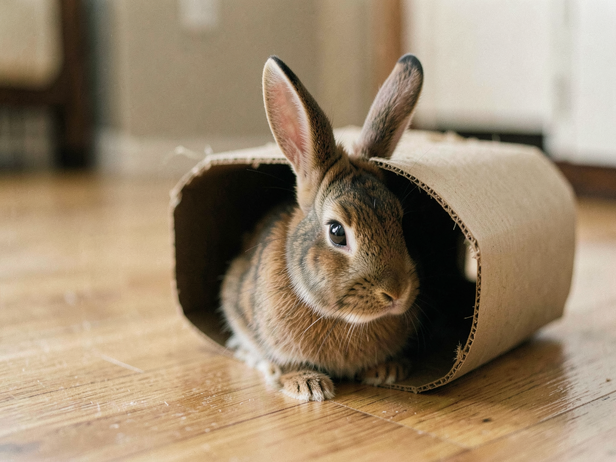
![Rabbit Explores Cardboard Tunnel]()
Rabbit Explores Cardboard Tunnel
Image credit : AI
My Netherland Dwarf rabbit enjoys exploring its cardboard tunnel, a simple joy for small rabbit breeds.
What the flat actually needs to provide
Both breeds are often marketed as low-maintenance pets, which is accurate in comparison to a dog and inaccurate in every other sense. Rabbits are not caged animals by nature. They need several hours of free-roaming time each day in a rabbit-proofed space, cables, houseplants, and gaps behind furniture are all hazards. A cage used as a permanent enclosure produces a stressed, often aggressive rabbit regardless of breed.
The Holland Lop's calmer temperament means it adapts better to a quieter flat routine, but it still needs the same floor time. The Netherland Dwarf's energy and alertness means it needs more environmental enrichment, tunnels, boxes to investigate, things to push around, or it will find its own stimulation in your furniture and wiring.
Both breeds are social animals. A single rabbit kept without a bonded companion will show boredom behaviours: excessive thumping, fur pulling, or a flat, withdrawn affect that owners sometimes mistake for contentment. Two neutered rabbits of compatible temperament are a more stable arrangement than one rabbit alone, though bonding takes time and should be done carefully with gradual introductions.
Temperature is a real concern in most Indian cities. Rabbits are comfortable between roughly 15 and 25 degrees Celsius and begin to suffer heat stress above 28. A flat without reliable air conditioning in summer is a serious welfare problem for either breed. Signs of heat stress in a rabbit, stretched out flat, rapid breathing, wet around the nose, require immediate cooling and a vet call.
Health predispositions specific to each breed
The Holland Lop's lopped ear carriage is not natural to rabbits. The ear canal in a lopped rabbit runs at an angle that traps debris and moisture differently from an upright ear. This makes Holland Lops predisposed to ear canal problems, including wax accumulation and infection. Regular ear checks are part of ownership, not an occasional task. Any sign of head tilting, scratching at the ear, or discharge is a vet visit, not a wait-and-see situation.
The Holland Lop's broad, compressed skull also means dental problems are more common than in longer-faced breeds. Rabbit teeth grow continuously throughout life and must wear evenly against each other. A skull shape that crowds the jaw can cause teeth to meet incorrectly, leading to overgrown molars that the owner cannot see and the rabbit cannot communicate clearly. Reduced appetite, drooling, or a rabbit that drops food while chewing are signs of a dental problem that needs a vet with rabbit experience, not a general small-animal clinic.
The Netherland Dwarf carries the same dental risk more acutely. The dwarfism mutation that produces the compact skull often results in teeth that are structurally misaligned from birth. Some Netherland Dwarfs develop molar spurs within the first two years of life. A hay-based diet, hay should make up at least 80 percent of a rabbit's daily intake, is the single most important factor in keeping teeth worn correctly, but it cannot overcome a severe structural misalignment. Any Netherland Dwarf owner should establish care with a rabbit-experienced vet early and schedule dental checks annually at minimum.
Both breeds can develop gastrointestinal stasis, a condition where gut motility slows or stops. It is a medical emergency in rabbits. A rabbit that has not eaten or produced droppings for twelve hours needs a vet the same day, not the next morning.
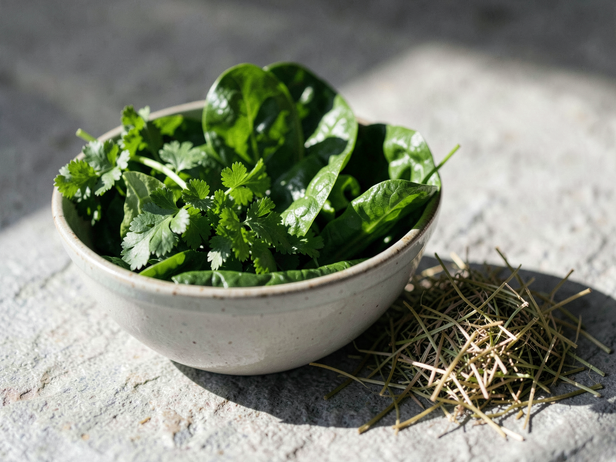
![Fresh Greens for My Rabbit]()
Fresh Greens for My Rabbit
Image credit : AI
I prepare a healthy meal of fresh greens and timothy hay for my rabbit, focusing on a balanced diet. This is essential for Holland Lop rabbit care in India.
Handling, bonding, and what to expect from each temperament
The Holland Lop's reputation for being handleable is real but conditional. A rabbit that was handled frequently and positively from a young age will tolerate and often enjoy being held. A rabbit that was not will not, regardless of breed. Forcing handling on a rabbit that is not comfortable with it causes stress and often results in a kick or scratch that can injure both the rabbit and the person holding it, rabbits have powerful hindquarters and a fragile spine, and a rabbit that twists sharply while being held can fracture its own lumbar vertebrae.
The Netherland Dwarf's independent temperament does not mean it cannot bond with its owner. It means the bond is built differently, on the rabbit's terms, at floor level, through patience rather than picking up. A Netherland Dwarf that chooses to sit beside a person is expressing more trust than a Holland Lop that tolerates being held because it was socialised to it.
Neither breed is suitable as a child's first pet in the way a hamster might be framed that way. Both need an adult who understands that a rabbit communicates through behaviour, not vocalisation, and that a rabbit showing aggression or withdrawal is telling you something about its environment or health, not its personality.
Diet, grooming, and the daily care load
Hay is not optional. Timothy hay or orchard grass hay should be available at all times and should form the bulk of the diet. Pellets are a supplement, not a staple, a small measured amount per day, not a bowl kept full. Fresh leafy greens in variety are part of a balanced diet; iceberg lettuce, starchy vegetables, and fruit in any quantity beyond a small treat are not. Roti, bread, biscuits, and dairy have no place in a rabbit's diet and cause digestive problems.
The Holland Lop's coat is dense and rolls rather than parts, which means it mats if not brushed two or three times a week. During moult, which happens roughly twice a year but can be more frequent, daily brushing prevents the rabbit from ingesting fur while grooming itself, which contributes to gastrointestinal problems. The Netherland Dwarf's shorter coat is easier to maintain but still needs regular attention during moult.
Nails grow continuously and need trimming every six to eight weeks. A rabbit with overgrown nails catches them on surfaces and can injure a toe. If the owner is not comfortable doing this, a rabbit-experienced vet or groomer can do it as a routine task.
Neither breed needs bathing. Rabbits groom themselves and bathing causes significant stress. Spot cleaning with a damp cloth on soiled areas is the appropriate response to a dirty coat, not a full wash.
The two breeds share enough care requirements that the choice between them comes down to temperament match more than logistics. A household that wants a rabbit that will settle near people and accept handling is better suited to a well-socialised Holland Lop. A household that is comfortable earning trust slowly and watching a rabbit express its personality on its own terms will find the Netherland Dwarf more rewarding. Either way, the commitment is the same: a decade or more of daily attention, a hay-based diet, regular vet care from someone who actually knows rabbits, and a home where the rabbit has space to move.