
Animal Breeds With the Most Unusual Eyes in Nature
Upasna Yadav | Mar 16, 2026, 13:30 IST

Animal With Most Unusual Eyes and vision Abilities
When you view the world a certain way, it's easy to forget not everyone has the same vision. We do mean that quite literally. Aside from philosophical considerations of the subjective experience of color, different organisms have evolved to view the world differently, with eye structures and configurations optimized for various kinds of existence.
Highlights
1. Some animals with the strangest and weirdest eyes in the animal kingdom Nature’s diversity is most apparent when viewed through the eyes, literally.
2. Certain organisms have the ability to see colours that are invisible to humans, while others have eyes that are independent or can detect light all over their entire body.
3. From the eagle’s ability to spot prey from miles away to the chameleon seeing almost every angle of its surroundings without moving its head, the animal kingdom is filled with unique and complex visual perspectives.
2. Certain organisms have the ability to see colours that are invisible to humans, while others have eyes that are independent or can detect light all over their entire body.
3. From the eagle’s ability to spot prey from miles away to the chameleon seeing almost every angle of its surroundings without moving its head, the animal kingdom is filled with unique and complex visual perspectives.
Some creatures with the most unique eyes in the world
1. Chameleon
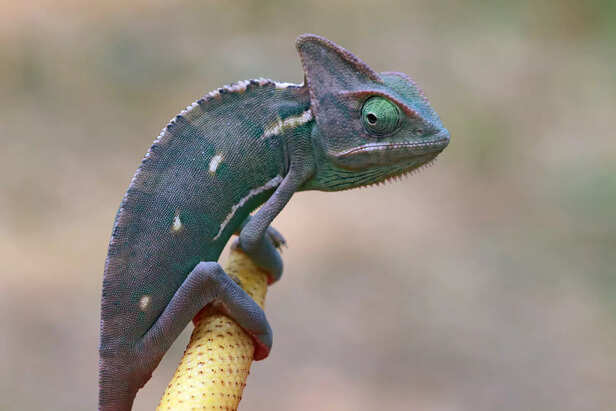
Unique Eye Structure of Chameleon
Chameleons have very specialized eyes that are capable of moving independently and offering near-panoramic vision. This enables them to observe their environment as they focus on their prey at the same time. The eyes of chameleons are also capable of monocular depth perception and rapid focusing, which helps them catch insects effectively.
2. Ostrich
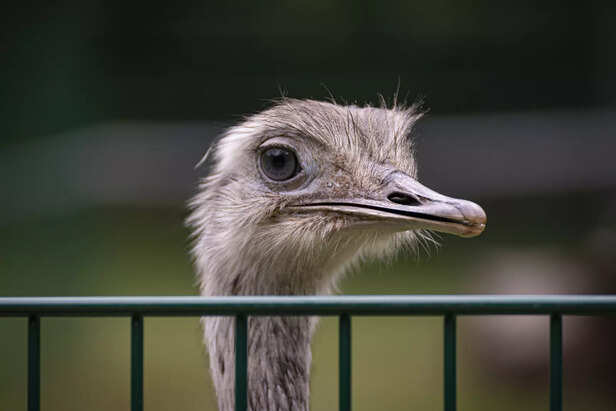
Large and Powerful Eyes of an Ostrich
Ostriches have eyes bigger than their brains, which helps them have a wider field of vision. This is necessary for them to detect predators in open spaces. Their long eyelashes protect their eyes from dust and debris. The strange and wonderful eyes found across the animal kingdom demonstrate how evolution tailors vision to survival needs. From the mantis shrimp’s color-detecting super-vision to the sea urchin’s body-wide light sensing, each adaptation reflects a unique ecological challenge. These extraordinary systems remind us that human eyesight is only one small variation in a vast spectrum of biological possibilities.
3. Great horned owls
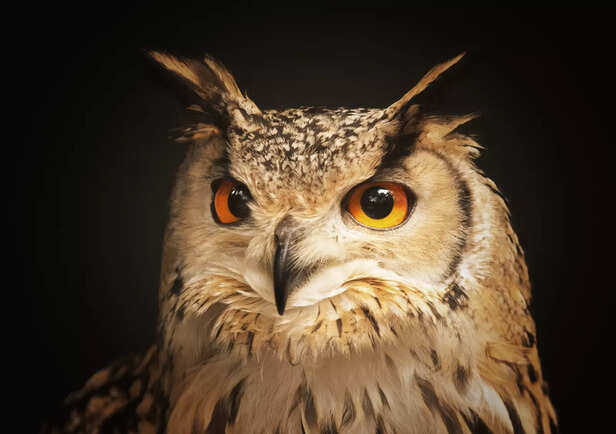
Sharp Night Vision of a Horned Owl
Great horned owls (Bubo virginianus) are easily recognized by their tall ear tufts and bright yellow eyes, which are larger in proportion to their brains than the eyes of any other owls. The striking yellow colour of their irises comes from a rare pigment called xanthopterin. Their eyes constitute up to 5% of their total body weight for comparison, humans’ eyes are about 0.02% of our body weight. The eyes of many birds of prey take up about half of their total cranial volume. Horned owls’ eyes are very well adapted to low-light environments, which is important considering they are nocturnal hunters. They also can constrict their pupils very quickly in less than 176 milliseconds after a flash of light. Another interesting fact is that their eyes are not ball-shaped, but tube-shaped. This renders their eyes completely immobile, but this isn’t really an issue considering they can rotate their heads 270 degrees. The shape of their eyes helps with depth perception and allows them to zero in on their prey. Owls’ exceptional vision is one of the reasons why humans have associated them with wisdom for millennia.
4. Horse
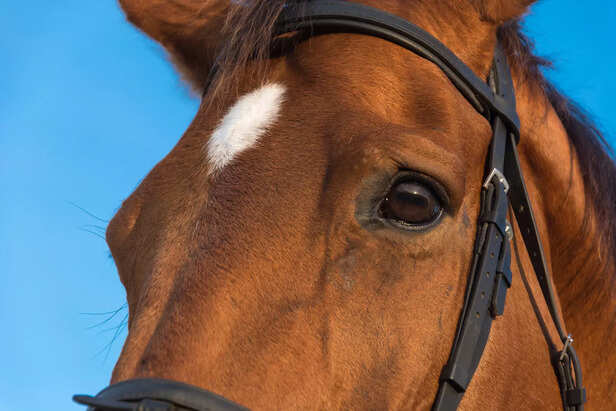
Wide Vision Eyes of a Horse
Surprisingly, horses (Equus caballus) have some of the largest eyes of all land mammals. Their eyes are about 5 centimeters (2 inches) in diameter. For comparison, elephants’ eyes are about 3.8 centimeters (1.5 inches) in diameter. Thanks to the size of their eyes, horses see everything about 50% larger than humans do. Because of how a horse’s eyes are positioned on the sides of its head, it can see almost 360 degrees although it does have two blind spots, directly in front of and directly behind its head.
5. Deer
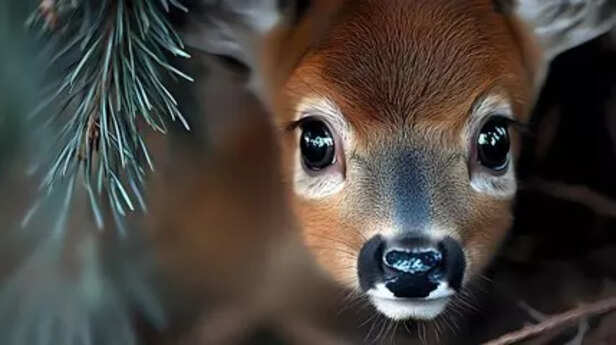
Alert Eyes of a Deer in the Wild
Deer eyes have pupils that are wide, horizontal slits, as you can see in this image. This shape allows them to let in more light than human pupils can, especially as they open wider in low-light conditions. It also is important in detecting movement across a wide, horizontal view where danger is most likely to appear. While this pupil shape helps them monitor a broader area, they sacrifice sharpness. Normal human eyesight is 20/20. Deer have a normal daylight eyesight of about 20/60, which means they see 3 times less clearly than humans! If you have ever made eye contact with a deer for what felt like an eternity, it is likely because they are trying to figure out exactly what they’re looking at.
Celebrate the bond with your pets, explore Health & Nutrition, discover Breeds, master Training Tips, Behavior Decoder, and set out on exciting Travel Tails with Times Pets!
Frequently asked questions (FAQs)
- Why chameleon eyes considered unique ?
Chameleons can move their eyes independently, allowing them to look in two different directions at the same time. This helps them watch for predators while hunting insects. - Why do horse and deer have eyes on the sides of their head ?
Horses and deer have side-placed eyes that give them a very wide field of vision. This allows them to detect danger quickly from different directions. - How do unusual eyes help animals survive ?
Unique eye structures help animals hunt, avoid predators, and adapt to their environment by improving vision, depth perception, or night sight. - What makes horned owl eyes unique ?
Horned owls have powerful night vision. Their large forward-facing eyes help them see clearly in low light and hunt effectively at night.