
10 best fish based on tank size: From nano aquariums to large home tanks
Oct 06, 2026, 09:08 IST

From nano aquariums to large home tanks
Whether you are setting up your first nano tank or planning a large freshwater aquarium, matching the fish to the available space is one of the most important decisions you can make. Here are 10 popular fish choices, organised around the tank sizes they can thrive in.
Choosing aquarium fish is not just about finding a species that looks beautiful. The size of the tank matters just as much. A fish that appears perfectly suited to a small aquarium as a juvenile may eventually need far more swimming space, filtration and territory than expected. Whether you are setting up your first nano tank or planning a large freshwater aquarium, matching the fish to the available space is one of the most important decisions you can make. Here are 10 popular fish choices, organised around the tank sizes they can thrive in.
Betta fish are among the most popular choices for smaller aquariums, thanks to their striking colours and flowing fins. A single betta can generally be kept in a properly filtered, heated aquarium of around 5 gallons or larger. Despite their small size, bettas are not simply decorative fish for tiny bowls. They need stable water conditions, a heater and gentle filtration. They can also be territorial, particularly toward other bettas.
![Keeping males only is one way to avoid an unexpected population boom]() Endler’s livebearers are tiny, colourful and active, making them a good option for a small community aquarium. A 10-gallon tank can accommodate a small group when it is appropriately maintained. Because they are prolific breeders, however, an aquarium can quickly become crowded. Keeping males only is one way to avoid an unexpected population boom.
Endler’s livebearers are tiny, colourful and active, making them a good option for a small community aquarium. A 10-gallon tank can accommodate a small group when it is appropriately maintained. Because they are prolific breeders, however, an aquarium can quickly become crowded. Keeping males only is one way to avoid an unexpected population boom.
Neon tetras are schooling fish, so their needs cannot be judged by the size of a single fish. They are best kept in groups, where their blue and red colouring creates one of the classic freshwater aquarium displays. A 10-gallon tank can work for a carefully planned group, although a longer aquarium provides more useful swimming space.
Guppies are hardy, colourful and relatively easy to care for, which makes them a longstanding favourite among beginner aquarists. A 10-gallon aquarium can house a small group, provided the tank is not overcrowded. Like Endler’s livebearers, guppies reproduce quickly. If males and females are kept together, the population can grow surprisingly fast.
![A tank of around 15 gallons or larger gives a small school more room to behave naturally]() Harlequin rasboras are peaceful schooling fish with distinctive copper-coloured bodies and dark markings. They are most comfortable in groups and benefit from a planted aquarium with open swimming areas. A tank of around 15 gallons or larger gives a small school more room to behave naturally.
Harlequin rasboras are peaceful schooling fish with distinctive copper-coloured bodies and dark markings. They are most comfortable in groups and benefit from a planted aquarium with open swimming areas. A tank of around 15 gallons or larger gives a small school more room to behave naturally.
Honey gouramis bring warm golden and orange tones to a freshwater aquarium. They are generally peaceful and spend much of their time in the upper and middle areas of the tank. A 20-gallon aquarium provides considerably more room for a honey gourami, particularly if it shares the tank with other peaceful species.
Cherry barbs are another colourful schooling species. Males can develop an especially vivid red colour, while females tend to be more subdued. They are active fish and should be kept in groups, making a 20-gallon aquarium a more appropriate starting point than a tiny tank.
![Tall aquariums can also be useful because they provide the vertical space these fish naturally use]() Angelfish can look deceptively small when young, but they grow into tall-bodied fish with long fins. Their height is an important consideration when choosing an aquarium. A 55-gallon tank or larger is a much better long-term home, particularly for multiple angelfish. Tall aquariums can also be useful because they provide the vertical space these fish naturally use.
Angelfish can look deceptively small when young, but they grow into tall-bodied fish with long fins. Their height is an important consideration when choosing an aquarium. A 55-gallon tank or larger is a much better long-term home, particularly for multiple angelfish. Tall aquariums can also be useful because they provide the vertical space these fish naturally use.
Oscars are intelligent and highly interactive, but they are also large, messy cichlids that produce considerable waste. Their eventual size makes them unsuitable for most community tanks. For a single adult Oscar, a 75-gallon aquarium is a sensible minimum starting point, with even larger tanks offering more comfortable long-term space.
Goldfish are often associated with small bowls, but common and comet goldfish can grow surprisingly large. They also produce a significant amount of waste and require strong filtration. A large aquarium, such as a 75-gallon setup for an adult fish, is far more appropriate than a bowl. Multiple goldfish require substantially more space.
Tank volume is only one part of the equation. The aquarium’s dimensions, filtration, water parameters, swimming space, temperature and number of fish all influence whether a setup is suitable. A useful rule is to choose the aquarium based on the fish’s adult size, not the size at the pet shop. Schooling species should also be considered as groups rather than individual fish.
And while larger tanks require more initial investment, they can actually be easier to keep stable because water conditions tend to fluctuate less dramatically than in very small aquariums. Ultimately, the best aquarium is not the one that fits the most fish. It is the one that gives the fish enough room to grow, swim and behave naturally while allowing the keeper to maintain consistently good water quality.
Betta fish : 5 gallons or larger
Endler’s livebearers: 10 gallons or larger
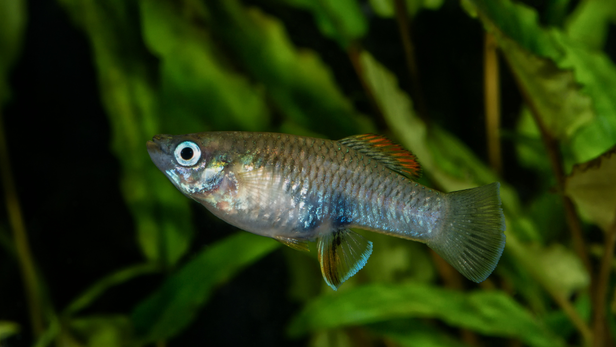
Keeping males only is one way to avoid an unexpected population boom
Neon tetras: 10 gallons or larger
Guppies: 10 gallons or larger
Harlequin rasboras: 15 gallons or larger
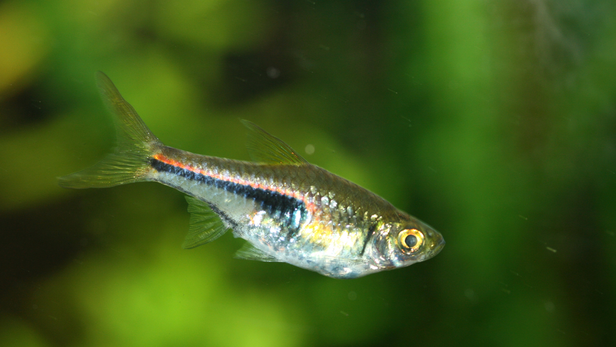
A tank of around 15 gallons or larger gives a small school more room to behave naturally
Honey gourami: 20 gallons or larger
Cherry barbs: 20 gallons or larger
Angelfish: 55 gallons or larger
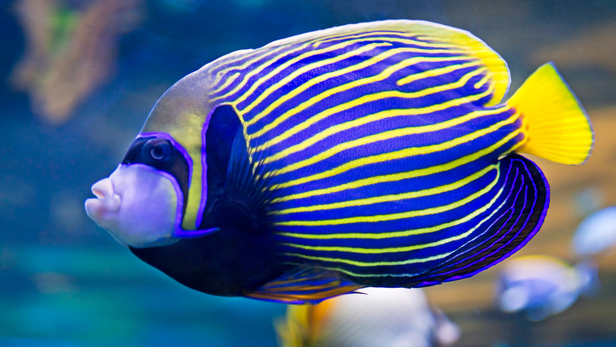
Tall aquariums can also be useful because they provide the vertical space these fish naturally use
Oscar: 75 gallons or larger
Common goldfish: 75 gallons or larger
The right tank is about more than litres
And while larger tanks require more initial investment, they can actually be easier to keep stable because water conditions tend to fluctuate less dramatically than in very small aquariums. Ultimately, the best aquarium is not the one that fits the most fish. It is the one that gives the fish enough room to grow, swim and behave naturally while allowing the keeper to maintain consistently good water quality.