The first time a rabbit binkies in a flat, the owner usually checks for something broken. The animal explodes off the floor, twists its spine mid-air, kicks its back legs out sideways, and lands facing a completely different direction, sometimes mid-run, sometimes into another binky, sometimes into a full-speed lap of the room. Nothing caused it. Nothing is wrong. That is the point.
What is actually happening in the body
A binky is a full-body expression of positive arousal. The rabbit contracts its back muscles sharply, which loads the hindquarters like a spring. The mid-air twist comes from the spine rotating while the head and hindquarters move in opposite directions, a movement rabbits use in the wild to change direction at speed when fleeing a predator, repurposed here as pure expression. The kick of the back legs, sometimes called a "dead bunny flop" when it ends in a sprawl, is the same musculature firing without the escape context. The whole sequence lasts under a second and burns a surprising amount of energy, which is why a rabbit doing multiple binkies in a row will often stop, sit, and breathe for a moment before going again.
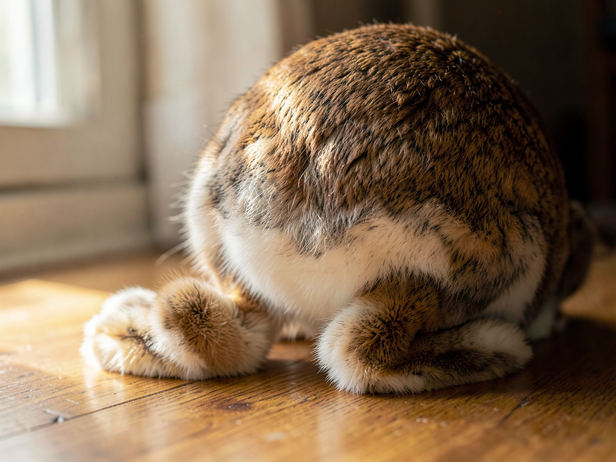
![Rabbit's Powerful Hindquarters]()
Rabbit's Powerful Hindquarters
Image credit : AI
Observing the powerful hindquarters of a rabbit, a sign of its readiness for a happy binky.
What triggers them
Binkies cluster around specific moments: when a rabbit is let out of its enclosure into a larger space, when it gets a food it particularly likes, when it has been resting and something shifts its mood, or for no legible reason at all during a free-roam session. Some rabbits binky at their owner's arrival. Some do it after using their litter tray. The common thread is a state of positive excitement, the rabbit equivalent of a dog's zoomies, but compressed into a single explosive movement rather than a sustained run. Young rabbits binky more than older ones, and rabbits with more space to move in tend to binky more than those in cramped enclosures. A rabbit that has just been given more room will often binky within the first few minutes of exploring it.
The difference between a binky and a pain response
This matters, because a rabbit in pain can also move in ways that look sudden and strange. A rabbit that is binkying is relaxed before and after the movement, ears forward or loosely back, body soft, often returning immediately to eating or exploring. A rabbit that has spasmed, stumbled, or moved suddenly because something hurts will show tension: a hunched posture, teeth grinding, reluctance to move, or a change in eating and litter habits. Head tilt, where the rabbit holds its head at a pronounced angle and may roll or circle, is a veterinary matter and should not be confused with a binky. If the sudden movement is accompanied by any of those signs, or if the rabbit seems distressed rather than energised after it, that is a reason to call a vet rather than to watch and wait.
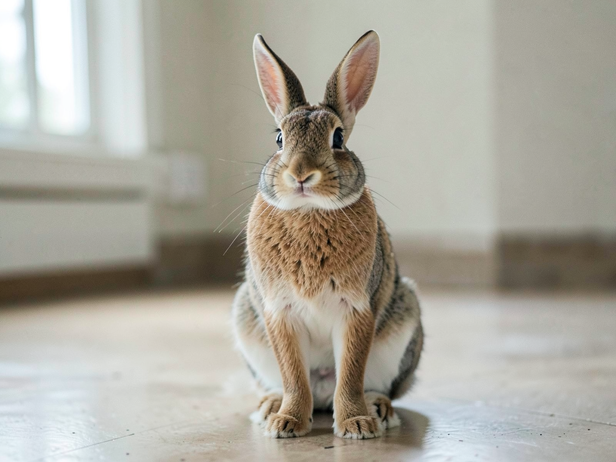
![Alert Rabbit in Daylight]()
Alert Rabbit in Daylight
Image credit : AI
Observing my surroundings, I exhibit happy behaviour signs. My relaxed posture indicates contentment.
What it tells you about your rabbit's welfare
A rabbit that binkies regularly is, by one of the clearest behavioural signals available, a rabbit that is experiencing positive welfare. Rabbits are prey animals with strong instincts to suppress visible signs of discomfort, they do not perform happiness for an audience. A binky is involuntary in the sense that it is not a trained behaviour and does not occur in animals that are stressed, in pain, or chronically under-stimulated. Rescue organisations and rabbit welfare groups use the presence of binkying as one informal indicator when assessing whether a rabbit's housing and social conditions are adequate. A rabbit that has never binkied in the owner's presence is not necessarily unwell, but it is worth asking whether the enclosure gives it enough space to move freely, whether it gets sufficient daily time outside the enclosure, and whether it has enough environmental variety to stay engaged. Some rabbits are naturally more reserved than others, and a quiet rabbit in good health is not a problem. A rabbit that used to binky and has stopped is worth paying attention to.