A bottle cap weighs almost nothing, skitters unpredictably across a tile floor, and disappears under the fridge at exactly the wrong moment. To a cat, that is not a flaw. That is the whole point.
The hunt is the point, not the toy
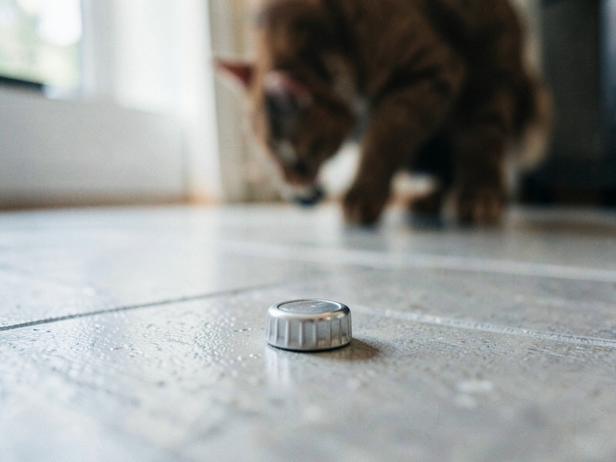
![Bottle Cap Intrigue]()
Bottle Cap Intrigue
Image credit : AI
A simple bottle cap captures feline attention, a common sight when cats ignore toys for household objects.
Cats are solitary ambush predators. In the wild, a successful hunt depends on detecting small, fast, erratic movement and responding to it faster than the prey can escape. That entire sequence, stalk, pounce, catch, kill, is driven by a neural reward loop that has not changed much in thousands of years of domestication. What triggers the loop is not the object itself. It is the object's movement pattern.
A bottle cap, flicked across a smooth floor, moves in short, unpredictable bursts. It changes direction. It stops suddenly. It is light enough that a single paw-tap sends it somewhere new. Every one of those qualities maps onto the movement of a small rodent or insect. The expensive plush mouse sitting still on the carpet maps onto nothing in that system at all.
Why novelty fades so fast
Cats habituate quickly. This is also a survival trait. A predator that keeps investing energy in something that does not move is a predator that starves. The brain essentially marks a stationary or predictable object as checked and moves on. This is why the feathered wand that sent your cat into a frenzy on day one is being walked past by day four. The object has not changed. The cat's assessment of it has: it has been filed as not prey.
Bottle caps and similar found objects stay interesting longer for a simple reason. They are not designed to be toys, so they have no consistent behaviour. Each flick produces a slightly different result. The cat cannot fully predict the next movement, which keeps the prey-detection system engaged.
Texture, sound, and size matter more than price
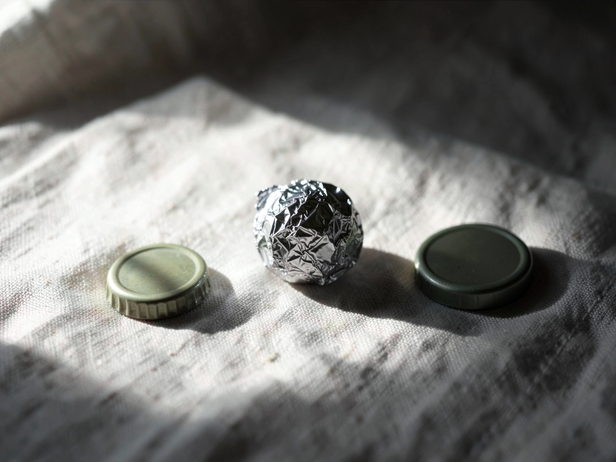
![Everyday Objects, Cat's Delight]()
Everyday Objects, Cat's Delight
Image credit : AI
Why cats ignore toys? These everyday objects offer endless fascination, proving simple items can be the best cat enrichment at home.
The sensory profile of an object does real work here. Cats have highly sensitive whiskers and paw pads that pick up vibration and texture. A lightweight object that makes a sharp click or skitter sound on a hard floor gives tactile and auditory feedback that a soft, silent plush toy does not. The size matters too: most cats prefer objects small enough to bat with one paw and carry in their mouth, which puts bottle caps, pen caps, crumpled paper balls, and foil scraps in a very usable range.
This is also why many cats are drawn to hair ties, rubber bands, and small plastic rings from milk cartons, though it is worth noting that any small object a cat might swallow is a hazard. If your cat is a dedicated chewer or tends to eat non-food items, keep bottle caps and similar objects out of reach and offer safer alternatives.
What this tells you about buying toys
The toy industry for cats has improved, but a lot of product is still designed to appeal to the person buying it rather than the cat using it. Bright colours mean little to cats, whose colour vision is limited compared to humans. Elaborate shapes that sit still are furniture. What works is movement, unpredictability, and the right size and weight.
Interactive toys that require your involvement, a string pulled under a door, a wand moved in short, darting arcs rather than slow circles, tend to hold attention longer than battery-powered toys, because you can vary the pattern in real time. Rotation also helps: putting a toy away for a week and reintroducing it can reset some of the habituation. The cat that ignored it last month may find it interesting again simply because enough time has passed.
If a toy consistently gets ignored after the first session, it is not a failure of your cat's imagination. It is the toy failing to sustain the movement profile that the hunt system is looking for. A bottle cap that skitters under the fridge and requires a fishing expedition to retrieve is, by that measure, a near-perfect toy, which is a slightly uncomfortable thing to admit after spending a lot of money on something with batteries.
The most useful thing the bottle cap reveals is not that your cat is contrary. It is that the behaviour you are watching is a predator running a system shaped over millions of years, and that system has very specific requirements. Meeting them does not have to cost much. It mostly just has to move right.