
Why the Garuda Purana Is Named After Garuda
Kashish Pandey | Sep 02, 2025, 12:30 IST

garudn
Image credit : Pixabay
The Garuda Purana is one of the most well-known texts in Hindu literature, especially because of its association with life, death, and the afterlife. Among the eighteen Mahapuranas, it holds a unique position. It is often read during funeral rites, and its descriptions of the soul’s journey after death have left a deep imprint on Hindu cultural practices. But a question often arises in the minds of curious readers: why is this Purana named after Garuda, the divine eagle and vehicle of Lord Vishnu? To understand this, we must explore not only the mythology of Garuda himself but also the deeper purpose and context of the Purana.
This blog will take you through the origins of the Garuda Purana, the character of Garuda, the structure and significance of the text, and how the association between Garuda and this Purana gives it both its name and its profound authority.
Before turning directly to Garuda, it is important to understand what a Purana is. The Sanskrit word Purana means ancient or old. The Puranas are a genre of sacred Hindu texts that narrate cosmology, genealogy of gods and sages, legends of kings, and ethical teachings. Traditionally, eighteen Mahapuranas are listed, each dedicated to a particular deity or theme.
The Garuda Purana is considered a Vaishnava Purana since it primarily glorifies Lord Vishnu. However, what sets it apart is its detailed treatment of topics like dharma, cosmology, ethics, medicine, gemology, and most famously, the afterlife.
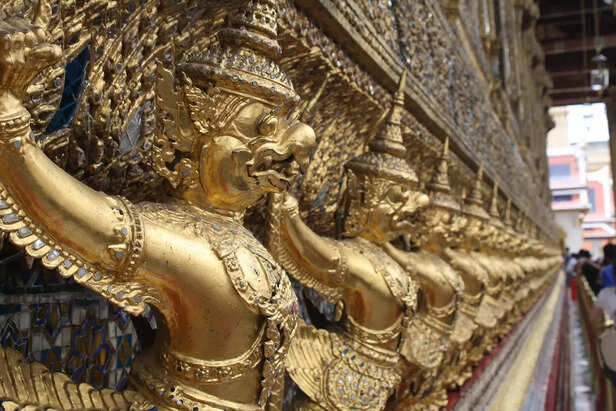
![garud]() To understand why this Purana carries Garuda’s name, we must know who Garuda is in Hindu mythology. Garuda is a large, powerful, bird-like divine being described as half-man and half-eagle. He is the son of Sage Kashyapa and Vinata. His mythology is rich with symbolism and heroism.
To understand why this Purana carries Garuda’s name, we must know who Garuda is in Hindu mythology. Garuda is a large, powerful, bird-like divine being described as half-man and half-eagle. He is the son of Sage Kashyapa and Vinata. His mythology is rich with symbolism and heroism.
According to the legends, Garuda hatched from an egg with immense radiance and strength. His wings could cover the sky, and his speed was unmatched. Garuda became famous for freeing his mother Vinata from slavery. To liberate her, he had to obtain the nectar of immortality (Amrita) from the gods. With his determination and courage, he succeeded in bringing it. Pleased by his devotion, Lord Vishnu made Garuda his vahana or celestial vehicle. From then on, Garuda became inseparably linked with Vishnu.
In iconography, Garuda is depicted as a majestic figure with a golden body, a white face, red wings, and an aquiline beak. He represents power, swiftness, and devotion. Beyond mythology, he also symbolizes knowledge that dispels ignorance, just as an eagle’s sharp eyes see through illusions.
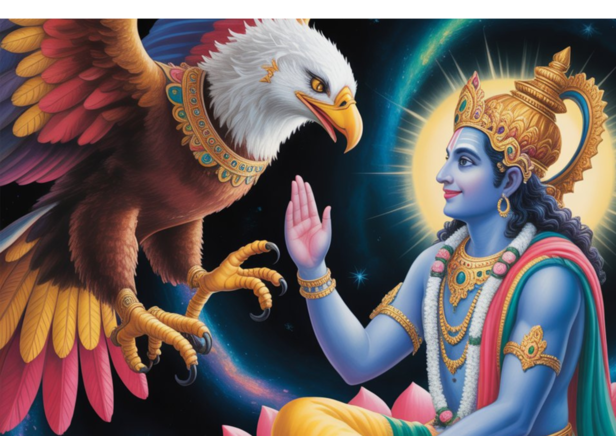
The primary reason why this Purana bears Garuda’s name is because the text is presented as a dialogue between Lord Vishnu and Garuda. In the Purana, Garuda, the eternal devotee of Vishnu, approaches his master with questions about creation, dharma, sins, afterlife, and liberation. Lord Vishnu responds to these queries with detailed explanations.
Thus, the Garuda Purana is framed as Garuda learning divine wisdom directly from Vishnu. Just as the Bhagavad Gita is a dialogue between Krishna and Arjuna, the Garuda Purana is a dialogue between Vishnu and Garuda. The text is named after Garuda because he is the seeker of knowledge, the devotee who represents humanity’s quest for truth.
The role of Garuda is crucial. He is not just a vehicle of Vishnu but also an inquiring disciple. Through his questions, all human beings find their curiosity reflected. The name signifies that this knowledge is not abstract but is meant to answer the practical concerns of life and death
The Garuda Purana is divided into two major sections: the Purva Khanda (first part) and the Uttara Khanda (later part). Together, these sections cover a wide range of topics.
![lord vishnu and garud]() The question remains: why was Garuda chosen as the student in this sacred conversation, rather than a human sage or another deity? The answer lies in Garuda’s qualities.
The question remains: why was Garuda chosen as the student in this sacred conversation, rather than a human sage or another deity? The answer lies in Garuda’s qualities.
Garuda is considered fearless, devoted, and immensely powerful. These qualities make him an ideal seeker because he does not approach knowledge with fear or hesitation but with courage. His devotion to Vishnu ensures sincerity in seeking truth. His power symbolizes the strength of spiritual aspiration.
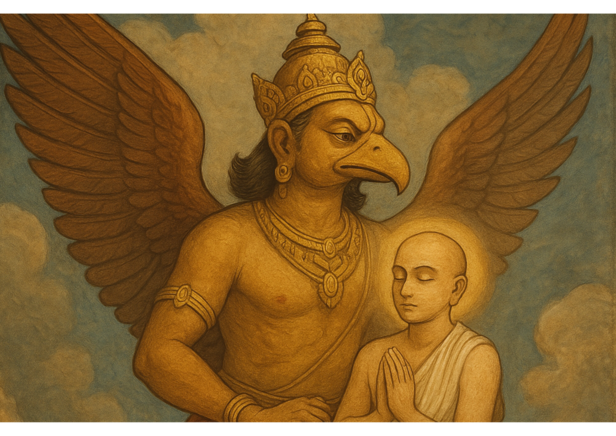
Moreover, Garuda is a divine being who still represents worldly bonds, since he freed his mother from slavery. This connects him to human struggles. In this way, Garuda bridges the divine and human realms, making him a perfect interlocutor for Vishnu’s teachings. ![death]() The Garuda Purana is widely known as a text read during funerals. The choice of Garuda as the central figure has symbolic depth here too. Garuda is traditionally seen as the messenger between heaven and earth. In Hindu art, Garuda carries Vishnu across the skies. In a similar sense, Garuda in this Purana carries souls through the knowledge of death and beyond.
The Garuda Purana is widely known as a text read during funerals. The choice of Garuda as the central figure has symbolic depth here too. Garuda is traditionally seen as the messenger between heaven and earth. In Hindu art, Garuda carries Vishnu across the skies. In a similar sense, Garuda in this Purana carries souls through the knowledge of death and beyond.
Garuda’s ability to soar beyond the earthly plane mirrors the soul’s own journey after death. Thus, the association of Garuda with this Purana is not accidental. His role as a guide and carrier fits perfectly with the text’s emphasis on the afterlife. The Garuda Purana was not meant to frighten but to educate. By naming it after Garuda, the text emphasizes the disciple’s role. It shows that even a powerful celestial being like Garuda needed guidance from Vishnu. If Garuda, with all his strength and divinity, seeks this knowledge, then ordinary human beings certainly need it as well.
The teachings are practical. They explain rituals of death to ensure the peaceful journey of the soul. They warn about sins and their consequences. They encourage righteous living, charity, and devotion. They also offer philosophical insights about detachment and liberation. All of this becomes more approachable because it is framed as Garuda’s humble inquiry.
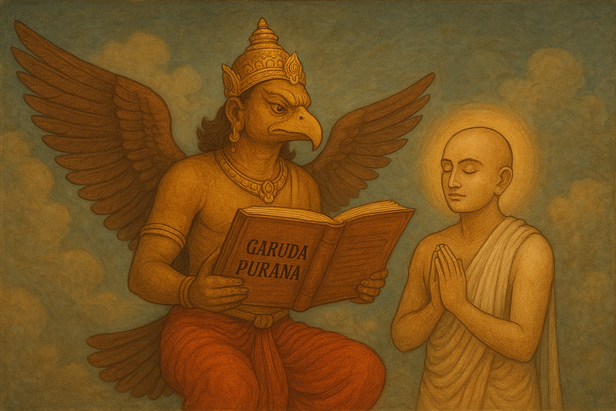
![death]() Beyond mythology, Garuda is also regarded as a symbol of knowledge. In various traditions across Asia, Garuda represents wisdom that overcomes darkness. In the Garuda Purana, this symbolism is reinforced. The Purana illuminates hidden truths of life and death. Garuda, with his sharp eyes and powerful wings, becomes a metaphor for penetrating vision and the capacity to rise above ignorance.
Beyond mythology, Garuda is also regarded as a symbol of knowledge. In various traditions across Asia, Garuda represents wisdom that overcomes darkness. In the Garuda Purana, this symbolism is reinforced. The Purana illuminates hidden truths of life and death. Garuda, with his sharp eyes and powerful wings, becomes a metaphor for penetrating vision and the capacity to rise above ignorance.
Naming the text after Garuda underscores this symbolism. Just as Garuda rises into the sky, the Purana lifts the human mind toward spiritual truths.
![hinduism]() The Garuda Purana has deeply influenced Hindu practices, especially surrounding death. Many rituals performed after a person’s passing are based on its prescriptions. Priests recite portions of the text during funerals, which are believed to help the departed soul transition smoothly.
The Garuda Purana has deeply influenced Hindu practices, especially surrounding death. Many rituals performed after a person’s passing are based on its prescriptions. Priests recite portions of the text during funerals, which are believed to help the departed soul transition smoothly.
Its vivid descriptions of different realms and punishments for sins have created a moral framework that emphasizes ethical living. The Purana is not merely about the afterlife but also about living a virtuous and meaningful life.
Because Garuda is a revered figure across India and Southeast Asia, attaching his name to this Purana ensures its authority and appeal. Devotees feel a sense of trust in teachings delivered to Garuda by Lord Vishnu. The Garuda Purana is often remembered for its vivid descriptions of death and the journey of the soul, but its depth goes far beyond that. At its heart, it is a philosophical guide that reflects on the fleeting nature of life, the value of detachment, and the power of devotion to Vishnu. Through the dialogue between Garuda and Vishnu, timeless questions come alive What is karma? What is the true nature of the soul? How can one find liberation?
By carrying Garuda’s name, the Purana reminds us that the search for truth begins with curiosity. Spiritual growth is not about blind acceptance but about asking the right questions. In this text, Garuda becomes the voice of every seeker who dares to question and strives to understand the mysteries of existence.
Over centuries, the Garuda Purana has been copied, translated, and studied widely. It has shaped not only religious practices but also cultural attitudes toward death and morality. Its role in guiding people through grief and reminding them of spiritual truths has made it one of the most practical of all Puranas.
The enduring legacy of this text is inseparable from the figure of Garuda. His devotion, strength, and ability to carry the seeker toward higher knowledge make him the perfect representative for this Purana.
The Garuda Purana is named after Garuda because he is the seeker, the disciple, and the symbolic guide through the mysteries of life and death. While Vishnu is the teacher, Garuda is the one who asks the questions that matter most to humanity. The text honors Garuda’s role by bearing his name, just as the Bhagavad Gita honors Arjuna by centering him in the dialogue.
Garuda is more than a vehicle of Vishnu; he is a spiritual symbol of strength, devotion, and wisdom. His association with the Purana makes it a text not only of ritual value but also of deep philosophical significance. The name reminds us that even the most powerful beings need guidance, and it encourages every seeker to rise, like Garuda, toward the light of truth.
In this way, the Garuda Purana continues to inspire, educate, and comfort people, centuries after it was composed. Its name is a testament to the eternal bond between the divine teacher Vishnu and his devoted disciple Garuda, whose quest for knowledge mirrors our own.
Discover expert advice and the latest tips on pet care, training, health, and more. Stay updated with all things pets at Times Pets!
Frequently Asked Questions[FAQs]
The Nature of the Puranas
The Garuda Purana is considered a Vaishnava Purana since it primarily glorifies Lord Vishnu. However, what sets it apart is its detailed treatment of topics like dharma, cosmology, ethics, medicine, gemology, and most famously, the afterlife.
Who is Garuda
garud
Image credit : Pixabay
According to the legends, Garuda hatched from an egg with immense radiance and strength. His wings could cover the sky, and his speed was unmatched. Garuda became famous for freeing his mother Vinata from slavery. To liberate her, he had to obtain the nectar of immortality (Amrita) from the gods. With his determination and courage, he succeeded in bringing it. Pleased by his devotion, Lord Vishnu made Garuda his vahana or celestial vehicle. From then on, Garuda became inseparably linked with Vishnu.
In iconography, Garuda is depicted as a majestic figure with a golden body, a white face, red wings, and an aquiline beak. He represents power, swiftness, and devotion. Beyond mythology, he also symbolizes knowledge that dispels ignorance, just as an eagle’s sharp eyes see through illusions.
Why the Garuda Purana is Associated with Garuda
Thus, the Garuda Purana is framed as Garuda learning divine wisdom directly from Vishnu. Just as the Bhagavad Gita is a dialogue between Krishna and Arjuna, the Garuda Purana is a dialogue between Vishnu and Garuda. The text is named after Garuda because he is the seeker of knowledge, the devotee who represents humanity’s quest for truth.
The role of Garuda is crucial. He is not just a vehicle of Vishnu but also an inquiring disciple. Through his questions, all human beings find their curiosity reflected. The name signifies that this knowledge is not abstract but is meant to answer the practical concerns of life and death
Structure of the Garuda Purana
- Cosmology and Creation – The Purana describes how the universe is created, sustained, and destroyed in cycles. It gives vivid descriptions of different worlds, gods, and cosmic order.
- Rituals and Dharma – It outlines rules for religious ceremonies, daily conduct, charity, and penance.
- Ayurveda and Medicine – Some chapters discuss health, diseases, and healing practices.
- Gemology and Astrology – The properties of different gems, their spiritual uses, and astrological influences are explained.
- Funeral Rites and Afterlife – The most famous part deals with what happens to the soul after death, the journey through Yama’s kingdom, descriptions of hells, karmic consequences, and eventual rebirth or liberation.
- Yoga and Liberation – The text also speaks about spiritual practices and devotion to Vishnu as the ultimate path to moksha.
The Significance of Garuda as the Student
lord vishnu and garud
Image credit : Chatgpt[Ai]
Garuda is considered fearless, devoted, and immensely powerful. These qualities make him an ideal seeker because he does not approach knowledge with fear or hesitation but with courage. His devotion to Vishnu ensures sincerity in seeking truth. His power symbolizes the strength of spiritual aspiration.
Moreover, Garuda is a divine being who still represents worldly bonds, since he freed his mother from slavery. This connects him to human struggles. In this way, Garuda bridges the divine and human realms, making him a perfect interlocutor for Vishnu’s teachings.
Garuda and the Theme of Death
death
Image credit : Chatgpt[Ai]
Garuda’s ability to soar beyond the earthly plane mirrors the soul’s own journey after death. Thus, the association of Garuda with this Purana is not accidental. His role as a guide and carrier fits perfectly with the text’s emphasis on the afterlife.
The Didactic Purpose
The teachings are practical. They explain rituals of death to ensure the peaceful journey of the soul. They warn about sins and their consequences. They encourage righteous living, charity, and devotion. They also offer philosophical insights about detachment and liberation. All of this becomes more approachable because it is framed as Garuda’s humble inquiry.
Garuda as Symbol of Knowledge
death
Image credit : Chatgpt[Ai[
Naming the text after Garuda underscores this symbolism. Just as Garuda rises into the sky, the Purana lifts the human mind toward spiritual truths.
Influence of the Garuda Purana in Hindu Tradition

hinduism
Image credit : Pixabay
Its vivid descriptions of different realms and punishments for sins have created a moral framework that emphasizes ethical living. The Purana is not merely about the afterlife but also about living a virtuous and meaningful life.
Because Garuda is a revered figure across India and Southeast Asia, attaching his name to this Purana ensures its authority and appeal. Devotees feel a sense of trust in teachings delivered to Garuda by Lord Vishnu.
Philosophical Depth
By carrying Garuda’s name, the Purana reminds us that the search for truth begins with curiosity. Spiritual growth is not about blind acceptance but about asking the right questions. In this text, Garuda becomes the voice of every seeker who dares to question and strives to understand the mysteries of existence.
Legacy of the Garuda Purana
The enduring legacy of this text is inseparable from the figure of Garuda. His devotion, strength, and ability to carry the seeker toward higher knowledge make him the perfect representative for this Purana.
The Garuda Purana is named after Garuda because he is the seeker, the disciple, and the symbolic guide through the mysteries of life and death. While Vishnu is the teacher, Garuda is the one who asks the questions that matter most to humanity. The text honors Garuda’s role by bearing his name, just as the Bhagavad Gita honors Arjuna by centering him in the dialogue.
Garuda is more than a vehicle of Vishnu; he is a spiritual symbol of strength, devotion, and wisdom. His association with the Purana makes it a text not only of ritual value but also of deep philosophical significance. The name reminds us that even the most powerful beings need guidance, and it encourages every seeker to rise, like Garuda, toward the light of truth.
In this way, the Garuda Purana continues to inspire, educate, and comfort people, centuries after it was composed. Its name is a testament to the eternal bond between the divine teacher Vishnu and his devoted disciple Garuda, whose quest for knowledge mirrors our own.
Discover expert advice and the latest tips on pet care, training, health, and more. Stay updated with all things pets at Times Pets!
Frequently Asked Questions[FAQs]
- Why is it called the Garuda Purana?
The text is named after Garuda, the divine bird and vehicle (vahana) of Lord Vishnu, because the teachings within are delivered by Vishnu directly to Garuda. - Who is Garuda in Hindu tradition?
Garuda is a celestial eagle-like being, revered as the king of birds. In Hindu mythology, he is the mount of Lord Vishnu and serves as a messenger between heaven and earth. - Does the Garuda Purana only deal with death?
No. While it is famously recited during funerals but it also teache about ethical living, devotion to vishnu etc. - What role does Garuda play in the Purana?
In the Garuda Purana, Garuda asks Lord Vishnu questions about death, the afterlife, karma, rituals, and liberation