A dog that has lived in the same flat for three years knows exactly where the gap between the couch and the wall is, in the dark, at 2 a.m., without looking. That knowledge is not incidental. It is how the animal navigates its world safely. When you rearrange the furniture on a Saturday afternoon, you have not redecorated, you have rewritten the map.
The sensory map your pet builds
Pets do not experience a room the way people do. A person glances around, updates their mental picture, and moves on. A dog or cat builds its spatial understanding through a combination of smell, sound reflection, and repeated movement through space. The scent of familiar objects in familiar positions is part of that map. A sofa that has sat in one corner for two years carries the family's smell, the pet's own smell, and a specific acoustic signature, the way sound bounces off it from that angle.
When the sofa moves, the smell moves with it, but the echoes change. The floor where the sofa used to sit smells wrong, too exposed, unfamiliar. The corner where it now sits carries no history. The animal's internal map and the actual room no longer agree, and that mismatch reads as a low-grade threat signal. The pet is not being dramatic. It is responding to a genuine sensory discrepancy.
![Worn Cushion in New Light]()
Worn Cushion in New Light
Image credit : AI
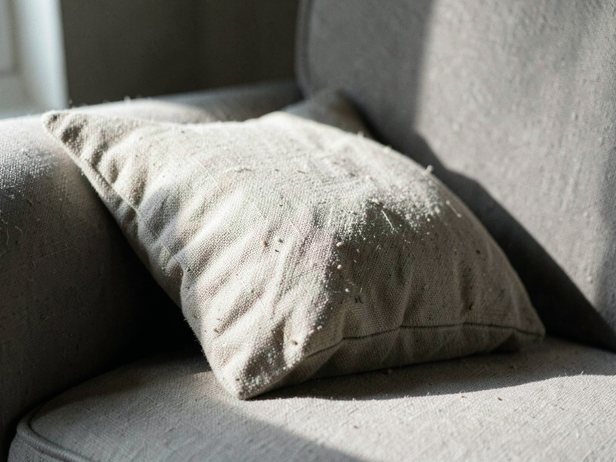
This worn cushion rests on a freshly moved armchair, a quiet testament to how long does it take pets to adjust to new furniture layout.
What acting out actually looks like, and why
The behaviours that follow a rearrangement tend to fall into a few recognisable patterns, each with a different cause.
Marking or spraying, particularly in cats, is almost always a response to the smell disruption. A cat that has never sprayed indoors may spray on a newly placed piece of furniture because it carries no territorial scent. The cat is not punishing you. It is trying to restore information to a surface that currently holds none.
Barking, pacing, or refusing to settle, more common in dogs, reflects the acoustic and spatial confusion. A dog that used to rest in a particular spot because it gave a clear sightline to the front door may now find that sightline blocked. The dog is not being stubborn. It is trying to solve a security problem.
Avoidance of a room entirely, or refusal to walk past a certain point, can signal that the rearrangement has created a space the animal finds genuinely disorienting. Older pets and those with any degree of cognitive decline are more vulnerable to this, because their ability to update the internal map slows with age.
Destructive behaviour, scratching furniture, chewing objects, sometimes follows because the pet is depositing scent through glands in the paws and face. This is self-soothing through scent-marking, not attention-seeking.
How long it takes to settle
Most healthy adult pets recalibrate within three to seven days as they re-walk the space, re-sniff the surfaces, and rebuild the map through experience. The timeline stretches for a few reasons: a larger rearrangement, a pet that was already anxious before the change, a senior pet, or a flat with very little natural scent anchoring, heavily cleaned, heavily air-freshened spaces give the animal less to work with.
Puppies and kittens often adapt faster than adults because their maps are less entrenched. A dog that came to the flat at eight weeks has spent its whole life updating a changing world. A dog that arrived at three years and has lived in the same layout for four years has a much more fixed expectation of what the room should be.
![Quiet Indian Living Room Evening]()
Quiet Indian Living Room Evening
Image credit : AI
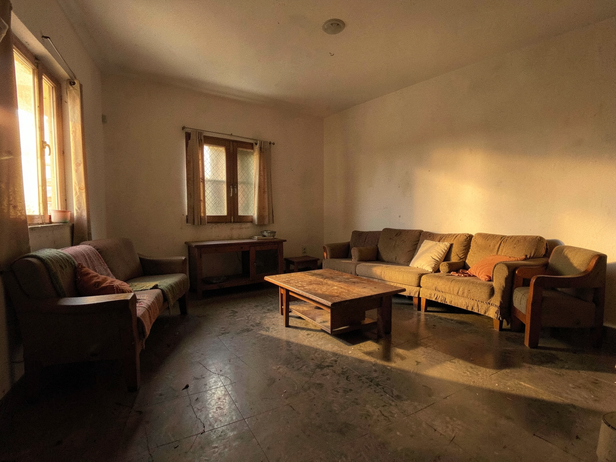
The stillness of the room offers a peaceful atmosphere, though pets might experience territorial behavior in Indian flats after furniture changes.
What helps the process along
The most effective thing you can do is let the animal investigate the new layout on its own terms. Walk through the rearranged room with them, your presence signals that the changed space is safe. Do not force them into a spot they are avoiding. Let them sniff the moved furniture at their own pace.
For cats, placing a worn item of your clothing on a newly positioned piece of furniture helps seed it with familiar scent before the cat has to decide whether to trust it. For dogs, feeding meals in the new layout speeds up positive association with the changed positions.
Avoid heavy cleaning or air freshening during the adjustment period. The animal needs scent information, not a blank room. If you have used a strong cleaner on the floor where furniture used to sit, the absence of smell there is itself disorienting.
If the rearrangement has blocked the pet's usual path to water, food, or a preferred resting spot, restore access. A pet that cannot reach its resources predictably will stay unsettled regardless of everything else.
When to take it seriously
Most post-rearrangement behaviour resolves on its own once the animal has had time to re-map the space. If the disruption lasts beyond two weeks, if the animal stops eating, loses interest in interaction, or shows signs of physical distress, repeated vomiting, changes in elimination, or obvious pain when moving through the space, those are reasons to call a vet. Sudden and lasting behavioural change in an older pet after any environmental shift can occasionally be the first visible sign of a neurological or cognitive condition rather than a response to the furniture itself. A vet is the right person to make that call.