
Why Dogs Treat Children Differently- Science Explains
Deepak Rajeev | Apr 20, 2026, 19:22 IST

Why Dogs Treats Children Differently?
Image credit : Freepik
Dogs treat children differently because they recognise them as unique, less predictable, and more vulnerable than adults. Science shows dogs adapt their behavior using instinct, emotional bonding, and sensory cues. They may become protective, cautious, or playful depending on the situation. This behavior reflects deep social awareness, as dogs continuously observe, interpret, and respond to children in ways humans often overlook.
If you’ve ever watched your dog interact with a child, you may have sensed something different- an unusual gentleness, a sudden alertness, or at times even hesitation. The same dog that confidently follows adult commands may behave more cautiously, more playfully, or even more protectively around children. This is not coincidence. Science suggests that dogs are highly sensitive social beings, and they do not see children as just smaller humans- they see them as fundamentally different.
![Mother With Son and Dog]() One of the most fascinating insights from animal behavior research is that dogs are capable of distinguishing between adults and children, not just by size, but by behavior, movement patterns, and vocal cues. Children move unpredictably, speak differently, and express emotions more openly, and dogs are constantly reading these signals.
One of the most fascinating insights from animal behavior research is that dogs are capable of distinguishing between adults and children, not just by size, but by behavior, movement patterns, and vocal cues. Children move unpredictably, speak differently, and express emotions more openly, and dogs are constantly reading these signals.
Studies show that dogs adjust their behavior based on who they are interacting with, and while they do respond to children, they synchronise their actions more strongly with adults, suggesting they perceive adults as more predictable or reliable social partners. This difference alone begins to explain why your dog may act more cautiously or curiously around children- it is processing a different kind of human.
![Young girl walking with dog]() Dogs are descendants of social, pack-oriented animals, and within these social systems, there is often an instinct to protect more vulnerable members. Children, with their smaller size, softer voices, and erratic behavior, can trigger this instinctive response. This is why some dogs become unusually attentive around children, positioning themselves nearby, watching closely, or even intervening when they sense distress. It is not trained behaviour- it is deeply rooted in evolutionary patterns of caregiving and social bonding.
Dogs are descendants of social, pack-oriented animals, and within these social systems, there is often an instinct to protect more vulnerable members. Children, with their smaller size, softer voices, and erratic behavior, can trigger this instinctive response. This is why some dogs become unusually attentive around children, positioning themselves nearby, watching closely, or even intervening when they sense distress. It is not trained behaviour- it is deeply rooted in evolutionary patterns of caregiving and social bonding.
Science has also uncovered something remarkable about the emotional bond between dogs and children. When children interact with dogs, both experience an increase in oxytocin, often referred to as the “bonding hormone.” This shared chemical response strengthens emotional connection, creating a feedback loop where the dog becomes more engaged, and the child feels more comforted. Over time, this mutual bonding can deepen into a relationship that is uniquely strong, sometimes even more emotionally expressive than typical adult-dog interactions.
Dogs are not passive companions- they are highly adaptive learners. Research shows that dogs adjust their behavior to match the children in their environment, often mirroring their activity levels, playfulness, and even emotional states. However, this adaptation is not always perfect. Because children can be unpredictable, dogs may remain more alert or cautious, constantly evaluating the situation. This explains why a dog may shift between playfulness and watchfulness within seconds when interacting with a child.
Early life experiences shape everything
Not all dogs respond to children in the same way, and one of the biggest factors is early exposure. Dogs that have interacted with children during their critical socialisation period tend to be calmer, more tolerant, and less stressed in their presence. On the other hand, dogs with little or no exposure to children may feel confused or overwhelmed, leading to avoidance or anxiety. This is not aggression- it is uncertainty, shaped by lack of familiarity.
Children often behave in ways that break the “rules” dogs learn with adults: sudden movements, loud noises, pulling, or inconsistent signals. Dogs that tolerate this well are not just “good dogs”- they are dogs that have either learned to interpret these behaviours or have a naturally calm temperament. Others may struggle, not because they are aggressive, but because they are trying to make sense of unpredictable interactions. This is why supervision and understanding are essential in every dog-child relationship.
At the heart of it all lies a simple but powerful truth: dogs do not treat children differently by accident- they treat them differently because they understand them differently. To a dog, a child is not just another human. It is a unique being- less predictable than an adult, more vulnerable than a peer, and more emotionally expressive than most. This combination triggers a mix of curiosity, caution, protection, and bonding that shapes every interaction.
Understanding this behavior changes everything. It explains why your dog may hover near your child, why it reacts instantly to crying, or why it sometimes steps back instead of engaging. These are not random actions- they are signs of perception, adaptation, and instinct working together. And in that quiet, watchful presence lies something extraordinary: your dog is not just coexisting with your child- it is constantly trying to understand, respond to, and protect a small human in a world it is still learning to interpret.
Celebrate the bond with your pets, explore Health & Nutrition, discover Breeds, master Training Tips, Behavior Decoder, and set out on exciting Travel Tails with Times Pets!
Dogs recognise that children are not adults
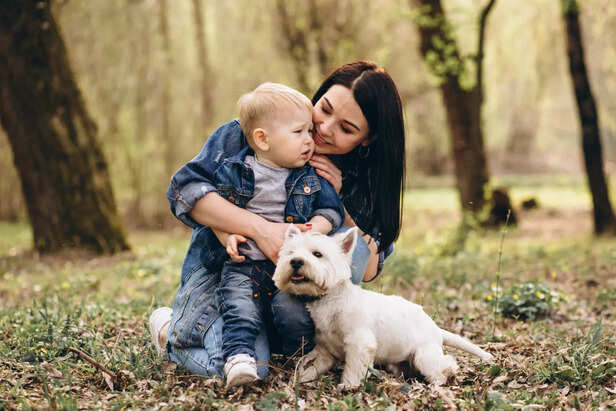
Mother With Son and Dog
Image credit : Freepik
Studies show that dogs adjust their behavior based on who they are interacting with, and while they do respond to children, they synchronise their actions more strongly with adults, suggesting they perceive adults as more predictable or reliable social partners. This difference alone begins to explain why your dog may act more cautiously or curiously around children- it is processing a different kind of human.
The role of instinct: protecting the vulnerable
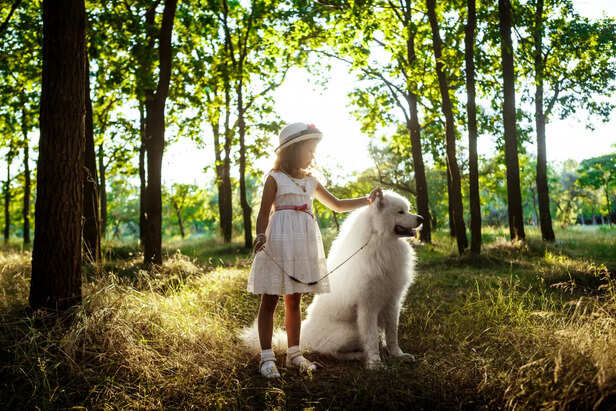
Young girl walking with dog
Image credit : Freepik
A powerful emotional connection: the oxytocin effect
Science has also uncovered something remarkable about the emotional bond between dogs and children. When children interact with dogs, both experience an increase in oxytocin, often referred to as the “bonding hormone.” This shared chemical response strengthens emotional connection, creating a feedback loop where the dog becomes more engaged, and the child feels more comforted. Over time, this mutual bonding can deepen into a relationship that is uniquely strong, sometimes even more emotionally expressive than typical adult-dog interactions.
Why dogs adapt to children’s behavior
Dogs are not passive companions- they are highly adaptive learners. Research shows that dogs adjust their behavior to match the children in their environment, often mirroring their activity levels, playfulness, and even emotional states. However, this adaptation is not always perfect. Because children can be unpredictable, dogs may remain more alert or cautious, constantly evaluating the situation. This explains why a dog may shift between playfulness and watchfulness within seconds when interacting with a child.
Early life experiences shape everything
Not all dogs respond to children in the same way, and one of the biggest factors is early exposure. Dogs that have interacted with children during their critical socialisation period tend to be calmer, more tolerant, and less stressed in their presence. On the other hand, dogs with little or no exposure to children may feel confused or overwhelmed, leading to avoidance or anxiety. This is not aggression- it is uncertainty, shaped by lack of familiarity.
Why some dogs are more patient- and others are not
Children often behave in ways that break the “rules” dogs learn with adults: sudden movements, loud noises, pulling, or inconsistent signals. Dogs that tolerate this well are not just “good dogs”- they are dogs that have either learned to interpret these behaviours or have a naturally calm temperament. Others may struggle, not because they are aggressive, but because they are trying to make sense of unpredictable interactions. This is why supervision and understanding are essential in every dog-child relationship.
The deeper truth: dogs see children differently, not equally
At the heart of it all lies a simple but powerful truth: dogs do not treat children differently by accident- they treat them differently because they understand them differently. To a dog, a child is not just another human. It is a unique being- less predictable than an adult, more vulnerable than a peer, and more emotionally expressive than most. This combination triggers a mix of curiosity, caution, protection, and bonding that shapes every interaction.
What this means for you
Understanding this behavior changes everything. It explains why your dog may hover near your child, why it reacts instantly to crying, or why it sometimes steps back instead of engaging. These are not random actions- they are signs of perception, adaptation, and instinct working together. And in that quiet, watchful presence lies something extraordinary: your dog is not just coexisting with your child- it is constantly trying to understand, respond to, and protect a small human in a world it is still learning to interpret.
Celebrate the bond with your pets, explore Health & Nutrition, discover Breeds, master Training Tips, Behavior Decoder, and set out on exciting Travel Tails with Times Pets!