Watch a dog in full play mode and you will catch it: a sudden, sharp sneeze, sometimes a rapid two or three in a row, and then straight back to the game as if nothing happened. No pause, no discomfort, no looking around. The sneeze was the message, and the message was delivered.
What the play sneeze actually is
The play sneeze is not a sneeze in the way you experience one, an irritant hitting the nasal lining and triggering an involuntary clearance reflex. Dogs do sneeze that way too, and you can usually tell the difference: a true irritant sneeze comes with a wet spray, sometimes repeated, and the dog often shakes its head or sniffs the ground afterward. The play sneeze is drier, shorter, and comes mid-action without interrupting the dog's focus at all.
What it is, behaviourally, is a calming signal, a term used in canine communication research to describe the range of small, deliberate behaviours dogs use to regulate the emotional temperature of an interaction. Turid Rugaas, a Norwegian dog trainer whose work on calming signals has been widely referenced in applied animal behaviour, documented sneezing as one of the signals dogs use to say: I am excited, and I am also fine with this. It is a self-regulating gesture that keeps arousal from tipping into something the other dog, or person, might misread as aggression.
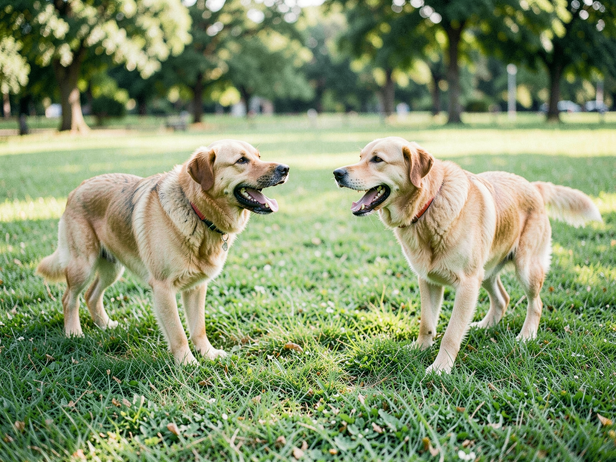
![Dogs Play Bow in Park]()
Dogs Play Bow in Park
Image credit : AI
Observing these dogs, I see clear canine calming signals. Their play-bow shows pure canine communication.
Why dogs need a signal like this during play
Play between dogs involves a lot of the same physical actions as conflict: chasing, biting, pinning, growling. Dogs have evolved a toolkit of signals to keep the other party clear on the intent. The play bow is the most obvious one. But play bows happen at the start. Calming signals, including the sneeze, happen throughout, as a running commentary: still playing, still good, not a real threat.
When your dog sneezes at you mid-tug or mid-chase, it is including you in that conversation. Dogs extend these signals to people they are comfortable with, which is partly why you see it more with a dog that knows you well than with a dog meeting a stranger.
When the sneeze is something else
Most play sneezes are exactly what they look like. But there are a few situations where sneezing during or after activity is worth paying attention to.
A dog that sneezes repeatedly, produces discharge from one nostril, paws at its face, or shows any swelling around the nose or eyes needs a vet visit. A foreign body, a grass seed is a common culprit in India, especially after a dog has been in a garden or a park, can lodge in the nasal passage and cause persistent sneezing that looks, at first, like a lot of enthusiastic play sneezes. The difference is that it does not stop when the play stops.
Reverse sneezing, a rapid, honking inhalation that sounds alarming, is also sometimes mistaken for play sneezing. It is common in short-nosed breeds like Pugs, Bulldogs, and Shih Tzus, and usually resolves on its own, but a vet should assess it if it happens frequently or lasts more than a minute.
If your dog sneezes during play and then gets on with its life, you are almost certainly watching communication, not a symptom.
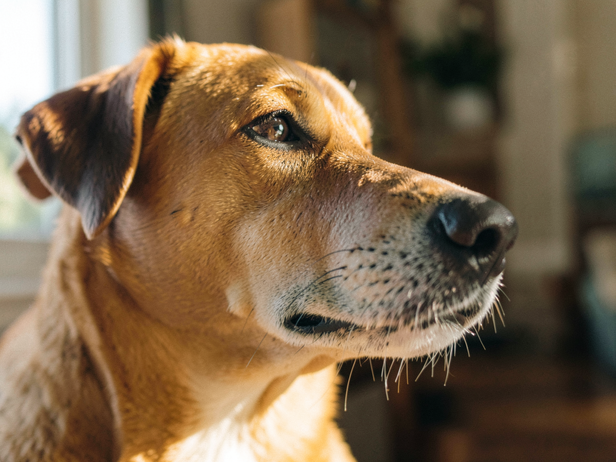
![Relaxed Dog in Afternoon Light]()
Relaxed Dog in Afternoon Light
Image credit : AI
Observing my dog's relaxed expression, I notice the subtle canine calming signals in its posture. This moment is pure tranquility.
What to do with this information
Mostly, nothing. The play sneeze is your dog being fluent in its own language and including you in it. Recognising it means you can read the interaction more accurately, you know the energy is high but the dog is regulating it, which is a good sign in a healthy play session.
If you want to respond, the most natural thing is to keep playing. The sneeze was not a request to stop; it was a check-in. Matching your dog's energy, keeping your own movements readable, and watching for actual signs of overstimulation, stiff body, hard stare, tail held very high and still, will serve you better than trying to interpret every sneeze as a separate event.
Dogs that play well and communicate clearly during play tend to be dogs that feel safe in the interaction. The sneeze is part of that.