
When Your Cat Licks You, What Are They Really Saying?
Anushka Tripathi | Feb 17, 2026, 18:00 IST

cat
Image credit : Pexels
When a cat licks you, it is rarely a random habit. This article explores the emotional, instinctive, and behavioral reasons behind feline licking, from affection and trust to stress and sensory curiosity. By decoding this misunderstood behavior, readers learn how cats communicate bonding, comfort, and boundaries. Understanding why cats lick helps pet parents respond with empathy, strengthen trust, and build a deeper, more respectful relationship with their feline companions.
A cat’s tongue is rough, surprising, and often confusing when it touches your skin. One moment you are enjoying a quiet cuddle, and the next your cat starts licking your hand, face, or even your hair. For many cat parents, this behavior raises questions. Is it affection, habit, stress, or something else entirely? Cats do not express love the way humans do. Their actions are subtle, instinct-driven, and deeply emotional. Licking is one of the most layered behaviors in a cat’s world, carrying meanings that go far beyond a simple gesture.
Grooming Is How Cats Build Relationships
In the wild and in domestic settings, grooming is a social language for cats. Kittens are groomed by their mothers from the moment they are born. This licking cleans them, stimulates circulation, and builds a sense of safety. As cats grow, they groom siblings or companions they trust. When your cat licks you, it is often placing you inside this trusted circle. You are not being cleaned because you are dirty. You are being included because you belong. This is one of the purest forms of feline bonding.
Licking As A Sign Of Affection And Trust
white cat
Image credit : Pexels
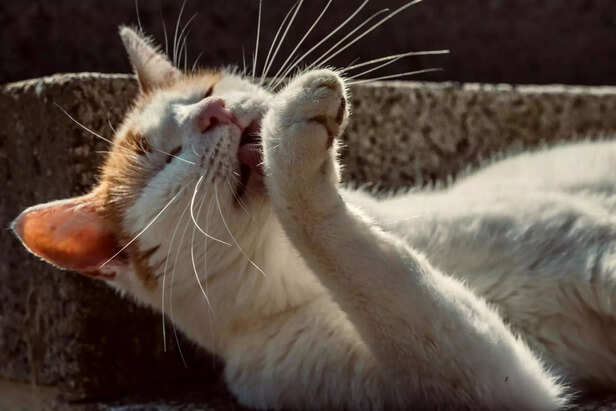
Cats are selective with affection. They do not offer physical closeness to everyone. When a cat licks you, especially while relaxed or purring, it is a sign of emotional comfort. Your scent, presence, and energy feel familiar and safe. In your cat’s mind, you are family. This behavior is often compared to a cat saying, you are mine, and I care about you. Unlike dogs, cats express love quietly. Licking is one of their softest emotional gestures.
Your Cat May Be Marking You As Their Own
Cats live in a world ruled by scent. Their tongues carry saliva that contains pheromones. When your cat licks you, it may be leaving its scent on your skin. This is not dominance in an aggressive sense. It is ownership rooted in security. By marking you, your cat is saying that you are part of its territory and social group. This often happens in multi-pet households, where cats feel the need to reinforce bonds with their favorite human.
Licking Can Be A Comfort-Seeking Behavior
Some cats lick when they feel calm, but others lick when they are anxious. Repetitive licking can be soothing, similar to how humans fidget or bite nails. If your cat licks you more during stressful situations like loud noises, changes in routine, or new environments, it may be using the behavior to self-soothe. In such cases, licking is less about you and more about emotional regulation. Your presence offers comfort, and the action helps your cat feel grounded.
Why Cats Sometimes Lick And Then Bite
cute cat
Image credit : Pexels
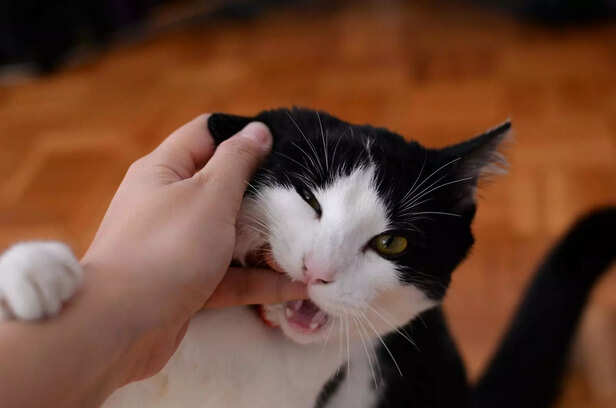
Many cat owners experience this confusing pattern. Gentle licking suddenly turns into a nip. This is not betrayal. It is overstimulation. A cat’s nervous system is highly sensitive. Prolonged physical contact can quickly become overwhelming. Licking starts as affection, but as sensations build up, the cat reacts by biting to create space. This behavior is your cat communicating that it needs a break. Learning to read body signals like tail flicking, ear movement, and muscle tension can prevent this sudden shift.
The Role Of Taste And Salt On Human Skin
Cats are curious creatures. Human skin carries salt from sweat, lotions, and natural oils. Some cats are attracted to these tastes. Licking may simply feel interesting or rewarding to them. This does not reduce the emotional meaning behind the behavior, but it adds a sensory layer. If your cat frequently licks after exercise or when you apply certain products, taste may be part of the motivation.
Mothering Instincts And Gentle Control
In multi-cat homes or with kittens, adult cats often lick to assert gentle authority. This is a nurturing form of control rather than aggression. When a cat licks you repeatedly, especially in a firm manner, it may be expressing a caretaking instinct. Some cats see their humans as clumsy, hairless kittens that need grooming. This sounds amusing, but it reflects a deep attachment. Your cat may genuinely feel responsible for you.
Stress Licking And When To Pay Attention
Occasional licking is normal, but excessive licking can signal stress or anxiety. If your cat licks you compulsively or licks itself excessively alongside other changes like hiding, aggression, or appetite shifts, it may be time to observe more closely. Changes in household dynamics, boredom, or lack of stimulation can contribute to stress behaviors. Licking, in this context, becomes a coping mechanism rather than a bonding one.
Does Licking Mean Your Cat Is Trying To Groom You Properly?
Cats groom with purpose. They remove loose hair, distribute oils, and maintain cleanliness. When they lick you, they are not performing these tasks effectively, but the instinct remains. Your cat may notice textures like hair or fabric and respond instinctively. This behavior is especially common when cats lick hair, eyebrows, or beards. To your cat, these areas resemble grooming targets.
Why Some Cats Never Lick Humans
Not all cats express affection through licking. Personality, early experiences, and socialization play major roles. A cat that was not groomed frequently as a kitten may show affection through proximity rather than touch. Sitting near you, slow blinking, or following you around are equally strong signs of love. Licking is one language among many in the feline emotional vocabulary.
Should You Let Your Cat Lick You?
In most cases, gentle licking is harmless. However, a cat’s mouth contains bacteria, and frequent licking on broken skin should be avoided. If the behavior becomes uncomfortable or excessive, gently redirect your cat without punishment. Pulling away slowly, offering a toy, or shifting attention can help. Never scold a cat for licking, as it may confuse or stress them.
How To Respond In A Way Your Cat Understands

fluffy cat
Image credit : Pexels
Cats respond best to calm consistency. If you enjoy the licking, allowing it for short periods is fine. If you want to discourage it, do so gently. Sudden movements or loud reactions can make cats anxious. Respecting your cat’s emotional boundaries strengthens trust. The goal is communication, not control.
Licking As Part Of A Larger Emotional Picture
No single behavior defines a cat’s feelings. Licking should be understood alongside other signals like posture, vocalization, eye contact, and routine behavior. A cat that licks, purrs, and stays close is expressing comfort. A cat that licks compulsively and avoids interaction may be expressing stress. Context is everything.
Understanding Your Cat Beyond Human Logic
Humans often search for simple answers. Cats do not operate in simple emotional categories. Their behaviors are shaped by instinct, environment, memory, and relationship history. Licking is rarely meaningless. It is layered, intentional, and deeply tied to how your cat experiences the world.
The Quiet Love Language Of Cats
When a cat licks you, it is not performing a trick or copying human affection. It is speaking its own emotional language. This language is built on trust, familiarity, and instinct. To be licked by a cat is to be accepted into its inner circle. It is a quiet honor that many overlook or misunderstand. Rather than asking why cats lick, it is more helpful to ask what they are feeling in that moment. Comfort, affection, anxiety, curiosity, or habit can all live inside a single lick. When you learn to see behavior as communication, your relationship with your cat deepens.
A Bond Rooted In Instinct And Emotion
Cats have shared their lives with humans for thousands of years, yet they remain beautifully mysterious. Their affection is subtle, earned, and deeply personal. Licking is one small window into that inner world. It reminds us that love does not always look the way we expect. Sometimes, it feels rough, surprising, and deeply sincere.
Celebrate the bond with your pets, explore Health & Nutrition, discover Breeds, master Training Tips, Behavior Decoder, and set out on exciting Travel Tails with Times Pets!