Most owners notice it first at night: the dog pacing the kitchen, tongue dragging across the tiles, or licking the wall beside the sofa in slow, deliberate strokes. It looks compulsive. It might be. But before landing on that explanation, it helps to know the full list of what drives this behaviour, because the causes range from a bit of spilled dal to a problem in the gut to a condition that needs a vet's attention.
The digestive explanation, and why it comes first
Excessive licking of surfaces, abbreviated in veterinary literature as ELS, is most commonly linked to gastrointestinal distress. A dog with nausea, acid reflux, or a gassy, uncomfortable gut will lick floors, walls, and sometimes the air as a way of managing the sensation. The licking triggers saliva production, and swallowing saliva temporarily coats the oesophagus and stomach lining, which seems to ease the discomfort.
This is the explanation worth ruling out first, because it is both common and treatable. Signs that point here: the licking happens most in the mornings before the first meal, or late at night on an empty stomach; the dog also gulps, eats grass when outside, or occasionally vomits bile; and the behaviour is new or has become noticeably more frequent. A dog that has started licking surfaces after a diet change, after being given table scraps, or after a course of antibiotics is giving a fairly clear signal about where the problem is.
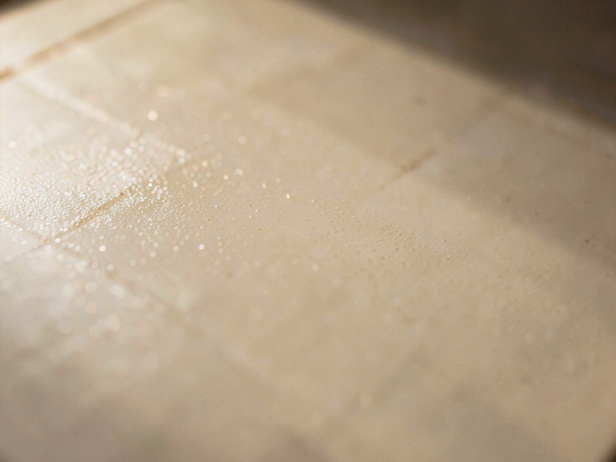
![Shimmering Ceramic Tile Surface]()
Shimmering Ceramic Tile Surface
Image credit : AI
Examining the floor, I notice the subtle shimmer on the tile. This reminds me of why dogs lick walls sometimes.
What the dog is actually tasting
Sometimes the explanation is simpler. Floors in Indian homes collect food residue, cooking oil, spilled liquids, and the salt from human feet. A dog that licks the kitchen floor after meals, or the spot near the dining table, is often just following its nose. Walls near cooking areas can carry grease and food smells that a dog finds genuinely interesting. This kind of licking is selective, it happens in specific spots, not everywhere, and it stops when the dog loses interest or is redirected.
Air licking is slightly different. A dog snapping or licking at the air is sometimes responding to a smell it cannot locate, or to a faint taste carried on a current from the kitchen. It can also be a response to something caught in the mouth or throat, a hair, a piece of grass, a fragment of food, and the dog is working to dislodge it. If the air licking is brief and happens around mealtimes, it is almost certainly one of these.
When it is anxiety or a compulsive pattern
Licking can become a self-soothing behaviour. Dogs under chronic stress, from under-stimulation, separation, a disrupted routine, or an environment they find unpredictable, sometimes develop repetitive behaviours that include surface licking. The licking releases a small amount of endorphins and provides sensory input, which temporarily reduces the feeling of anxiety.
The tell here is context. Anxiety-driven licking tends to escalate during specific triggers: when the owner leaves, when there is loud noise, when the household routine changes. It is also harder to interrupt than curiosity-driven licking. A dog deep in an anxious licking episode may not respond to its name or to a treat held near its nose. Over time, if the underlying anxiety is not addressed, the behaviour can become compulsive, meaning it persists even when the trigger is gone and the dog appears otherwise calm.
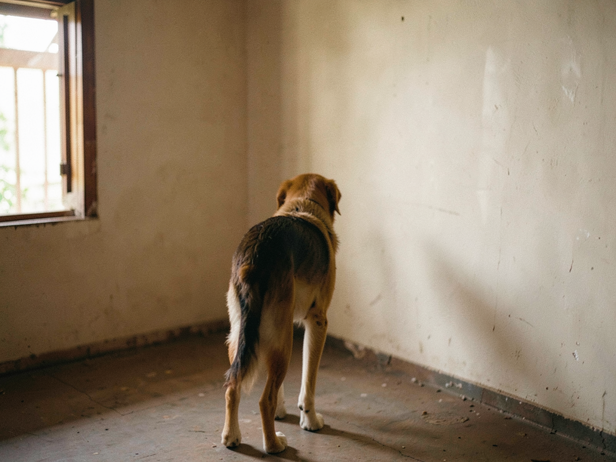
![Dog by Indian Wall]()
Dog by Indian Wall
Image credit : AI
Observing a dog's behavior, I wonder about the reasons behind its licking surfaces. Perhaps it's a common dog licking behaviour.
The causes that need a vet
Three things can drive surface licking that sit outside the owner's ability to manage at home. The first is neurological: partial seizures can manifest as repetitive licking or chewing movements, often accompanied by a glazed look, unresponsiveness, or a brief period of disorientation afterward. The second is pain, a dog with dental pain, a mouth ulcer, or discomfort in the throat may lick surfaces as a way of stimulating saliva to soothe the area. The third is a nutritional deficiency or a metabolic issue, though this is less common and usually comes with other signs.
If the licking is frequent, lasts more than a few minutes at a stretch, happens at unpredictable times with no clear trigger, and the dog seems unable to stop when distracted, that is the point to stop managing it at home and book a vet visit. A dog that licks surfaces and also shows changes in appetite, weight, energy, or stool quality needs to be seen sooner rather than later.
Surface licking is one of those behaviours that sits at the intersection of instinct, gut health, and emotional state. A dog doing it occasionally, in places that smell like food, is almost certainly fine. A dog doing it constantly, in no particular pattern, and with visible urgency is telling you something the body has not found another way to say.