
What Your Dog Does Before You Arrive Home Might Surprise You
Deepak Rajeev | Apr 23, 2026, 11:00 IST

Can dogs predict when you come home
Image credit : Freepik
Dogs often wait for their owners before they arrive home due to a mix of learned routines, heightened senses, and emotional bonding. They detect subtle environmental cues like sounds, scents, and daily patterns. Over time, these signals help them anticipate your return. This behavior reflects observation and memory rather than prediction, showing how deeply dogs understand human routines.
Most dog owners are familiar with the moment they reach home and find their dog already waiting, sometimes at the door, sometimes near the window, or simply alert and ready as if they had been expecting that exact moment. It feels almost uncanny. How could a dog know you are about to arrive before you even step inside? This behavior is widely reported by pet owners, and researchers have studied it for decades. Surveys suggest that a significant number of dog owners notice this kind of anticipatory behavior regularly, where dogs appear to position themselves near entry points shortly before their humans return. The key question is not whether it happens, but how it happens.
![Emotional connection shapes their anticipation more than we realise]() One of the most grounded explanations comes from something surprisingly simple: routine. Dogs are experts at learning patterns in their environment. Over time, they begin to associate specific cues with your return, even if you are not aware of them yourself. It could be the sound of a distant vehicle, the shift in household activity, or even subtle changes in light and movement around the home. Dogs are exceptionally sensitive to environmental signals and quickly connect repeated events into predictable sequences. This is a form of associative learning, where the brain links one event to another based on experience rather than conscious understanding. So when your dog moves toward the door before you arrive, it is often responding to a chain of familiar signals that have quietly built up over time.
One of the most grounded explanations comes from something surprisingly simple: routine. Dogs are experts at learning patterns in their environment. Over time, they begin to associate specific cues with your return, even if you are not aware of them yourself. It could be the sound of a distant vehicle, the shift in household activity, or even subtle changes in light and movement around the home. Dogs are exceptionally sensitive to environmental signals and quickly connect repeated events into predictable sequences. This is a form of associative learning, where the brain links one event to another based on experience rather than conscious understanding. So when your dog moves toward the door before you arrive, it is often responding to a chain of familiar signals that have quietly built up over time.
![A family and their pet spending morning together]() Beyond routine, dogs rely heavily on senses that operate far beyond human perception. Their hearing allows them to detect distant sounds that may signal your approach long before you are visible. A car turning onto a familiar road, footsteps in the hallway, or even elevator movement can act as early indicators.
Beyond routine, dogs rely heavily on senses that operate far beyond human perception. Their hearing allows them to detect distant sounds that may signal your approach long before you are visible. A car turning onto a familiar road, footsteps in the hallway, or even elevator movement can act as early indicators.
Smell is another powerful factor. Dogs experience the world through scent in a way that humans cannot fully imagine. As the day progresses, the scent patterns inside a home change subtly. When movement begins outside or when familiar scents shift again as you approach, your dog may interpret this as a sign that your return is near. There is also scientific discussion around how dogs may combine these sensory inputs with learned timing patterns, allowing them to anticipate arrivals with remarkable consistency.
While science often focuses on sensory cues, emotional bonding plays an equally important role. Dogs are deeply attuned to their human companions and often build strong emotional expectations around daily routines.
Waiting for you is not just about detection. It is also about expectation. Your dog learns that certain times of day bring your return, comfort, attention, and interaction. Over time, this creates a powerful emotional rhythm. When that internal rhythm aligns with external cues, anticipation becomes even stronger. This is why some dogs appear restless, alert, or unusually focused before you arrive. It is not anxiety in most cases. It is anticipation built from repeated positive experience.
What makes this behavior so fascinating is how precise it can appear. Many owners report their dog waiting at the door just minutes before arrival, even when there is no obvious signal. This has led to years of debate among scientists and pet owners alike.
Some researchers suggest that dogs may be combining multiple forms of information at once, including routine, environmental cues, and long-term memory patterns. Others argue that simple explanations like timing and sensory detection are sufficient to explain most cases. What is clear is that dogs are far more observant of everyday life than we are. What feels like prediction is often the result of continuous observation happening in the background, where your dog is constantly updating its understanding of your habits.
In the end, what your dog does before you arrive home is not mysterious in the supernatural sense, but it is still deeply impressive. Your dog is not guessing. It is observing, learning, and responding to a complex mix of signals that you rarely notice yourself. That quiet moment when you find your dog already waiting is not just coincidence. It is the result of a mind that has been tracking your life with remarkable attention, turning everyday patterns into anticipation.
Celebrate the bond with your pets, explore Health & Nutrition, discover Breeds, master Training Tips, Behavior Decoder, and set out on exciting Travel Tails with Times Pets!
Your dog is constantly reading invisible patterns in daily life

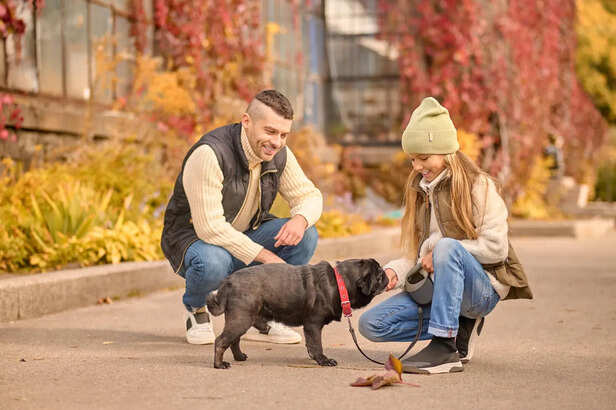
Emotional connection shapes their anticipation more than we realise
Image credit : Freepik
Smell and sound may give your dog clues you never notice
A family and their pet spending morning together
Image credit : Freepik
Smell is another powerful factor. Dogs experience the world through scent in a way that humans cannot fully imagine. As the day progresses, the scent patterns inside a home change subtly. When movement begins outside or when familiar scents shift again as you approach, your dog may interpret this as a sign that your return is near. There is also scientific discussion around how dogs may combine these sensory inputs with learned timing patterns, allowing them to anticipate arrivals with remarkable consistency.
Emotional connection shapes their anticipation more than we realise
While science often focuses on sensory cues, emotional bonding plays an equally important role. Dogs are deeply attuned to their human companions and often build strong emotional expectations around daily routines.
Waiting for you is not just about detection. It is also about expectation. Your dog learns that certain times of day bring your return, comfort, attention, and interaction. Over time, this creates a powerful emotional rhythm. When that internal rhythm aligns with external cues, anticipation becomes even stronger. This is why some dogs appear restless, alert, or unusually focused before you arrive. It is not anxiety in most cases. It is anticipation built from repeated positive experience.
Why your dog’s timing often feels almost impossible to explain
What makes this behavior so fascinating is how precise it can appear. Many owners report their dog waiting at the door just minutes before arrival, even when there is no obvious signal. This has led to years of debate among scientists and pet owners alike.
Some researchers suggest that dogs may be combining multiple forms of information at once, including routine, environmental cues, and long-term memory patterns. Others argue that simple explanations like timing and sensory detection are sufficient to explain most cases. What is clear is that dogs are far more observant of everyday life than we are. What feels like prediction is often the result of continuous observation happening in the background, where your dog is constantly updating its understanding of your habits.
The surprising truth behind the waiting behavior
In the end, what your dog does before you arrive home is not mysterious in the supernatural sense, but it is still deeply impressive. Your dog is not guessing. It is observing, learning, and responding to a complex mix of signals that you rarely notice yourself. That quiet moment when you find your dog already waiting is not just coincidence. It is the result of a mind that has been tracking your life with remarkable attention, turning everyday patterns into anticipation.
Celebrate the bond with your pets, explore Health & Nutrition, discover Breeds, master Training Tips, Behavior Decoder, and set out on exciting Travel Tails with Times Pets!