Watch a bird long enough and you will notice it spends a surprising amount of time looking like a small, round cushion. Feathers lifted, body compact, eyes sometimes half-closed. The behaviour is so common that most owners stop registering it, but feather fluffing is not one thing. It is a signal that shifts meaning depending on context, time of day, temperature, and what else the bird is doing alongside it.
The physics of a fluffed feather
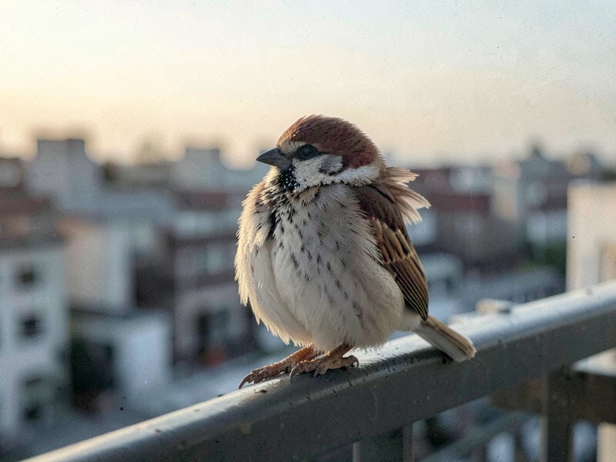
A bird's feathers are not just for flight. They are the primary insulation layer, and a bird controls that insulation actively by adjusting how tightly or loosely the feathers lie against the body. When a bird fluffs up, it is creating air pockets between the feathers and the skin. Trapped air warms against the body and acts as a buffer against heat loss, the same principle behind a down jacket. This is why a healthy bird in a cool room will fluff briefly after a bath, or first thing in the morning before the ambient temperature climbs. The behaviour is metabolically smart: generating heat costs energy, and trapping existing body heat costs almost none.
![Sparrow's Morning Warmth]()
Sparrow's Morning Warmth
Image credit : AI
This sparrow fluffs its feathers for warmth in the early morning glow. Bird puffed up feathers meaning can vary.
When fluffing is completely normal
A bird that fluffs for a few minutes at a time, returns to its usual posture, eats normally, vocalises as it usually does, and moves around its perch without difficulty is almost certainly fine. Contentment fluffing happens during preening, during rest, and when a bird is being handled by someone it trusts. Parakeets, cockatiels, lovebirds, and mynas all do it. So do pigeons, crows, and most garden birds, you will see house sparrows fluffed into near-spheres on a cool morning, then back to streamlined the moment they start foraging. The key marker of normal fluffing is that it is intermittent and the bird is otherwise engaged with its environment.
When it signals something else
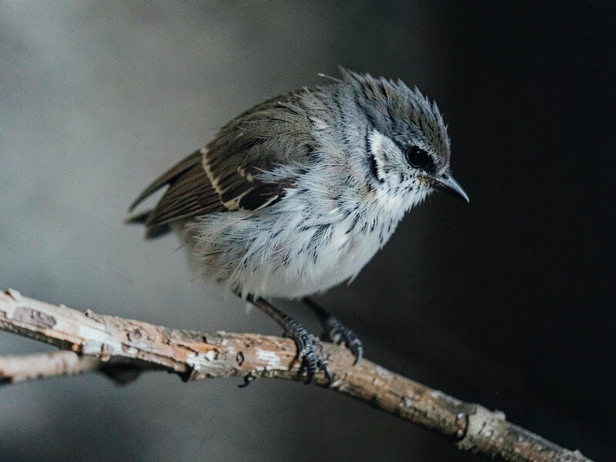
Feather fluffing becomes a concern when it is sustained, when it appears alongside other changes, or when the bird is also doing things it does not normally do. A bird that stays puffed for hours, sits low on the perch rather than upright, has discharge around the nostrils or eyes, is losing feathers outside a moult, or has stopped eating is showing a cluster of signs that point away from temperature regulation and toward illness. Birds are prey animals by evolutionary history, and they suppress visible signs of weakness for as long as they can. By the time a sick bird looks obviously unwell, it has often been unwell for a while. Sustained fluffing in a warm room, with a bird that is quiet and unresponsive to its surroundings, is the signal to stop watching and start calling a vet.
![Bird Hunched on Branch]()
Bird Hunched on Branch
Image credit : AI
Observing a bird puffed up feathers, I notice its hunched posture. This behavior might indicate it's feeling unwell.
Stress, boredom, and the in-between cases
Between clear wellness and clear illness sits a middle zone that owners find harder to read. A bird that is mildly stressed, by a new object in the room, a change in routine, a loud noise, or a new animal in the household, may fluff intermittently without being sick. The difference from illness is that the bird recovers its normal posture and behaviour once the stressor passes. Chronic mild stress, however, can suppress immune function over time, and a bird that lives in a state of low-level anxiety is more vulnerable to the infections that make sustained fluffing a medical event. Boredom produces a different picture: a bird that is under-stimulated may sit puffed and inactive for long stretches, but it will typically respond when engaged directly. If interaction pulls the bird back to normal, the problem is environmental, not physical.
What the feathers themselves tell you
Fluffing is about posture, but the condition of the feathers underneath the behaviour carries its own information. Feathers that look dull, broken, or unevenly distributed, or that the bird is pulling at obsessively, point toward nutritional gaps, a skin condition, or feather-destructive behaviour, all of which need a vet or an avian specialist to assess properly. A bird that fluffs and simultaneously over-preens one area is not just cold. The fluffing in that case is incidental to something happening at the skin level. Feather condition and feather posture are related but distinct signals, and reading them together gives a more accurate picture than either alone.