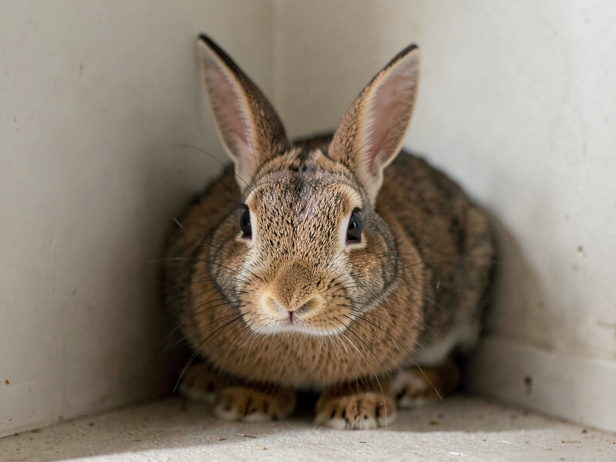
A rabbit sitting calmly in its enclosure and then slamming both back feet into the floor with a sound that travels through the whole room, first-time rabbit owners often have no idea what just happened. The thump is one of the most distinctive things rabbits do, and it carries real information once you know how to read it.
Where the behaviour comes from
Rabbits are prey animals. In the wild, a rabbit that detects a predator, by sight, sound, or smell, thumps the ground hard with its hind legs. The vibration travels through the earth and alerts other rabbits in the warren before any sound could. The behaviour is wired in. A domestic rabbit living in a Pune flat has never met a hawk or a fox, but the nervous system that evolved to survive them is still fully operational.
![Rabbit's Fearful Cornered Stance]()
Rabbit's Fearful Cornered Stance
Image credit : AI
I feel the tension in this rabbit's body language, a clear sign of fear. Observing rabbit behaviour like this is fascinating.
What your rabbit is responding to
The trigger is almost always something the rabbit perceived as a threat or an irritant, and rabbits perceive things you do not. A thump at two in the morning often means your rabbit heard or felt something: a vehicle on the road, a dog barking two floors down, a change in air pressure. During the day, common triggers include a sudden loud noise, an unfamiliar person or animal entering the room, a smell it finds alarming (strong perfume, a dog that visited earlier, a plastic bag), or being handled in a way it did not like. Some rabbits also thump when they are annoyed rather than frightened, being put back in an enclosure they wanted to leave, or having a favourite spot rearranged. The body language around the thump usually tells you which it is: a rabbit that thumps and then stays alert and upright is warning you; one that thumps and then turns its back and sits in a corner is expressing displeasure.
How to tell fear from irritation
Fear thumps tend to come with other signs, wide eyes, ears flattened or swivelled toward the threat, a hunched posture, or the rabbit pressing itself against a corner. The rabbit may thump repeatedly until it decides the danger has passed, then return to normal behaviour. Irritation thumps are usually a single loud stamp followed by deliberate ignoring. The rabbit knows exactly where you are and is choosing not to look at you. Both are normal; neither needs correction. Punishing a thump, raising your voice, tapping the enclosure, adds stress without removing the cause.
![Carrot, Hay, and Water]()
Carrot, Hay, and Water
Image credit : AI
A simple still life featuring a carrot, hay, and water, evoking a sense of quietude. Understanding rabbit behaviour can be fascinating.
When thumping points to something worth investigating
Occasional thumping is normal rabbit communication. Frequent thumping that happens without any obvious trigger, or thumping paired with other signs, refusing food, sitting hunched for long periods, grinding teeth, laboured breathing, or not moving around as usual, is the rabbit telling you something is wrong with how it feels, not just what it heard. Pain, gastrointestinal discomfort, and respiratory infections can all make a rabbit hypervigilant and reactive. If your rabbit is thumping far more than usual and you cannot identify a cause in the environment, that pattern warrants a vet visit rather than a wait-and-see approach. A rabbit that stops thumping entirely and becomes very still and quiet can also be a concern, extreme stillness in a prey animal is often a sign of significant distress.
What you can actually do
When a fear thump happens, the most useful thing is to identify and remove the trigger if you can, close a window if there is noise outside, move the enclosure away from a high-traffic area, give the rabbit a hide box it can retreat into. Speak quietly and move slowly near a rabbit that has just thumped; sudden movement will confirm whatever alarm it felt. For irritation thumps, the rabbit usually just needs to be left alone for a few minutes. Most rabbits will come around once they decide the grievance has been noted. What does not help is excessive handling immediately after a thump, or trying to force reassurance on an animal that is signalling it wants space.