Cats do a great many things that look strange in a Gurgaon apartment but make complete sense when you know what they were doing before they moved in with us. Scratching and pawing at the floor around a food bowl is one of them. It is common, it is usually harmless, and it has at least three distinct explanations that are worth knowing apart from each other.
The caching instinct
Wild felids that cannot finish a meal in one sitting do not leave it out in the open. They cover it, bury it, or drag it somewhere hidden so a scavenger cannot find it. Domestic cats retain this instinct even though the food is not going anywhere and there is no competition for it. When your cat scratches around the bowl after eating, it is performing the motions of covering leftover prey. The floor does not yield, the food stays visible, and the cat eventually walks away, but the drive to complete the sequence is real. This is sometimes called caching or food-caching behaviour, and it is the same impulse that makes cats scratch at the litter box far longer than the task requires.
![Morning Cat Food Still Life]()
Morning Cat Food Still Life
Image credit : AI
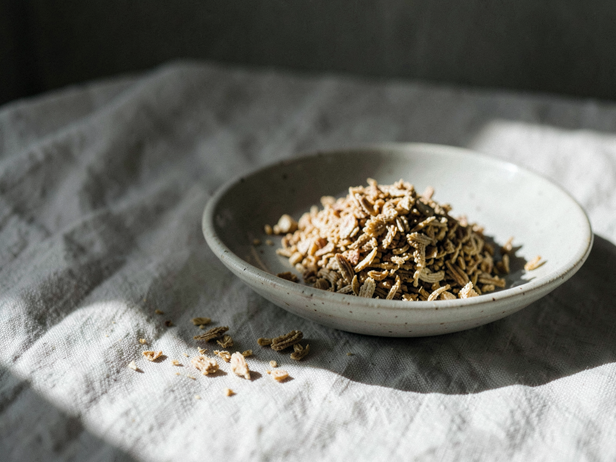
Observing the cat food caching instinct, a quiet morning scene unfolds. The texture of the kibble is remarkably detailed.
Marking the area
Cats have scent glands between their toes. Scratching a surface deposits scent, which is one reason cats scratch furniture, door frames, and yes, the floor around a bowl. The scratch around the bowl can be a mild territorial signal, essentially labelling the food source as belonging to this cat. In a multi-cat household this behaviour often becomes more pronounced, because the presence of another cat makes the marking more meaningful. If you have recently added a second cat and the scratching has intensified, that is the likely reason.
Displeasure with the food or the bowl
Not all floor-scratching is instinctive in a neutral sense. Some cats scratch before eating rather than after, or scratch and then walk away without touching the food. This pattern can mean the cat finds the smell off-putting, the food too cold straight from the refrigerator, or the bowl itself unpleasant. Deep narrow bowls press against a cat's whiskers, which are sensitive enough that the contact is genuinely uncomfortable. This is called whisker fatigue, and it is a real phenomenon, not a marketing term. A cat experiencing it may eat reluctantly, paw around the bowl, or eat only from the centre and leave the edges. Switching to a wide, shallow dish often resolves it quickly.
![Golden Hour Cat Bowl Still Life]()
Golden Hour Cat Bowl Still Life
Image credit : AI
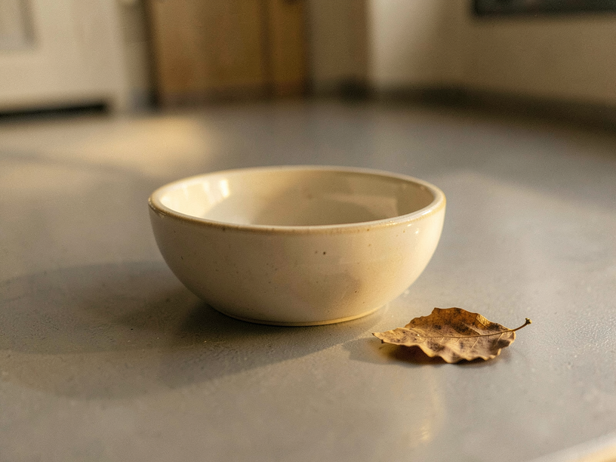
The warm glow highlights the simple elegance of the cat bowl, hinting at the instinctual cat food caching behavior.
When it is worth paying attention
Scratching around the bowl is almost always benign, but a few changes in the pattern are worth noting. If a cat that previously ate normally has started scratching, backing away, and eating far less, mouth pain is a possibility. Dental disease is extremely common in cats and often goes unnoticed until eating becomes uncomfortable. A cat that paws at its mouth, drools, or drops food while chewing alongside the floor-scratching should be seen by a vet. Similarly, if the scratching is accompanied by vomiting, significant changes in appetite, or weight loss, those signs together point to something that needs a clinical assessment rather than a behavioural explanation.