A cat that nibbles on your hair is not malfunctioning. It is doing something that makes complete sense within feline social logic, even if it leaves you with a damp patch on your head and mild confusion about what just happened.
It is a grooming behaviour, directed at you
![Golden Hour Feline Affection]()
Golden Hour Feline Affection
Image credit : AI
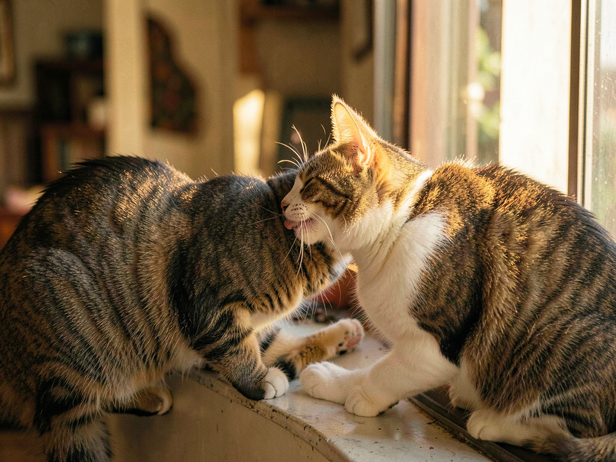
A tender moment of cat allogrooming in India, showcasing natural bonding and trust. The warm light highlights their intricate fur textures.
Cats who live together groom each other in a behaviour called allogrooming. They focus on the head and neck, areas a cat cannot reach alone, and the act reinforces social bonds between animals that trust each other. When your cat nibbles your hair, it is extending this same behaviour to you. You are, in its social map, a member of the group. The nibbling is not random; it is targeted at the part of you that most resembles another cat's head. This is one of the cleaner examples of a cat treating its owner as a conspecific rather than as a separate species entirely.
Scent plays a bigger role than it looks
Hair carries a concentrated record of where you have been, what you have touched, and what products you use. Cats have a far more developed olfactory system than humans, and your hair is, from their perspective, an information-dense surface. Some cats nibble as a way of investigating this scent more closely, the mouth and the nose work together in feline sensory processing. If you have come home after being around other animals, or if you have changed your shampoo recently, you may notice the behaviour intensifies. The cat is reading, not just chewing.
It can also be a comfort behaviour with roots in kittenhood
![Serene Feline Morning Slumber]()
Serene Feline Morning Slumber
Image credit : AI
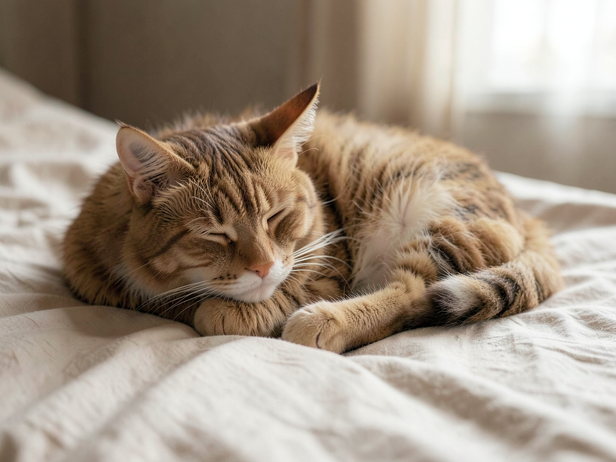
A moment of quiet repose. Understanding why cats nibble hair can deepen your bond with your feline friend.
Kittens knead and nuzzle against their mothers while nursing. Some of these early comfort behaviours persist into adulthood, particularly in cats that were weaned early or that have a strong attachment to their owner. Hair nibbling in this context tends to happen when the cat is relaxed and seeking closeness, often when you are lying still, in the early morning, or just before sleep. The rhythmic quality of the nibbling is part of what makes it soothing for the cat. It is self-regulating behaviour, not a demand.
When the behaviour is worth a second look
Most hair nibbling is benign, but two patterns are worth noticing. The first is compulsive or frantic nibbling, where the cat seems unable to stop, escalates quickly, or shows other repetitive behaviours alongside it. This can indicate anxiety or an underlying compulsive disorder, and a veterinary behaviourist is the right next step, not more redirection at home. The second is a sudden increase in the behaviour in a cat that did not do it much before. A change in routine, a new animal in the home, or a reduction in environmental enrichment can all drive a spike. Rule out the stressor before assuming the behaviour is simply a quirk.
What to do if it bothers you
Redirect, do not punish. When the nibbling starts, move gently, offer an alternative, a toy, a grooming session with a brush, or a play session, and give the cat a positive reason to disengage. Consistency matters more than any single correction. If your cat is doing this partly out of boredom, structured play twice a day will reduce it more reliably than any in-the-moment response. The behaviour is rooted in affection and instinct; the goal is to give it a different outlet, not to make the cat feel that closeness itself is unwelcome. Most cats adjust quickly when the alternative is genuinely engaging.