There is a moment, usually somewhere around the third week of owning a pet, when you realise the animal has memorised your day before you have. The dog is already at the door before your alarm goes off. The cat has positioned itself by the bowl at a time you haven't consciously noticed is always the same. You didn't teach this. It arrived on its own.
The animal is reading time through your body, not a clock
Pets track circadian and ultradian rhythms, the biological cycles that govern light, temperature, hunger, and activity, through a combination of internal clocks and sensory cues from the people around them. Dogs in particular are sensitive to cortisol changes in human scent, shifts in household noise, and the specific sequence of sounds that precede an event. The jingle of keys before a walk. The particular creak of a chair when you're about to stand. Your pet has built a predictive model of your day from these signals, and it is often more accurate than your own sense of your habits. What this means in practice: the animal is not responding to time. It is responding to you. The routine you think you keep loosely is, to your pet, a precise and reliable map.
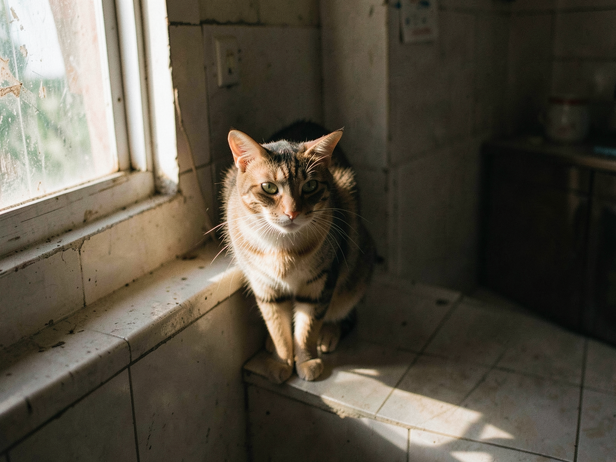
![Cat's Morning Vigil]()
Cat's Morning Vigil
Image credit : AI
My pet routine is simple: observe the world from my favorite spot. What pets teach you about daily routine is profound.
Why disruption lands harder on them than on you
When that map breaks, a late morning, a skipped walk, a week of irregular meals, the animal does not adapt the way a person might. It waits. It checks. It loops back to the place where the expected thing usually happens and waits there again. This is not stubbornness, and it is not separation anxiety in the clinical sense, though prolonged unpredictability can contribute to genuine anxiety in some animals. It is the behaviour of a creature whose entire orientation to safety and comfort is built on sequence. The meal comes after the walk. The walk comes after the alarm. The alarm comes after the light changes. Pull one tile and the whole floor shifts. For most pet owners, watching this response is the first time they see their own schedule from the outside. The irregularity you barely notice reads, to the animal, as a significant event.
What the rhythm does for the animal, and quietly does for you
Predictable routine reduces baseline stress in domestic animals. For dogs, a consistent walk time, feeding schedule, and sleep location lowers the background hum of uncertainty that drives reactive behaviour, excessive barking, and destructive chewing. For cats, who are often assumed to be indifferent to schedule, consistency in feeding and play time reduces urine marking and nighttime vocalisation. The mechanism is straightforward: when the next thing is reliably known, the nervous system does not need to stay on alert for it. The animal can rest between events rather than monitor for them. The less obvious effect is what this does to the person. Keeping a pet on a routine means keeping yourself on one. The morning walk happens whether you feel like it or not. The evening feeding is a fixed point in a day that might otherwise have no fixed points. People who live alone with pets often describe this as the thing that held the day together during periods when nothing else did, not as sentiment, but as a plain description of what happened. The animal's need created a structure the person then lived inside.
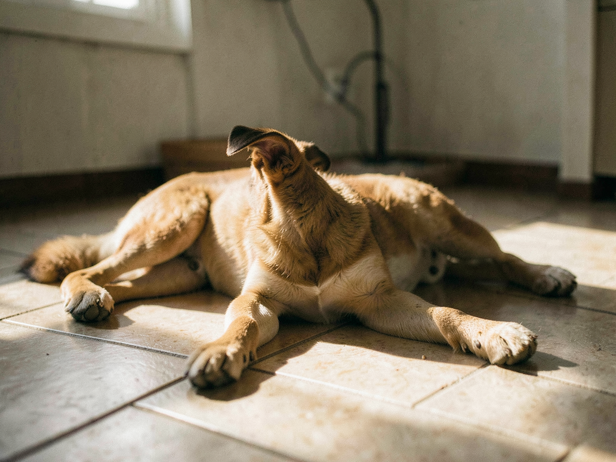
![Sun-drenched dog nap]()
Sun-drenched dog nap
Image credit : AI
My pet routine brings structure to my day, just like this peaceful nap in the warm afternoon sun.
The behaviour that looks like love is also a lesson in attention
A pet that greets you at the door, follows you between rooms, or settles against your leg while you work is doing something that has a functional explanation, proximity to a known safe figure reduces stress in social animals, but the experience of it teaches something that the explanation does not fully contain. The animal is present with you in a way that most of the day is not. It is not waiting for the conversation to get interesting. It is not half-watching something else. It is simply there, attending to where you are and what you are doing, in the specific room you are in right now. Spending time with a creature that operates this way changes how a day feels. Not because the animal is wise, but because its attention is undivided in a way that most human attention is not. You notice the quality of the afternoon light because the cat is sitting in it. You notice the particular quiet of an early morning because the dog is calm in it beside you. The ordinary day becomes, briefly, something you are actually inside rather than moving through.
The pet did not set out to teach any of this. It was hungry, it was social, it was tracking the sequence of events that made its world predictable. But the side effect of living alongside that, of being the fixed point in another creature's map of the day, is that the day becomes more legible to you too.