Dogs communicate constantly. The problem is that most of what they say gets misread, dismissed as quirky, or, worse, punished as bad behavior. Understanding what a behavior actually signals, and which ones point to something a vet should see, makes living with a dog considerably less confusing for both of you.
Circling before lying down
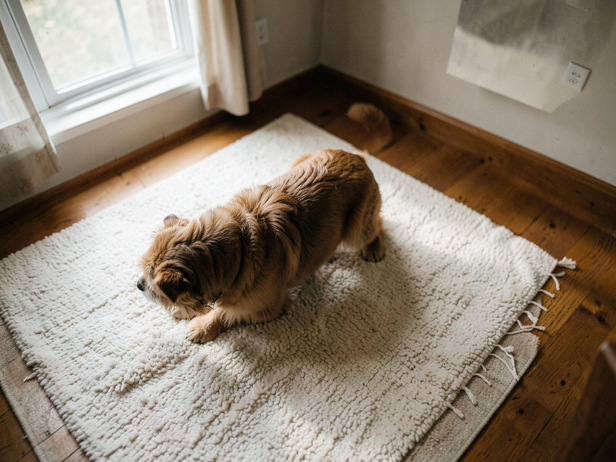
This is one of the oldest behaviors in the domestic dog's repertoire, carried forward from ancestors who lived in tall grass. Circling flattens the ground, checks for hidden insects or snakes, and orients the animal relative to wind direction. In a Mumbai flat with tiled floors, it serves no practical purpose, but the motor program is hardwired. A dog that circles more than a few times, seems unable to settle, or cries while doing it may be in pain. Arthritis and spinal discomfort can make lying down difficult, and circling becomes a way of managing the approach. If the behavior has changed in frequency or intensity, that change is worth a vet visit.
![Dog's Cozy Circle Time]()
Dog's Cozy Circle Time
Image credit : AI
Finding comfort in my favorite spot. Understanding dog behavior is key to a happy home.
Eating grass
The popular explanation, dogs eat grass to make themselves vomit, is only partially supported by observation. Studies tracking grass-eating in dogs found that fewer than one in four vomited afterward, and most showed no signs of illness before eating it. The more likely explanations: dogs are opportunistic omnivores and grass is simply edible, fiber intake may be instinctively regulated this way, or the behavior is a mild oral fixation with no functional goal at all. Occasional grass-eating in an otherwise healthy dog is not a problem. A dog that eats large quantities urgently, retches repeatedly, or shows other signs of distress, drooling, bloating, restlessness, needs to be seen by a vet the same day.
Staring at you while eating
This is a social behavior, not a challenge. Dogs are highly attuned to human faces and use eye contact to monitor emotional state and predict what happens next. A dog that watches you while eating is checking whether you are going to move toward the bowl, whether the situation is safe, and whether you are paying attention to it. In households where food has historically been taken away mid-meal, the staring intensifies, the dog is tracking a threat. If a dog stiffens, growls, or stops eating when you approach the bowl, that is resource guarding, a separate behavior that benefits from working with a qualified trainer rather than being managed by avoidance.
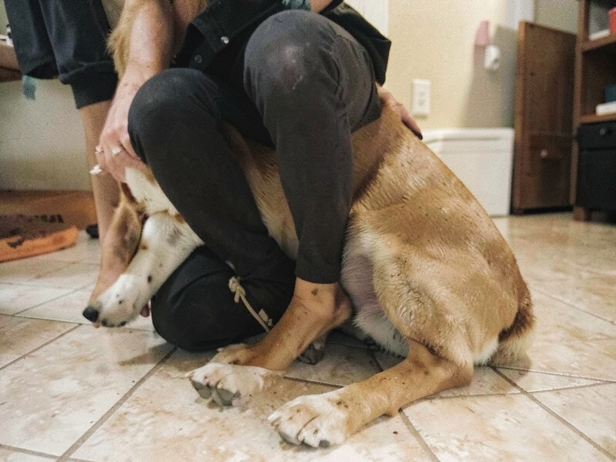
![Dog's Comforting Embrace]()
Dog's Comforting Embrace
Image credit : AI
My dog's presence offers such comfort. Understanding dog body language reveals their deep need for connection.
Yawning when you scold them
A dog that yawns while you are raising your voice is not bored and is not being dismissive. Yawning is a calming signal, a term from behavioral research describing a set of gestures dogs use to reduce tension in themselves and in others. It is the dog's way of saying it finds the situation stressful and is trying to de-escalate. Lip licking, looking away, and turning the head to the side serve the same function. Recognizing these signals matters because they appear early in a stress sequence. A dog that has run through its calming signals without relief is closer to a bite than one that just started showing them.
Bringing you a toy when you come home
The most common reading is affection, and that is not wrong, but the mechanism is more specific. Dogs that greet with an object in their mouth are channeling arousal through an outlet. The excitement of your return produces a physical need to do something, and carrying an object satisfies it. Some dogs learn the behavior because it has been reinforced with attention; others do it spontaneously. Either way, it is a positive sign. A dog that greets by jumping, nipping, or barking rather than fetching an object is expressing the same arousal without the outlet, and teaching it to fetch something on greeting is one of the more effective ways to redirect that energy.
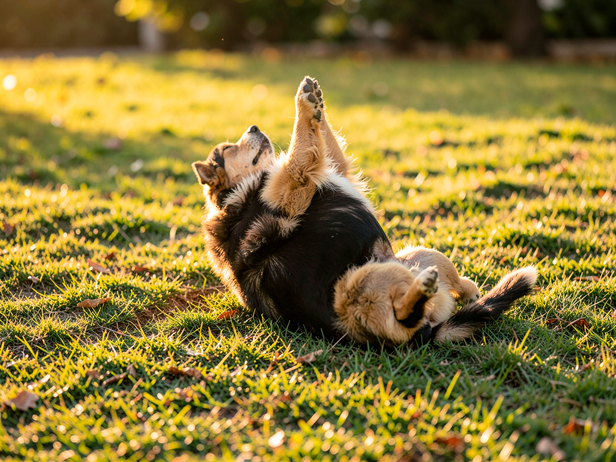
![Dog's Joyful Roll]()
Dog's Joyful Roll
Image credit : AI
Experiencing pure bliss, I roll freely, a perfect example of understanding dog body language.
Sitting on your feet or pressing against your legs
Physical contact is a primary way dogs regulate their own emotional state. Sitting on your feet or leaning into your legs provides proprioceptive input, pressure feedback, that many dogs find calming. It also keeps track of where you are without the dog having to watch you. This is generally a comfort behavior, not a dominance claim. The dominance framing of this behavior has no support in current behavioral science. A dog that does this only in specific situations, loud environments, unfamiliar people, thunderstorms, is using it as a coping mechanism. A dog that does it constantly and becomes distressed when contact is interrupted may have separation-related anxiety worth discussing with a vet or a behaviorist.
Chasing their tail
Puppies chase their tails because they have not yet mapped their own body and the tail is a moving object. In adult dogs, occasional tail-chasing is usually play behavior or a response to boredom. The behavior becomes a concern when it is compulsive, the dog cannot be interrupted, returns to it immediately after being called away, or injures the tail in the process. Compulsive tail-chasing in adult dogs has been associated with anxiety, certain neurological conditions, and in some breeds with a possible genetic component. A dog that chases its tail for minutes at a time, multiple times a day, should be evaluated by a vet to rule out a medical cause before assuming it is purely behavioral.
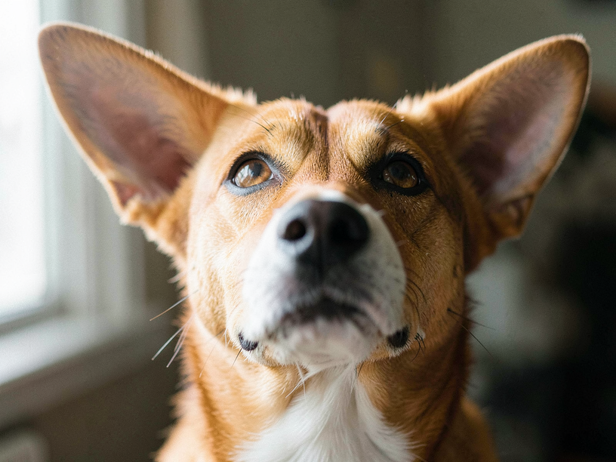
![Attentive Dog's Upward Gaze]()
Attentive Dog's Upward Gaze
Image credit : AI
I'm keenly observing, trying to understand dog behavior. My focused gaze shows I'm paying attention to everything.
Rolling in something that smells terrible
This behavior is well-documented and poorly understood. The leading hypothesis is scent masking, rolling in a strong smell may have helped ancestral dogs approach prey without being detected. A competing hypothesis is scent marking in reverse: bringing an interesting smell back to the group as information. Whatever the origin, the behavior is deeply reinforced by the sensory experience itself, which is why calling a dog away mid-roll rarely works. It is not defiance. Prevention, keeping the dog on leash near carcasses, garbage, or animal droppings, is more practical than correction after the fact.
Licking your face or hands
Face-licking in dogs has roots in puppy behavior: wolf and wild dog pups lick the muzzle of returning adults to stimulate regurgitation of food. In domestic dogs the food function is gone, but the social function remains. Licking a person's face is an appeasement gesture and an affiliation signal, it says the dog recognizes you as important and is not a threat to you. Hand-licking often serves the same function, or is simply a response to the salt on skin. Excessive licking, of people, of surfaces, of the dog's own paws, can indicate anxiety, gastrointestinal discomfort, or a compulsive disorder. If a dog licks obsessively and cannot be redirected, a vet visit is the right next step.
Barking at nothing
Dogs hear and smell a great deal that people cannot. What looks like barking at a blank wall is usually a response to a sound in the building, a smell drifting in from outside, or an animal moving through a space the dog can detect but you cannot. Before assuming the behavior is anxiety-driven, check whether it happens at consistent times, in a consistent direction, or in response to specific sounds. A dog that barks at a particular wall every evening at seven is probably tracking a neighbor's routine. A dog that barks unpredictably, seems disoriented, or has recently developed the behavior after years without it may be experiencing cognitive changes, particularly in dogs over eight years old. Sudden behavioral changes in older dogs are worth raising with a vet.