Betta splendens were not bred to be calm. Long before the ornamental trade selected them for colour and finnage, they were fighting fish in the rice paddies and slow streams of Southeast Asia, and in that world, another male in your territory was a direct threat to your survival and your breeding rights. The flare is that threat response, preserved intact, running in a glass box in a Gurugram flat.
What the flare actually is
When a betta sees another male, or anything it reads as one, it spreads its gill covers outward, fans its fins to full extension, and darkens its colours. The whole display happens in under a second. It is not aggression in the human sense of wanting to fight; it is a territorial broadcast. In the wild, the display often ends the confrontation before it turns physical. The intruder reads the signal, backs down, and leaves. The problem with a reflection is that the intruder never leaves. It matches every move, escalates every flare, and never backs down. The betta is stuck in a loop its nervous system has no exit for.
![Mirror on Wet Stone]()
Mirror on Wet Stone
Image credit : AI
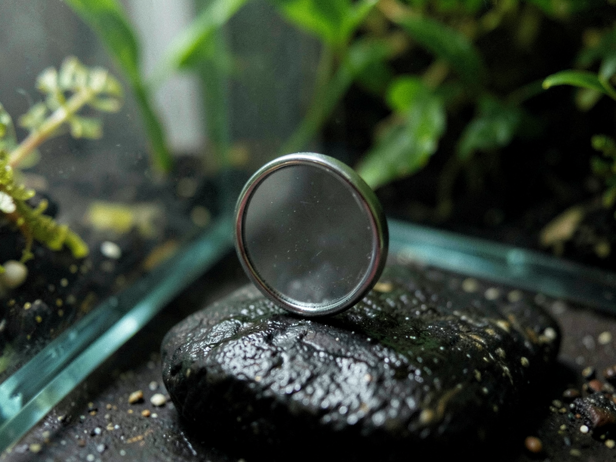
Observing the subtle interplay of light and reflection on a wet stone, reminiscent of a betta fish flaring at its own image.
Why the reflection reads as a rival
Betta males assess other males visually. Colour saturation, fin spread, and movement pattern are the signals they read. A mirror or a glass pane lit from outside returns all three with high fidelity, the fish sees a brightly coloured, fully finned male moving in perfect synchrony. That synchrony is, if anything, more threatening than a real rival, because a real rival would have already shown some hesitation. The reflection shows none. Tanks placed near a window, tanks with a light source outside the glass, and tanks with a dark backing on one side only are the most common setups that produce persistent reflection problems.
What it costs the fish
A single short flare is not harmful. Bettas flare at each other in the wild and recover. The cost comes from duration and frequency. A betta that flares at its reflection for twenty minutes a day is running its stress response for twenty minutes a day. Chronically elevated cortisol in fish, the same hormone class that drives the stress response in mammals, suppresses immune function over time. Owners often notice the fish eating less, resting more at the surface, or developing fin edges that look ragged. These are not always signs of disease; they can be signs of a fish that has not had a quiet day in weeks. The distinction matters because the fix is environmental, not medical.
![Morning Aquarium Glow]()
Morning Aquarium Glow
Image credit : AI
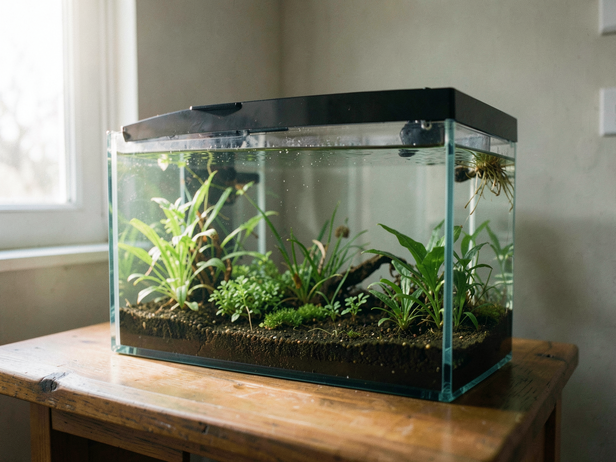
Observing the calm, settled atmosphere of my aquarium, I wonder about betta fish behaviour in tank.
When flaring is a problem and when it is not
Brief, occasional flaring, a few seconds when the tank light first comes on, or when the fish catches a flash of its reflection as you walk past, is normal and probably beneficial. It gives the fish a short burst of the territorial behaviour it is built to perform. The concern is sustained flaring: a fish that locks onto its reflection and cannot disengage, or one that flares repeatedly throughout the day. Watch for the fish turning away from food during a flare, or still showing darkened colours and clamped fins an hour after the trigger. Those are signs the response has stopped being a display and started being a sustained state. Adjusting the tank's position, reducing external light sources hitting the glass, or adding a background on all four sides usually resolves it within a few days. If the fish continues to look unwell after the reflection is removed, that is the point to speak to a vet with fish medicine experience, lethargy, clamped fins, and appetite loss have other causes too.
The deliberate mirror debate
Some owners use a small mirror for a few minutes a day as enrichment, on the reasoning that it gives the fish a controlled outlet for territorial behaviour. The idea is not wrong in principle, short, bounded stimulation followed by removal is different from continuous exposure. But the evidence that it is actively beneficial is thin, and the risk of misjudging duration is real. A betta that is already showing stress signs does not need more flare triggers. For a fish that appears settled and healthy, a brief mirror session watched closely is unlikely to cause harm. For a fish that already flares frequently or shows any of the signs above, remove the reflection sources first and see whether the fish stabilises before adding any deliberate trigger.